


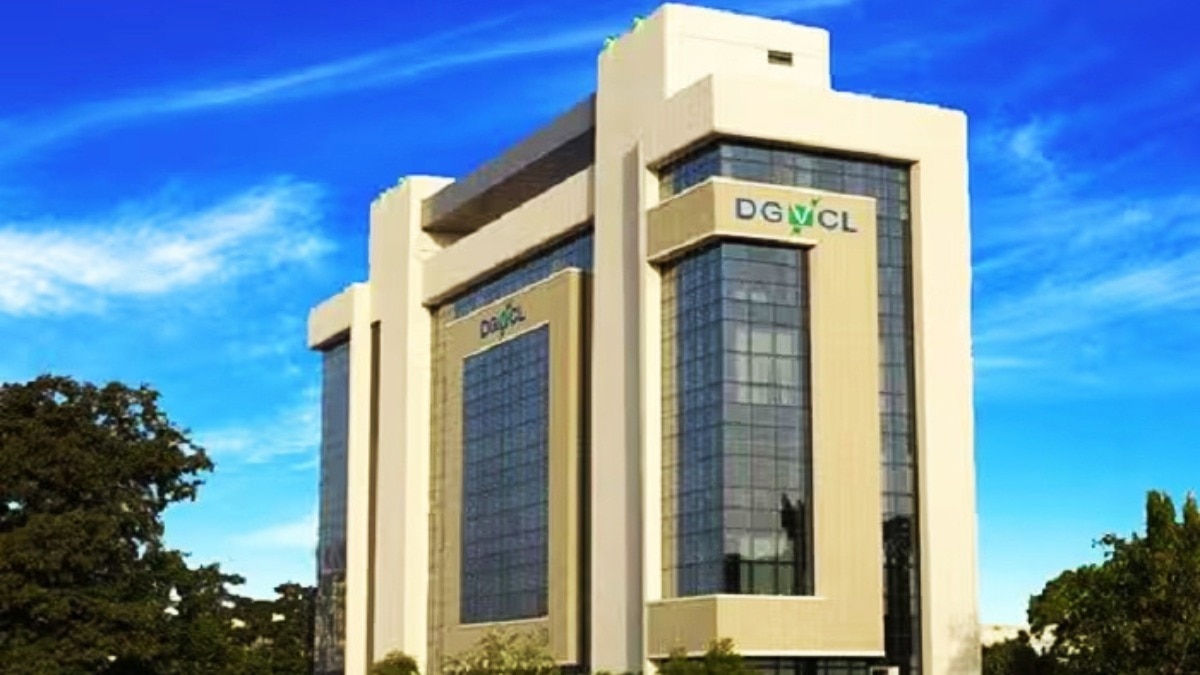
Weeks before Diwali, when Surat’s looms and Rajkot’s workshops would normally be running at full capacity, Gujarat’s industry is being switched off for want of power. The Dakshin Gujarat Vij Company Limited, a state-owned power distribution company, has announced outages on designated industrial feeders from 4 pm to midnight, citing an electricity shortage caused by rising demand and generation constraints.“Of course, this is a shock,” says Ashok Jirawala, president of the Southern Gujarat Chamber of Commerce and Industry (SGCCI).
Businesses, he notes, must fulfil orders and dispatch goods in the crucial weeks before Diwali. He added that the government had not imposed such a “severe” power cut in 20 to 25 years.
Nevertheless, Jirawala insists the state government has generally been industry-friendly and that he expects it to resolve the problem.The SGCCI estimates that the livelihoods of roughly 2.5 million workers in south Gujarat are at risk, with losses running into thousands of crores of rupees. Textile production losses alone are estimated at Rs 300 crore a week by a weavers’ leader.
Engineering units in Rajkot have adopted Wednesday as their designated shutdown day.The immediate dispute is over timing. SGCCI wants the eight-hour shutdown imposed after 7 pm once a week, while the power distribution company favours a 6 pm start.
An office-bearer of the Sanand Industries Association has separately called for uninterrupted supply to small and medium enterprises. The squeeze is unprecedented in recent years, and climate variability appears to have played a significant role.
Gujarat’s peak power demand touched a record 29,822 MW on October 16, a 36.6 per cent jump from 21,822 MW in the corresponding period last year. Across September and October, demand has been around 12 per cent, or nearly 4,000 MW, higher than in previous years.State government statements have attributed the surge to persistent heat following a weak monsoon, the effects of El Nio, higher cooling requirements, increased irrigation demand, extended all-night Navratri festivities and heightened industrial activity before Diwali.
Agricultural demand alone peaks at nearly 12,000 MW a day.Supply, meanwhile, has moved in the opposite direction. Hydropower generation, typically robust during October and November, has declined following below-normal rainfall in Gujarat and neighbouring states.
Lower wind speeds have also reduced wind generation. Solar power falls to zero after sunset, leaving coal- and gas-fired plants to shoulder the crucial evening peak between 5 pm and 11 pm.
Battery storage capacity remains limited, with only 192 MW currently operational.The pressure is not confined to Gujarat. Power supplies are tight across the country as well.
On October 19, the Central Electricity Authority reported that 96 of India’s 191 coal-based power plants were operating with critically low coal stocks.The timing could hardly be worse for Gujarat’s textile sector, which is already grappling with slowing demand, sluggish business and delayed payments. “The textile industry is struggling with a slowdown, sluggish business and delayed payments,” says Champalal Bothra, national president of the textile and garment committee of the Confederation of All India Traders. “Many traders have not done the expected business this time. In many industrial units, one shift's production is being kept shut.”Ahead of an election year, the government is scrambling to manage the crisis.
Chief minister Bhupendra Patel reviewed the power situation on October 20. According to his office, he directed the energy department to accelerate demand management measures, improve power availability and strengthen capacity planning.The Centre has assured Gujarat of an additional 10 to 11 coal rakes a day until November, with allocations expected to rise to 13 to 14 rakes thereafter.
The state has also arranged short-term power purchases amounting to 2,990 MW in October, 1,740 MW in November and 1,335 MW in December. Consumers have been urged to avoid electricity use during the peak hours of 5 pm to 11 pm.Longer-term solutions, however, will arrive too late for this year’s festive season.
A 500 MW/1,000 MWh battery storage project is scheduled for completion by March 2027. An 800 MW unit at the Ukai power station is expected by September 2029 while the state’s first nuclear power unit is projected to come online in 2032.Until then, the Gujarat government maintains that power supplies remain adequate.
On factory floors across the state’s industrial belt, however, the evening outages are already taking their toll.Subscribe to India Today Magazine- Ends