


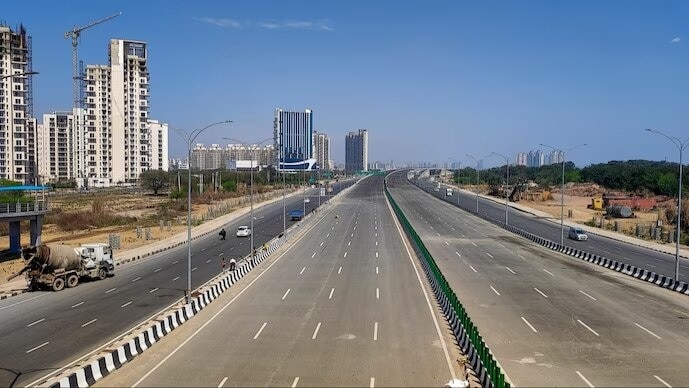
Uttar Pradesh is expanding technology-led urban development across central and state smart cities. The initiatives seek to improve infrastructure, civic services, sustainability and citizen-friendly governance.Uttar Pradesh has 10 cities selected under the Central Smart Cities Mission: Agra, Aligarh, Bareilly, Jhansi, Kanpur, Lucknow, Moradabad, Prayagraj, Saharanpur and Varanasi. (Representative photo)Technology-led infrastructure, improved civic services and planned urban development are shaping the future of cities across Uttar Pradesh.Urban development is an important part of Uttar Pradesh's growth journey.
With cities expanding and demand for better civic infrastructure increasing, planned development, efficient public services and technology-enabled governance have become key priorities.In this direction, the Smart Cities Mission, launched by the Government of India on June 25, 2015, aims to promote sustainable urban development and improve citizens' quality of life through the use of Information and Communication Technology (ICT), better infrastructure and citizen-friendly governance.Uttar Pradesh has 10 cities selected under the Central Smart Cities Mission: Agra, Aligarh, Bareilly, Jhansi, Kanpur, Lucknow, Moradabad, Prayagraj, Saharanpur and Varanasi. A FOCUS ON PLANNED AND SUSTAINABLE URBAN DEVELOPMENTThe Smart Cities Mission focuses on improving urban infrastructure through a combination of area-based development and technology-driven solutions.Its key objectives include promoting mixed land use and inclusive housing, developing walkable neighbourhoods, creating and preserving open spaces, encouraging multiple modes of transport, and making urban governance more citizen-friendly and cost-effective.
The mission also seeks to strengthen infrastructure and public services through smart solutions. These interventions are intended to address the everyday needs of urban residents while supporting sustainable development.TECHNOLOGY AT THE CENTRE OF URBAN MANAGEMENTAn important component of the mission is the adoption of technology to improve city management.
The implementation framework includes Integrated Command and Control Centres (ICCCs), Intelligent Traffic Management Systems, tracking systems for solid waste collection vehicles, air quality monitoring and automated street lighting.Infrastructure interventions under the programme include smart roads, multi-level parking facilities, the development of open spaces, open gyms and smart public toilets.For implementation, the 10 Central Smart Cities in Uttar Pradesh operate through Special Purpose Vehicles (SPVs) established under the Companies Act, 2013. These entities are responsible for planning, implementing, managing and monitoring Smart City projects in their respective cities.Integrated Command and Control Centres have been operationalised in all 10 Central Smart Cities in Uttar Pradesh, according to the Ministry of Housing and Urban Affairs' parliamentary reply dated February 2, 2026.STRENGTHENING THE URBAN DEVELOPMENT FRAMEWORKThe Smart Cities initiative in Uttar Pradesh extends beyond the 10 cities selected under the Central Mission.
In 2019, the state government designated seven additional municipal corporations - Ayodhya, Firozabad, Ghaziabad, Gorakhpur, Mathura, Meerut and Shahjahanpur - as State Smart Cities.These seven cities are covered under a separate state-level framework and are managed directly by their respective Nagar Nigams, unlike the 10 Central Smart Cities, which are managed through SPVs.Together, the Central and State Smart City initiatives reflect Uttar Pradesh's broader approach to planned urban development.With a focus on infrastructure, technology-enabled services, inclusive planning and efficient governance, the Smart Cities Mission provides a framework for addressing urban development needs and improving the delivery of civic services across the state.- Ends