


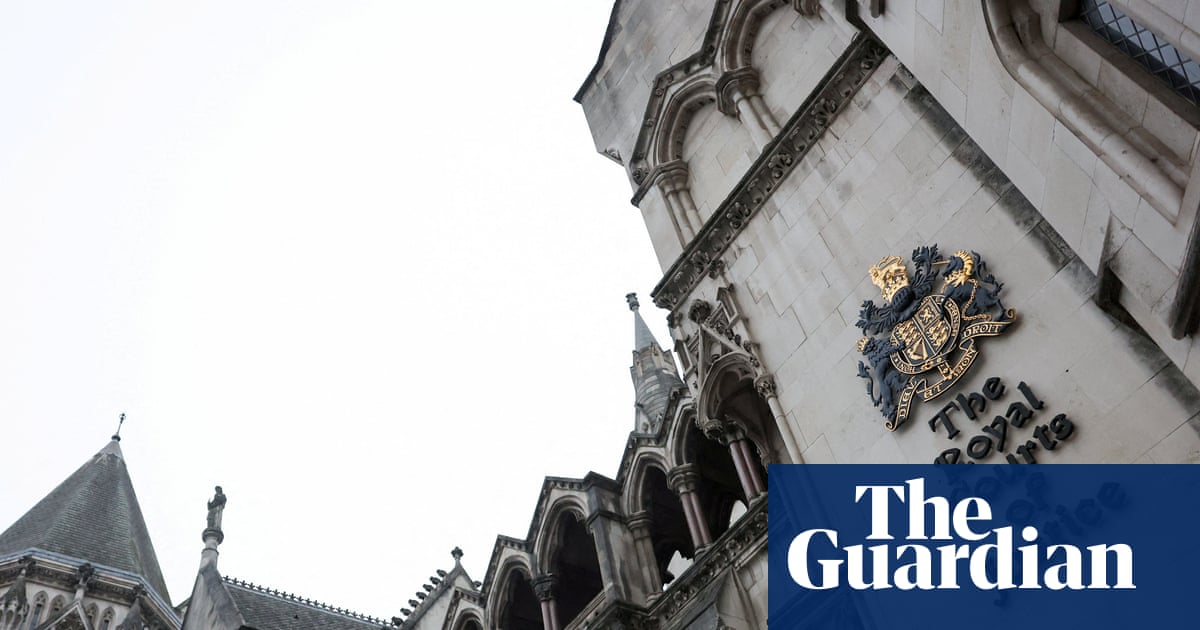
Two news organisations have a duty to the public and their sources to publish allegations of exploitative sexual behaviour by a well-known figure despite claims he is “highly likely” to attempt suicide, the high court has heard.The anonymous individual, known in court simply as PPT, is seeking an injunction against the Guardian and ITN to stop them publishing the allegations, which he denies.His legal team have argued that publishing would likely lead to his death, following two previous attempts to take his own life.However, the legal team for the media groups told the high court there were powerful “countervailing” considerations compelling them to publish the claims.Gavin Millar KC, the lead barrister for the media outlets, said they had “not just the responsibility, but the duty to publish information we believe to be in the public interest”.He argued the claimant had not taken the impact on the sources involved in the investigation “sufficiently into account”.“They have made a substantial commitment to being contributors, and were extremely anxious for the publication and the broadcast to go ahead as soon as possible,” Millar said.Many of the women making the allegations have been traumatised by PPT’s alleged conduct and have suffered mental health crises and mental illness as a result, according to a written submission from the media groups.It states: “They believe that it is important that their allegations are publicly aired so that other women are protected and the full nature of his conduct is disclosed, and in order to assist the sources to recover from their own experiences.”It said the media outlets had credible evidence of seriously improper conduct “towards a large number of women over a prolonged period”, including potential criminal conduct.Millar said if publication of the allegations were blocked, “our women contributors and others we are aware of” were likely to find “other ways to make their stories known publicly”.He added that proceeding with publication through the Guardian and ITN would be the “best way to put the information into the public domain”.The well-known figure is seeking to block publication of the allegations by citing article two of the European convention on human rights (ECHR), which relates to the right to life; article three, relating to “inhuman or degrading treatment”; and article eight, which protects the right to respect for private and family life.However, the media companies argue that the European court of human rights, which enforces the ECHR, has never ruled in such a way that would cause these articles to apply in this case. They also argue countervailing rights under article 10, which protects the right to freedom of expression.Millar said the investigation into PPT had spoken to more than 100 people, including 30 who gave first-hand accounts.He told that court that since the Guardian and ITN first contacted PPT in May so he could respond to the allegations, deadlines had been repeatedly extended and unusual measures put in place in order to act responsibly, given PPT’s medical issues.Millar said that “recognising the difficult and unusual nature of the case”, the media companies had then agreed to delay publication so that PPT could seek an injunction and have his case heard before a judge.PPT’s legal team has previously told that court there was evidence his life would be endangered should the allegations be published.A summary of an assessment of the claimant’s current wellbeing by an independent expert stated that he could not conclude either that suicide was inevitable if publication went ahead, or that psychiatric treatment could eliminate all risk.The expert said that the risks could be lowered should the allegations be published while PPT was in an inpatient psychiatric setting.The trial has now concluded, with Mr Justice Nicklin retiring to come to a ruling.In the UK and Ireland, Samaritans can be contacted on freephone 116 123.
In the US, you can call or text the National Suicide Prevention Lifeline on 988, chat on 988lifeline.org, or text HOME to 741741 to connect with a crisis counselor. In Australia, the crisis support service Lifeline is 13 11 14.
Other international helplines can be found at befrienders.org