


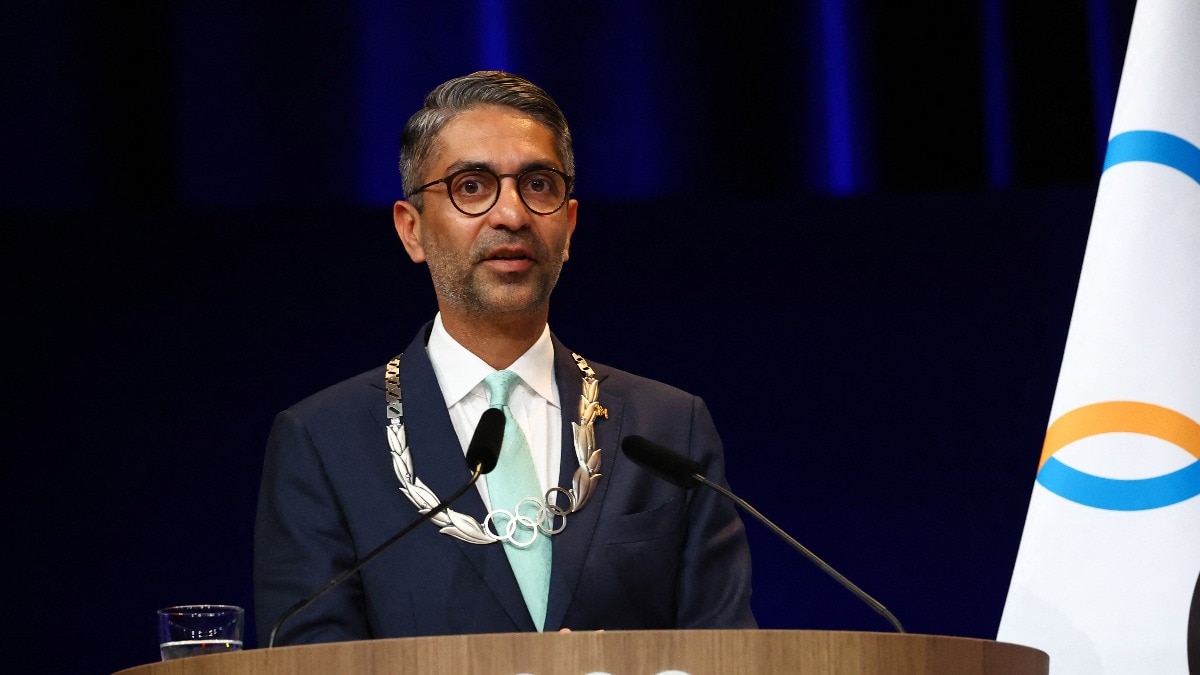
However, he believes the initiative must give young athletes time to grow instead of judging their potential by results at an early age.The Sports Ministry has drawn up a four-stage Talent Identification and Development Module under the Khelo India Scheme for 2026-27 to 2030-31. The aim is to identify promising youngsters and prepare them for a shot at the 2036 Olympic Games, which India is bidding to host in Ahmedabad.Prime Minister Narendra Modi announced the initiative during his Independence Day address earlier this year.Bindra, who became India's first individual Olympic gold medallist at the 2008 Beijing Games, welcomed the move but raised some questions about how talent would be assessed.
In a post on X, the former rifle shooter pointed out that behind every assessment and performance figure is a child with a dream. An athlete who struggles at 14, he argued, could still go on to achieve remarkable things a decade later."A child who is not the best at 14 may still have everything it takes to become extraordinary at 24," Bindra wrote.
He hopes the programme will recognise that potential cannot always be measured through a single test or assessment.It is really encouraging to see India preparing to take a more systematic approach to grassroots talent identification. This is a welcome step, and a wonderful opportunity to build something meaningful for the future of Indian sport.
As we begin this journey, I feel there are some important questions worth thinking about. Because behind every test, every assessment and every number is a young child with a dream.
When we assess two 14-year-olds, are we always comparing talent, or are we sometimes comparing biological maturity? One child may be stronger, faster or better coordinated simply because they have developed earlier.
How do we distinguish that temporary advantage from long-term potential? And could the child who seems less promising at 14 turn out to be exceptional at 23?
Are we measuring only what a child can do today, or also their ability to learn, adapt and improve? How do we account for differences in nutrition, family circumstances and access to coaching?
A child who has never received structured training may not perform as well as one who has had years of support. But does that necessarily tell us who has greater potential?
Should we be tracking growth and maturation over time, so that training, recovery and injury prevention reflect how each child is developing rather than simply how old they are? And can we give grassroots coaches the knowledge and tools to recognise these differences, especially during the rapid changes of adolescence?
There is also something important to consider about opportunity. If a child develops early, performs well and is selected, that child naturally receives better coaching and greater exposure.
But what happens to the child who develops later? How do we make sure that one assessment doesn’t quietly close a door that might have opened a few years later?
How do we keep children engaged, motivated and believing in themselves when their development takes a little longer? And how do we recognise the different needs of girls and boys, athletes with disabilities, and children pursuing different sports?
Perhaps we should also follow these young athletes over the years, learning which early qualities really translate into senior excellence, why some progress while others leave sport, and how we can keep improving the decisions we make. These are not questions about what is right or wrong.
They are worth asking because we have an opportunity to build this system with care, science and a real understanding of the children it is meant to serve. A child who is not the best at 14 may still have everything it takes to become extraordinary at 24.
As India begins this important journey, I hope we build a system that not only recognises talent, but has the patience to nurture it, the wisdom to look beyond immediate results, and the compassion to ensure that a child’s dream is never defined by a single day of testing.— Abhinav A. Bindra OLY (@Abhinav_Bindra) October 30, 2026FOUR-STAGE PLANThe Ministry's framework has four levels: Foundation, Grassroots, Intermediate and Elite.
The final stage is supported by the government's Target Olympic Podium Scheme (TOPS), which backs athletes preparing for major international competitions.At the Foundation level, the focus will be on introducing children to sports. Through partnerships with schools across the country and the Ministry of Education, the programme will cover basic skills, physical fitness and participation.The Grassroots stage will take children identified through schools and school leagues into early-stage coaching.
Training will take place at Khelo India Utkrishta Vidyalayas, Khelo India Feeder Schools and Khelo India Centres.At the Intermediate level, athletes will be classified as Emerging Khelo India Athletes (E-KIA) or Khelo India Athletes (KIA), depending on age-appropriate protocols and performance benchmarks.They will train at Sports Authority of India Training Centres (STCs), SAI National Centres of Excellence (NCoEs), Khelo India Accredited Academies (KIAAs), Khelo India Centres of Excellence, including universities, Youth Sports Companies working with the Armed Forces, and other suitable academies.BINDRA'S QUESTIONSFor Bindra, one of the biggest challenges will be making sure the system doesn't overlook children who develop later or come from backgrounds with fewer sporting opportunities.He wants the assessments to look beyond what a child can do at present. The ability to learn, adapt and improve should also count."How do we account for differences in nutrition, family circumstances and access to coaching?" he asked.A child who has never received structured training, he pointed out, is unlikely to perform on the same level as someone who has had years of coaching and support.
That doesn't necessarily mean the latter has greater potential.Bindra also warned that early selection could create a cycle in which those who perform well initially receive better coaching and more exposure, widening the gap with those who need more time to develop.He believes the programme must ensure that one assessment doesn't shut the door on a child whose talent might emerge a few years later.The former Olympic champion also raised questions about keeping youngsters motivated when progress is slow. He called for the system to account for the different needs of girls and boys, athletes with disabilities and children competing in different sports.Bindra suggested following young athletes over several years to understand which early qualities translate into success at the senior level.
It would also help identify why some youngsters progress while others eventually leave sport.His larger point is straightforward. India's search for future Olympic medallists must leave enough room for children to develop at their own pace.
A disappointing day at 14 shouldn't decide what an athlete can achieve at 24.- Ends