


Sammy Cossairt has tried call center work, waiting tables and hoisting concrete. She prefers hoisting concrete.The 36-year-old tower crane operator in Nashville, Tenn., who works 12-hour shifts, helps lift and move rebar and buckets of concrete from a perch often hundreds of feet in the air.
This isn’t what she envisioned when she received a liberal arts associate degree more than a decade ago, but after nearly a decade on the job, she feels at home in her crane.“I’m out in the sun, making my mark on the world,” said Cossairt, who makes $120,000 a year. “I think more women would love to get in and make men’s money doing this work, if they only knew.”The skilled trades have long been a boy’s club. But more women are breaking in, drawn by well-paying jobs that are in high demand.
To keep them coming, many companies are courting women like Cossairt through new benefits and perks, including paid maternity leave and more flexibility. They are also trying to create a more welcoming work environment while cracking down on off-color jokes and catcalls on male-dominated jobsites.The federal government tracks female participation in fields such as construction, and installation and repair, which includes jobs such as plumbers, carpenters and auto technicians.
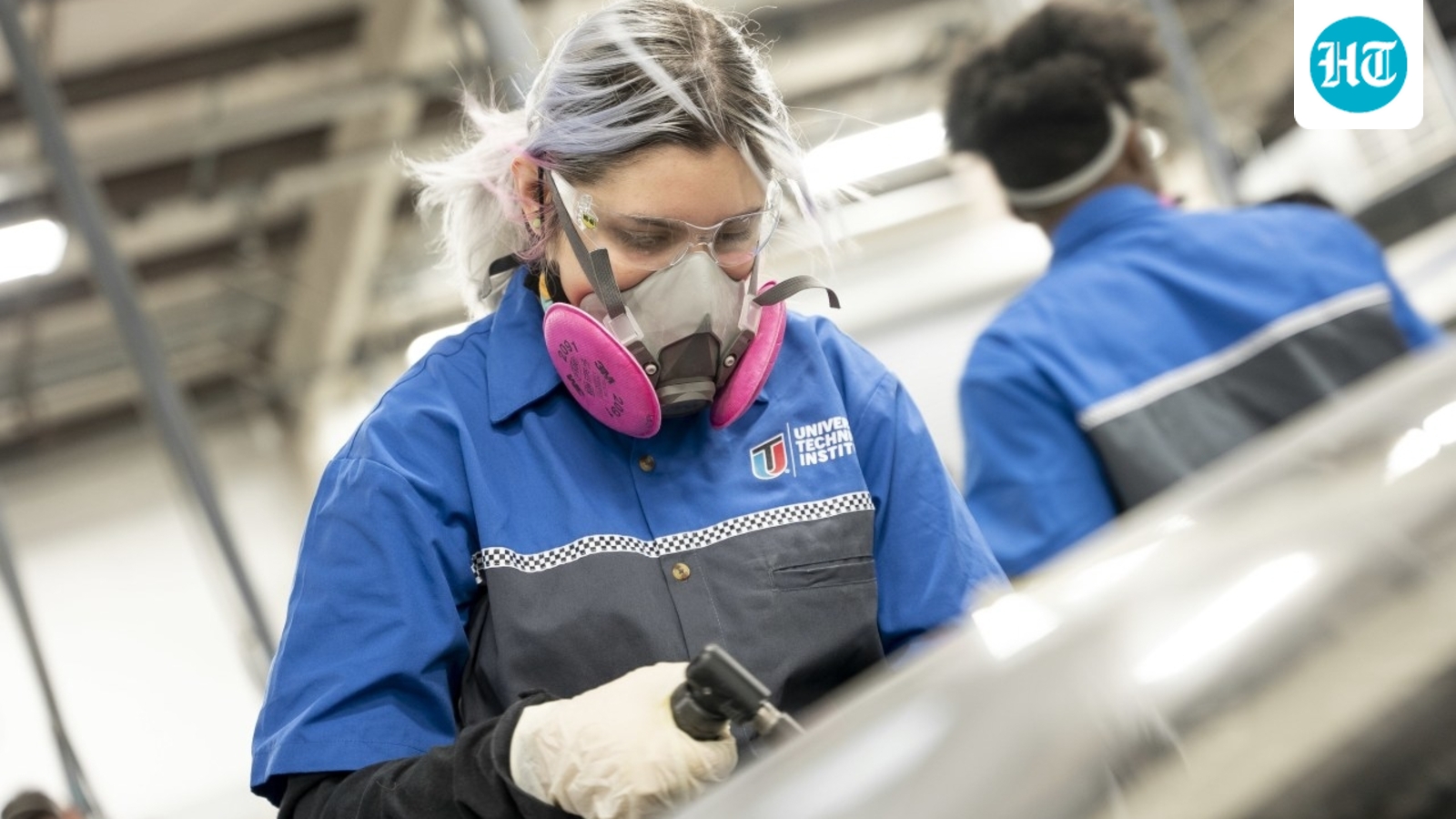
As of last year, women made up about 4.4% of those workers. But they have made mostly steady gains, with that figure rising from 2.9% a decade earlier.At Universal Technical Institute’s campus in Exton, Pa., career services director Katie Yurick said women are enrolling partly because the industry has grown more tech-infused.
Automotive technicians can hook up cars to computers for diagnosis, and plenty of in-demand jobs—such as welding and electrical work—can trade as much on brains and attention to detail as brawn.“These jobs aren’t even dirty jobs anymore,” said Yurick, adding that she has also heard from employers who say they are trying to hire women, believing they possess high maturity levels and are detail-oriented.UTI’s student body, which spans 17 campuses across the U.S., is now 8% female, quadruple what it was five years ago. In some areas, such as collision repair and auto refinishing, that figure is even higher, at 19%.“Our industry needs this workforce,” said Maja Ericksen, executive vice president at construction company Mortenson, which in 2024 began offering 12 weeks of paid leave for birth mothers in its skilled workforce.
More than 10% of Mortenson’s skilled workforce is now female, up from 7% a decade ago.“There aren’t too many careers you feel are AI-proof, and being in the skilled trades is one that isn’t going away,” Ericksen said.Women have broadly outperformed men in the labor market in recent years. This partly reflects booming growth in fields that traditionally employ more women, such as healthcare and social assistance, while women also are making inroads in traditionally male-dominated jobs.Kym Gardner, 39, a project engineer in Charlotte, N.C., said that as a child, she never thought about working in the field.
Her mother was a teacher, her father a computer analyst. “No one really talked about it, it wasn’t considered to be a career,” she said. “The expectation was to go to college.”But in high school, she grew interested in architecture, found a construction mentorship program and quickly fell in love with seeing buildings rise from the ground up. Now the mother of three children, including a 5-month-old, starts her days on site and works remotely in the afternoons—flexibility she said helps give her peace of mind and ensures she doesn’t have to sacrifice her caregiving duties.Her company, Turner Construction, is growing fast and needs all the workers it can get, said president Abrar Sheriff.
The company hit $29 billion in revenue last year and expects around $35 billion this year, fueled in part by work on data centers. More worker flexibility, including creature comforts such as heated and cooled bathrooms with running water on worksites, or regularly cleaned breakrooms, are part of the pitch.“We need more people to come into our industry,” Sheriff said.Elsewhere, construction company Skanska has taken steps such as ensuring female employees have correctly sized gloves, helmets and work boots, rather than forcing them to make do with male-sized gear.
Deila Ray, who spent a decade as a pipe welder and now teaches the trade in high school, said she had to shrink her own gloves with fire when she started in the industry.Skanska this year also started mandating inclusivity for all its team leaders, encouraging them to be more aware of different workers’ needs, said Ayesha Adams, who joined Skanska in 2023 as its inaugural director of culture and engagement.“You can get people all day, but how do you keep them here?” Adams said.Some states are trying to make work in the trades more accommodating for women. Both Washington and Illinois, for example, have in the last few years passed laws requiring nursing rooms for mothers on construction sites, as well as refrigerators to store breast milk, flexible break schedules and access to water for cleaning.Construction companies are also tackling another issue: workplace harassment.
At Turner, senior leaders there get on a call within four hours of any incident being reported. In one recent case in Texas, a subcontractor’s entire project crew of around a dozen men were replaced when that company couldn’t identify who had written derogatory graffiti about female employees, said Sheriff, Turner’s president.Part of the challenge is that it doesn’t take aggressive comments to make a jobsite feel hostile, said Rebecca Heustess, 42, a tile foreman who makes $65,000 a year in Henry, S.D.
Even after 20 years in the trades, she said she regularly encounters men who patronize her or ignore her instructions.Still, she said she has thick skin and that the jobsite culture has slowly improved. She also loves the work.“When I leave a job, it’s this beautiful shiny sparkly project that I know will be there for years to come,” Heustess said. “It’s super fulfilling.”Write to Te-Ping Chen at Te-ping.Chen@wsj.com