


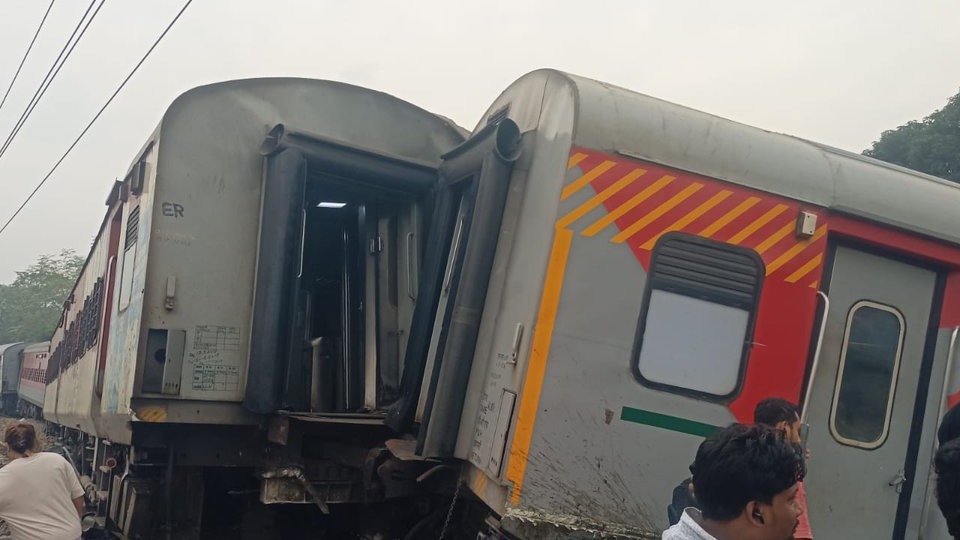
A six-member probe team, in its report, found that the system primarily responsible for applying brakes in the coaches, technically known as the BP angle cock, was in an isolated condition in the locomotive.The train overshot a red signal, hit a dead end and derailed after its brakes allegedly failed while it was entering a loop line to allow another train to pass. A preliminary inquiry into the derailment of the Kolkata-Sairang Express at Digaru railway station in Assam on November 11 has indicated that the train's main braking system may have malfunctioned, news agency Press Trust of India reported.The train overshot a red signal, hit a dead end and derailed after its brakes allegedly failed while it was entering a loop line to allow another train to pass.A six-member inquiry team found that the BP angle cock, which controls the main braking system in the coaches, was in an isolated or closed position in the locomotive."This may be the reason for this accident, as the brakes may not have been applied when the FP/BP angle cock of the loco was in an isolated condition," the team said in a joint note prepared on the day of the accident.
The team said the train crew applied the brakes, "but the brakes may not have been applied as the angle cock was previously in the closed position".According to PTI, the preliminary report does not identify who made the braking system inoperative or whether the train crew failed to follow safety procedures to check it before operating the train. In their statements, the loco pilot, assistant loco pilot and guard said the braking system was working properly when they took charge of the train at Guwahati at around 5.30 am on November 11.The train stopped at Panbari station at 6.16 am after the wheels of one coach were found to have overheated because of jammed brake pads.
The crew attended to the problem, and the train remained at the station for about 30 minutes.It left Panbari at 6.46 am. As it approached Digaru station, the station master signalled it to enter the loop line and stop to allow another train to pass first.
The report said the brakes failed when the crew tried to stop the train. It then crossed the red signal, hit a dead end and derailed.Some safety experts said the crew might have used the train's alternative regenerative braking system to control its speed during the journey.
They may have tried to use the main braking system while stopping near the loop line, only to find that it was not working."Who isolated the main braking system? Did railway staff do it and forget to restore it later?
Looking at the sequence of events, the possibility of involvement of some outsider is highly unlikely. The incident raises several questions and warrants a thorough probe," a safety expert told PTI.Advisories issued by some railway divisions after the derailment suggest that railway staff may have closed the angle cock while dealing with the jammed brake pad at Panbari and failed to reopen it before the train resumed its journey.The preliminary inquiry has, therefore, linked the derailment to the isolated main braking system, while questions about who closed it and whether safety checks were overlooked remain unanswered.- Ends