


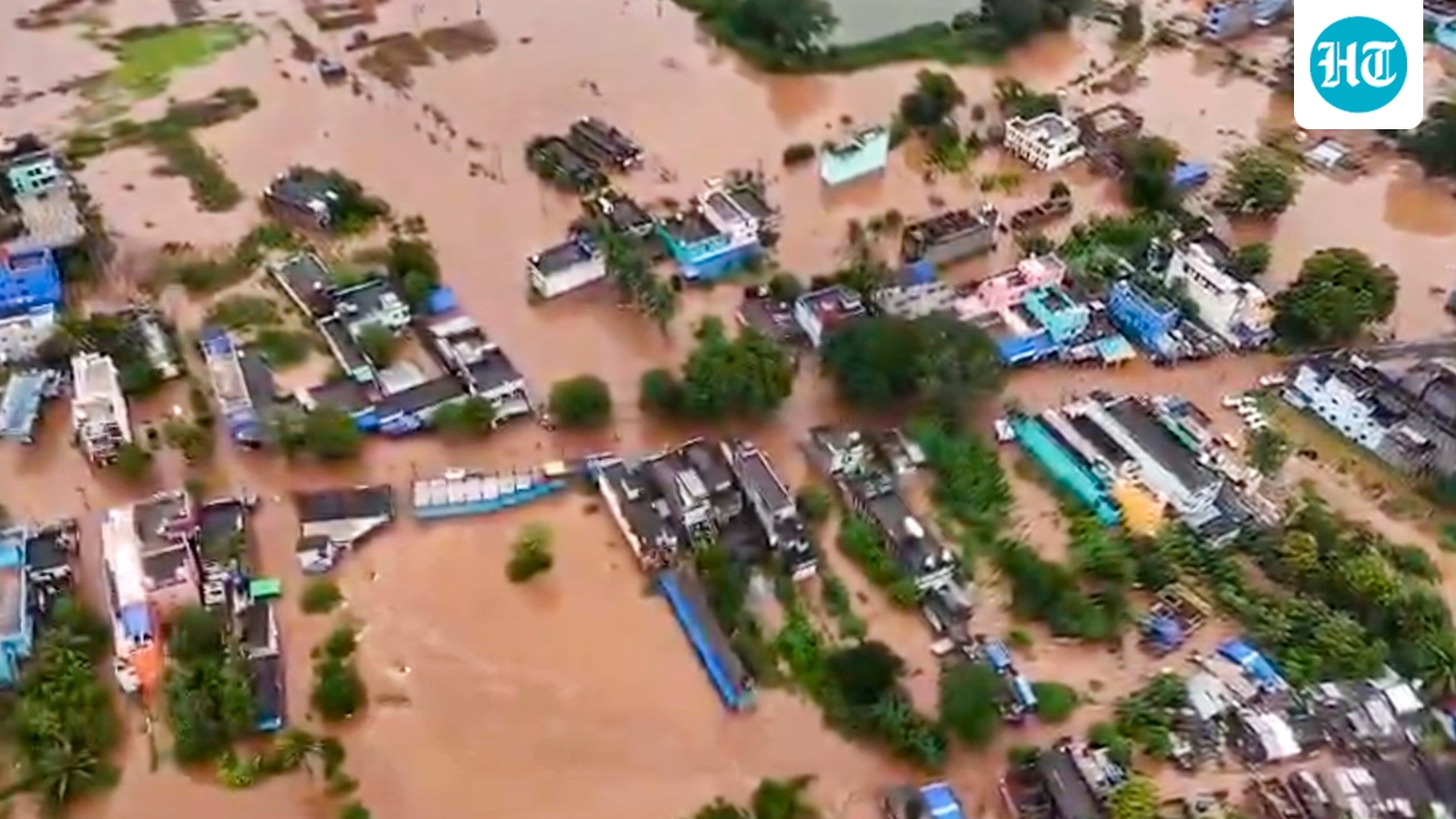
The unprecedented rainfall triggered by Cyclone Arnab, which battered parts of Odisha and Andhra Pradesh after making landfall on October 28, has sparked a debate in Odisha over reservoir management and disaster preparedness.A drone view of the inundated area of Berhampur in the wake of the Cyclone Arnab, in Ganjam, Odisha, Thursday, Oct. 29, 2026. (PTI)Opposition parties and former officials are questioning whether better planning could have mitigated the devastating floods in Ganjam district, where the swollen Rushikulya river affected approximately 1.5 lakh people, although a final assessment is still underway.
Casualties were also reported in Ganjam district following the torrential rainfall in the aftermath of the cyclone.A few days ago, former chief minister and Leader of Opposition Naveen Patnaik wrote to Chief Minister Mohan Charan Majhi, describing the floods as “man-made” and alleging poor management of the rainfall.Patnaik, who toured the flood-ravaged district, said that not enough had been done for the victims. Former chief secretary Suresh Mohapatra, in a video posted on his YouTube channel, questioned whether reservoirs should have been emptied further ahead of the cyclone.
However, state disaster management minister Suresh Pujari on Thursday maintained that exceptionally heavy rainfall over three days overwhelmed the river system and the district's limited reservoir network.The controversy has acquired political significance ahead of next year's expected panchayat elections. Ganjam, Odisha's most populous district, is politically important to both the Bharatiya Janata Party (BJP) and the Biju Janata Dal (BJD).
Traditionally a BJD stronghold, the district is where Patnaik began his electoral career by winning the Aska Lok Sabha by-election in 1997. However, the BJP won 11 of the district's 13 Assembly seats and both Lok Sabha constituencies in 2024.
The BJD retained only Hinjili, Patnaik's constituency, while the Congress won one seat. The government's handling of the floods has therefore emerged as an early test of its disaster-management credentials.What triggered the devastating floods in Ganjam?Ganjam received an average rainfall of 338.74 mm between October 27 and 29 as Cyclone Arnab approached the Odisha coast, nearly 80% above its normal October average of 187.9 mm.
This was the highest three-day rainfall recorded in the district, surpassing the levels recorded during major flood events in 1990, Cyclone Phailin in 2013 and 2018.Patrapur block in Ganjam received 546 mm of rainfall in a single day, while several other locations, including Sorada, also witnessed exceptionally heavy downpours. Nearly 70% of the month's rainfall was recorded within two days.The steep terrain of the Eastern Ghats accelerated runoff into streams and rivers, causing the Rushikulya and its tributaries to swell rapidly and inundate low-lying settlements.On October 29, the Rushikulya was carrying 6,908 cubic metres of water per second (cumecs), nearly twice its estimated carrying capacity of 3,500 cumecs.
At Purushottampur, the river crossed 19 metres, around three metres above the danger mark.The debate over flood managementThe India Meteorological Department (IMD) issued its first warning about the weather system on October 23, followed by a red alert for October 28 and warnings of extremely heavy rainfall between October 27 and 29.Former chief secretary Mohapatra said the forecasts provided sufficient time for the water resources department to reduce reservoir levels and create additional storage capacity. He said several reservoirs were holding 65% to 80% of their capacity before the intense rainfall.
Citing preparations ahead of Cyclone Phailin in 2013, he said reservoir levels had then been reduced to around 50% to accommodate the anticipated rainfall. He also questioned the timing of reservoir releases, particularly as several dams were releasing water during the period of intense rainfall.The government, however, maintains that it followed established protocols, but the unprecedented concentration and intensity of rainfall made the resulting floods difficult to contain.According to Chief Secretary Garg, the combined catchment area of the Rushikulya and Bahuda river systems is around 9,800 square kilometres.
However, only about 880 square kilometres, or 10%, drain into reservoirs. The remaining 90% flows directly into the rivers.The government said that even if the reservoirs had been emptied further, the additional storage capacity would have had a limited impact on the enormous runoff generated across the wider catchment.
However, establishing how much difference this could have made would require a detailed technical assessment of rainfall distribution, reservoir inflows and outflows, gate-operation schedules and downstream river levels.What experts say about Odisha's disaster preparednessOn controversy over Ganjam flood, disaster management experts say holistic efforts are needed. "Such extreme rainfall events can happen anytime and we need better coordination among the IMD, water resources and district administration. We need to revive wetlands that act as sponges of excess water and desilt the rivers.
As such extreme rainfall events in hilly regions can trigger landslides like the one happened on Ganjam-Kandhamal border we need to take landslide prevention measures like Kerala and Uttarakhand are doing," said prof Anjan Prusti of department of environmental sciences, Berhampur University.