


(NOTE: This article was originally published in the India Today issue dated October 26, 2026)On August 7, a little-known film about spiritual guru Neem Karoli Baba dropped in cinemas. It wasn’t even the first Hindi film of 2026 to feature him; Shree Baba Neeb Karori Maharaj came and went in May, creating nary a ripple.
At first, Hanuman Ansh seemed headed the same way, making just Rs 90 lakh in its first week. By week two, only 27 cinema halls were showing it.
Newcomers Vishal Chaturvedi and Shobhinaw Satyaa, the writer-director and lead actor, respectively, knew they had to do something to save the film from disappearing altogether. So, they embarked on a road trip, visiting Gujarat, Rajasthan and Delhi to meet the audiences watching the last few shows and urged them to spread the word.
They did. By week three, Hanuman Ansh, much like the film’s protagonist, achieved a miracle, earning Rs 10 crore.
And that was just the start. Two months after its release, Hanuman Ansh, made on a shoestring budget of Rs 1.7 crore, is still running in cinemas, and has grossed Rs 400 crore-plus so far.Like Dhurandhar – The Revenge, the year’s highest-grossing film so far, Hanuman Ansh too has become a cultural phenomenon, with footage of audiences removing their footwear or crying in cinemas circulating online.
Among the devout fanbase is Jatin Mishra, an RJ by profession, who has seen the film thrice and hearts it for its “honesty and simplicity”. “I like how baba gives a devotee practical advice to see a doctor when he complains of fever. It’s not like he is some miracle man,” he says. “There were scenes that gave me goosebumps and left me emotional.”The film’s success has had a seismic effect.
Kainchi Dham, the baba’s shrine in Uttarakhand, is suddenly awash with such a tourist throng that the locals are peeved. Shobhinaw, who saw his role change from assistant director to leading man at the 11th hour, cannot walk the streets without a mask and cap on.
When he does get recognised, people first touch his feet, then seek selfies. He responds with, “Sita Ram, Sita Ram.” Sensing the immense opportunity, Sony Entertainment Television recently announced a show on Neem Karoli Baba.
Producers are queuing up to register more devotional titles and announcing biopics on spiritual gurus; the latest being on Ramdev Pir and Devraha a.k.a. Machaan Baba.
Bollywood, clearly, is under a divine spell. The real biggie, though, has yet to come.
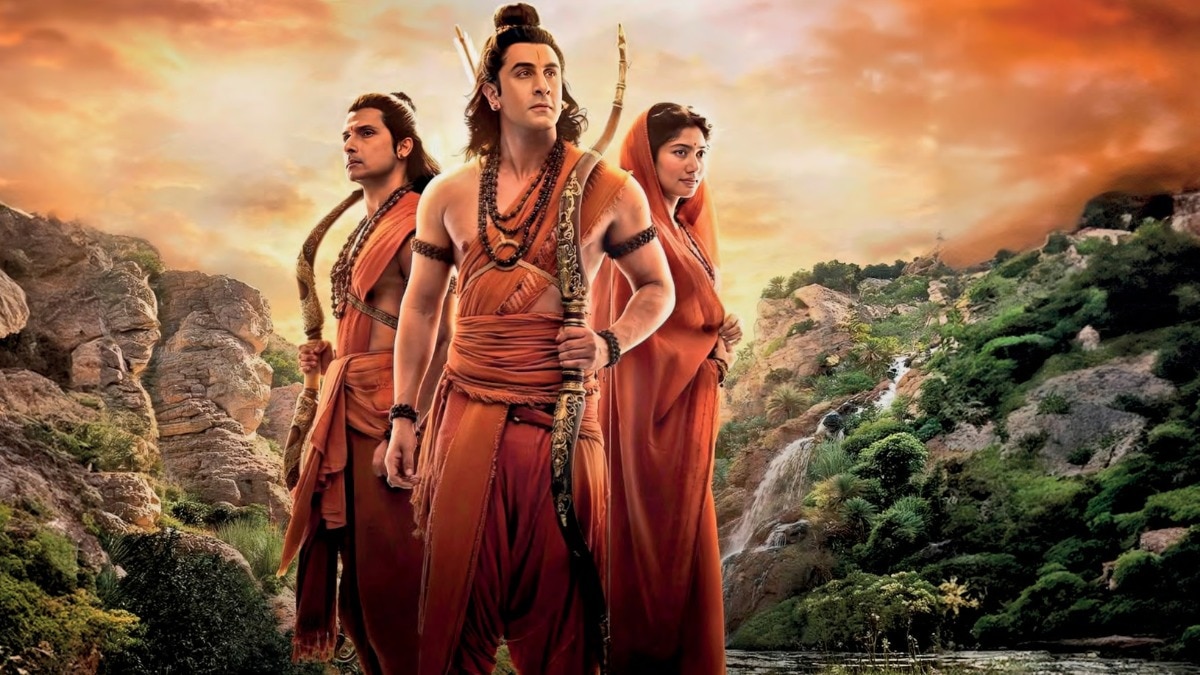
With a budget as epic as the story itself—Rs 4,000 crore—Ramayana is poised to be this Diwali’s biggest draw. It is a tale audiences never tire of hearing, starring a much-loved hero of the Hindu pantheon.
Produced by Namit Malhotra’s Prime Focus and actor Yash’s Monster Mind Creations, it is the costliest film in Indian cinema. Devotion will undoubtedly be a lure, but the makers are also banking on spectacular visual effects and a star-studded cast: Ranbir Kapoor as Ram, Sai Pallavi as Sita, Sunny Deol as Hanuman, Yash as Ravan and Arun Govil—the original Ram of Doordarshan’s cult television series Ramayan—as Dashratha.
And this is only Part 1 of the 3D spectacle. The sequel is due next year, alongside a spate of faith-based dramas: two films on Hanuman, including one made entirely using artificial intelligence; a film on Kali; and an animated feature on Parashuram, among others.LEAP OF FAITHThe success of Hanuman Ansh follows what has already been a noteworthy year for devotional cinema.
In January, Laalo – Krishna Sada Sahayte became the highest-grossing Gujarati film of all time, earning Rs 100 crore plus. Made by a crew of debutants—from director Ankit Sakhiya, lead actor Karan Joshi, composer Smmit Jay to lyricist Prem Dave—the film germinated from Sakhiya’s need to advocate goodness and bring god into regular conversation. “I felt that when I was with friends, I could not talk about god.
It was not seen as cool but old school,” Ankhiya told India Today earlier this year while promoting the release of the Hindi-dubbed version in Mumbai. The film sees Krishna saving its angry, alcoholic titular protagonist and setting him on a spiritual journey.May saw another Krishna film, Krishnavataram Part I: Hridayam, make Rs 40 crore.
Much like Hanuman Ansh’s Shobhinaw, it was a breakthrough role for Siddharth Gupta, who plays Krishna. “I was spiritually aware but not inclined when the project came to me,” he says. “It’s when I started reading the Bhagavad Gita and other scriptures that the responsibility I was being bestowed with dawned on me. The process takes you away from its result.” These days, Gupta’s friends don’t swear in his presence lest they offend ‘Kanhaji’.The ball had been set rolling the previous year.
Hombale Films’s Mahavatar Narsimha emerged as the surprise blockbuster of 2025, netting nearly Rs 250 crore in its theatrical run against a budget of just Rs 15 crore, and single-handedly giving the Indian animation industry a massive impetus. It was first-time filmmaker Ashwin Kumar’s attempt to address what he felt was a vacuum of stories celebrating Hindu mythology and culture. “ If a crore people can visit Kumbh mela, you know there is a colossal mass that loves stories on faith.
We just need to bring them tales they truly believe in, and do it with self-belief.”Hombale Films has already committed to making the Dashavatar franchise with Kumar. “India has an incredible wealth of folklore, mythology and traditions, and we believe these stories deserve to be told with the scale and cinematic experience they deserve,” says Chaluve Gowda, co-founder of Hombale Films. In making six additional films on the different avatars of Vishnu and releasing them at two-year intervals, Kumar also wants to show children that Hindu gods are no less, if not better, than Marvel superheroes. “If we don’t bring back our gods [on the big screen], kids will be habituated to western icons like Spider-Man, Superman and Batman,” he says. “In the West, they have to concoct superheroes.
We don’t have to do that, for we have our gods.” The franchise, he says, enables him to not just showcase the “valour” of our gods, but also familiarise Gens Alpha and Z with concepts such as dharma, righteousness, sacrifice and the value of family.Hombale Films are not the only ones building a franchise around an Indian divinity. Raj Kurup of CreativeLand Studios, the makers of Krishnavataram, recently announced “a transmedia universe bringing the timeless stories, wisdom and spirit” of Krishna.
The ambitious project, which has the backing of The Art of Living’s World Forum for Arts & Culture, also plans to have merchandise, theme parks, musicals, video games and educational shows for kids, besides films. “This is not about religion or gods,” Kurup said at a gathering for media, “these are stories for us. I want to make culture fun and accessible.
Our rich heritage is not just for oldies, but for kids to understand too.”BACK TO THE ROOTSThe industry’s growing faith in mythology as a bankable genre, alongside the flood of films based on the Hindu faith, reflect a broader push to reclaim Indian civilisation and recast its lore as a source of pride. In a conversation titled ‘Ramayana Lives On’ with Sadhguru, Ramayana producer Malhotra said he was “troubled” about the epic not being taught in schools. “We’re learning British and Mughal history and what they did to us but not our history, the origin of where we come from,” he said.
The Ramayana films, he asserts, stem from his desire to make Indians proud of their cultural identity and erase the “victim mindset”.Also the CEO of DNEG Studios, the visual effects company that has won seven Oscars till date, Malhotra calls Ramayana a passion project with which he hopes to elevate Indian cinema to a global platform. “We got to bring something that shows who we are, where we come from, the richness of our history in a way that the world has never seen before,” he said at an event earlier this year. “Ramayana has everything that all the biggest Hollywood spectacles have.”It’s a sentiment the Rashtriya Swayamsevak Sangh-backed Bharatiya Chitra Sadhana (BCS) is likely to readily approve. Founded in 2016, the organisation aims to encourage films promoting ‘Bharatiya’ values and re-establish ‘Bharatiya’ ethos through cinema. “There are issues related to interpretation of history, dharmic groups, lack of literature on several historical events,” says an RSS insider. “We encourage them to pick up issues important to civilisation.” A top pracharak of the Vishwa Hindu Parishad notes that while the West equates Hindu culture with “mythology”, in ‘Bharat’, those values are part of “parampara” (tradition) or “dharmic” lore (stories, philosophy, legends and cultural knowledge).
As the genre gains traction and pays dividends, BCS hopes to set a standard for how deities are visually portrayed on screen, while leaving the actual production to the makers.Some, though, see the spate of mythologicals as concerning. “In early Indian cinema, mythology provided filmmakers established narratives and recognisable characters and also offered a way to negotiate British colonial censorship, indirectly articulate anti-colonial sentiments, and foster pride in India’s cultural heritage,” says Sanghita Sen, assistant professor in the School of Design, Arts & Creative Industries at Northumbria University, Newcastle. “But we need to distinguish these historical uses from contemporary attempts to present mythology as verifiable history. Today, certain films mobilise mythology to advance Hindutva ideology within a wider political ecosystem, privileging a homogenised, ethnonationalist majoritarian identity over India’s fundamentally plural and diverse cultural landscape.
The issue is not mythology itself, but its politicisation and deployment as propaganda.” Sen cites the Akshay Kumar-starrer Ram Setu—about Ram’s journey on the mythical bridge between India and Sri Lanka—as one such example.For audiences, such films help reaffirm their religious beliefs, and also make for family-friendly viewing. According to Dr Harish Shetty, a leading psychiatrist based in Mumbai, the growing tendency to gravitate towards films like Mahavatar Narsimha, Laalo and Hanuman Ansh stems from the innate need for catharsis and hope in a world afflicted by disconnection. “With turmoil across the world, you don’t see a saviour.
Indians want to see a ‘figure’ who will save them from their sins and pain,” he says. “They are invariably saying, let the eleventh avatar [of Vishnu] come and do something. People are looking for miracles.”MAKING THE DIVINE DRAMATICDevotional cinema is hardly new in Bollywood.
It was among the earliest genres to capture filmmakers’ imagination when they first turned to the camera, making silent films. From Dadasaheb Phalke’s Raja Harishchandra (1913), which heralded the birth of Indian cinema, to Prabhat Studios’ 1930s and ’40s dramas such as Gopal Krishna, Sant Dnyaneshwar and Sant Tukaram, films were a means to disseminate religious values to the masses.
This cinematic embrace of bhakti—sometimes counted as a distinct rasa (emotional essence) akin to the nine described in the Natyashastra—endured, reaching a high point in the 1970s with Jai Santoshi Maa (JSM) and Shirdi Ke Sai Baba. Released in 1975, Jai Santoshi Maa gave even the blockbuster Sholay a run for its money at the box office.
Its titular goddess helped a woman endure a tyrannical sasural and even brought her back from the dead.By the ’80s, though, mythological storytelling migrated to television, entering millions of homes through Ramanand Sagar’s Ramayan and B.R. Chopra’s Mahabharat.
Both became national obsessions, drawing audiences in unprecedented numbers. “The whole country would come virtually to a standstill during the broadcast,” writes Amit Khanna in his 2019 book, Words, Sounds, Images: A History of Media and Entertainment in India. “Attracting a near-impossible 90 per cent viewership, these shows were commercial blockbusters, earning millions in advertisement revenue.” The film industry, it seemed, was content to cede the mythological narrative to television.FROM GODS TO GURUSBollywood, meanwhile, shifted its gaze from gods to ‘godmen’, probing the power they wield, the influence they command and their capacity to deceive. In Rajkumar Hirani’s PK, the highest-grossing film of 2014, an alien played by Aamir Khan becomes the vehicle for a satire on religion as a commercial enterprise, with fraudulent babas exploiting faith for profit.
He does so by exposing the lies of its antagonist, Tapasvi Maharaj (Saurabh Shukla). Around the same time, some godmen recognised cinema’s potential to spread their teachings and turned filmmakers themselves.
Gurmeet Ram Rahim Singh, head of the Dera Sacha Sauda sect—and now serving a prison term for rape—made four films that put himself and the devotion he commands centre stage, beginning with MSG: The Messenger of God.Chaturvedi is troubled by what he sees as a larger trend of films portraying the “dhongi paakhandi” [fraudulent and hypocritical] aspects of religious gurus. “If you see the villains, especially in web series, their vesh bhusha [attire], language, you will find them wearing tilak and kalavaah [a red-and-yellow thread tied around the wrist],” he says. “Why can’t a tilakdhaari vyakti [a person who wears a tilak] be a hero of the film?” He is alluding to shows such as Sacred Games, Leila, Aashram and Hunkkaar: The Roar, and films such as Maharaj and Sirf Ek Banda Kaafi Hai, in which godmen are portrayed as sexual predators or shadowy figures with sinister motives. Of late, though, Bollywood is trying to make gods cool again with films like 2022’s Brahmastra (Shiva).It’s not just Hindi cinema that’s obsessed with gods.
Tamil and Telugu cinema, too, have a rich history of drawing inspiration from the Mahabharata and the Ramayana to create blockbusters like Mayabazar (1957), a mythological drama centred around Arjuna’s son Abhimanyu and Balarama’s daughter Sasirekha. Both S.S.
Rajamouli and Nag Ashwin cite it as one of their favourite films and effectively incorporate Hindu deities in their narratives—be it the Ram-inspired imagery in RRR’s now-iconic action sequence featuring Ram Charan to Amitabh Bachchan’s Ashwathama and Prabhas’s Karna in sci-fi epic Kalki 2898 AD. Telugu filmmaker Prasanth Verma, too, has announced a cinematic universe inspired by Indian mythology.
After the superhero film Hanu-Man (2024), his next, Mahakali, arrives in cinemas in January, followed by Jai Hanuman with Rishab Shetty and Rana Daggubati.THE BHAKTI BANDWAGONMaking films about gods and epics may have become a new trend, but the risk of offending religious sentiments is an old one. “It’s a double-edged sword,” says Ashwin Kumar. “We have to stay true to the intent, the shastra, to the legend. Otherwise, it could backfire.” Chaturvedi, too, stresses the responsibility filmmakers bear.
Ramayana’s makers encountered a wave of criticism on social media when they came out with the first teaser of the film, as eagle-eyed viewers flagged what they saw as excessive reliance on CGI. It underscored that audiences may be keen to see mythological epics on screen, but they are equally exacting about how they are brought to life.Shailesh Kapoor, co-founder of media and entertainment research and consulting agency Ormax, also cautions against Bollywood’s tendency to overplay an emerging trend. “Hindi cinema has an unenviable ability to identify an emerging opportunity and then eliminate it with oversupply,” he says.
The success of Hanuman Ansh, he argues, shows that a devotional film need not be “a giant spectacle” to strike a chord with audiences. Assuming that every film with a religious or spiritual undertone will find an audience, he warns, would be a costly mistake for producers. “This is a genre where the success of a film is the most unpredictable compared to other genres.
One doesn’t know if and how the devotee base will endorse the film,” says Kapoor. “A genre built around belief can probably detect cynicism faster than most.”Chaturvedi welcomes the growing interest in spiritual roots, but worries that filmmakers increasingly see faith as a bankable formula and a certified cash cow. “What matters is the sincerity and sensitivity with which you make the subject,” he says. “Unless you are a believer, the film will not work.” Before embarking on a second instalment of Baba, he has another spiritual project on the horizon: Ram Bola, a film on the saint-poet Tulsidas.Whether these films herald a spiritual awakening in Indian cinema remains to be seen. What is clear, however, is that astronomical budgets and lavish sets are no longer prerequisites for box-office success.
Nor are big stars. The overnight rise of Shobhinaw, the lead actor of Hanuman Ansh, is a case in point.
The son of teachers in Lucknow, he spent nearly a decade struggling in Mumbai before serendipity landed him the role. Two months after the film’s release, he is still out promoting it, sporting the same look and even the demeanour of his character. “Baba to ban gaya hoon,” he says with a laugh.
He has no qualms about being typecast, nor is he anxious about what lies ahead. “I won’t do something radically different,” he says. “I will only take up offers jo meri maryaada ke andar hain [that fall within my moral values].” He is content to leave his cinematic journey in the hands of the god and guru he believes brought him this far. “I didn’t have anything before. How can I be greedy now?
If I didn’t learn this much from Baba, then what’s the point?”—with Anilesh S. MahajanVISHAL CHATURVEDI | SPIRITUAL SON This sleeper blockbuster of 2026 was written on a notebook stamped with the Marvel Comics logo.
In his compact office in Andheri, Mumbai, Vishal Chaturvedi, writer-director-co-producer of Hanuman Ansh, flips through the book, amazed that his low-budget film about a spiritual guru would rival collections of a superhero flick. It’s from this office that his team edited the film, designed the posters and did more than half of the visual effects. “I had become stubborn when it came to making Hanuman Ansh,” says Chaturvedi.A doctor-turned-self-taught filmmaker, Chaturvedi first heard of spiritual leader Neem Karoli in 2006 on a road trip with friends in Uttarakhand.
Riding in dense fog, their car skidded off the road and stopped in front of the gate of Kainchi dham, the site popular among his devotees. So began his journey to know more about the guru.
Gradually, Chaturvedi was convinced that Baba’s life was ripe for a film. Before the script, he self-published a book on the guru, The Divine Detour.Finding producers to back his vision was a challenge—this despite a resume full of music videos and ad films, as creator on Fauji 2 and creative producer on multiple films.
An OTT platform turned Chaturvedi down, but it was their manner that stayed with Chaturvedi. “They said, ‘We are not looking for such kinds of stories’.”Hanuman Ansh’s success lies in its clean storytelling: anecdotes of the Baba’s life blended with his ideology. “He is trying to make people better not by telling them ‘give me gold’ or ‘touch my feet’,” he says. “Instead, he says, ‘Love everyone, Ram Ram likho aur bolo, bhookon ko bhojan do, bhakton ko prasad’.”The film is the gift that keeps on giving. Chaturvedi already has a producer for his next, a devotional drama on saint-poet Tulsidas.
Hanuman Ansh producers are keen for a part II. He is keeping streaming platforms waiting on digital rights, including the one that shunned him.Subscribe to India Today Magazine- Ends