


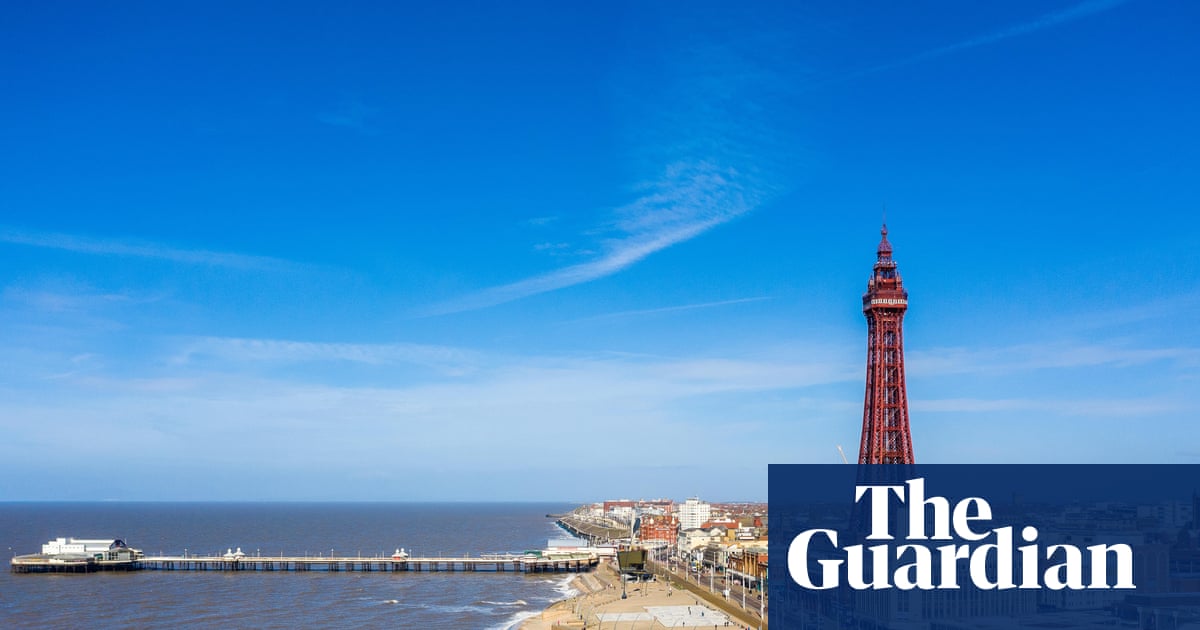
Blackpool, Sheffield, Milton Keynes and Wrexham have been shortlisted to be the UK city of culture 2029, an award viewed as a way to boost local economies, foster civic pride and, above all, have some fun.The four places were chosen from a longlist of nine and each will be given £125,000 to develop their bids before the winner is announced in the new year.That winner will be given a further £10m to help fund what has, in previous years, been a blizzard of events and ideas that create jobs, increase arts engagement and bring in tourists.All four previous UK cities of culture – Derry (2013), Hull (2017), Coventry (2021) and Bradford (2025) – said afterwards that the designation had been transformative and brought lasting legacies.Before the shortlist was announced, Wrexham was the bookmaker’s favourite to win. The city is already surfing a Hollywood wave after its football team was bought by the actors Ryan Reynolds and Rob McElhenney.Wrexham was previously the bookmaker’s favourite to win, with its football team surfing a Hollywood wave after being bought by the actors Ryan Reynolds and Rob McElhenney.
Photograph: Robbie Jay Barratt/AMA/Getty“We’re on the map and on the up,” said Wrexham’s council leader, Mark Pritchard, adding that making the shortlist was “fantastic” news. “Our reputation is growing.”He said Wrexham still had huge challenges around socioeconomic opportunities and inequalities but “winning this competition would be another step towards overcoming those challenges, building confidence in our communities and showing the world what Wrexham is truly about”.Blackpool is bidding to become the first seaside resort to win the prize. The council leader, Lynn Williams, said it was a place that never stood still.
She said: “Blackpool has been entertaining people for generations and now we have the chance to show the country exactly what our town is made of.“It is proud, working-class culture that has always been about bringing people together, having fun and making something happen. We have always been a town that entertains the country and there is nowhere quite like Blackpool.”Perhaps more than most places, Milton Keynes is a city burdened with misconceptions that it is just concrete and roundabouts. “We do still have concrete cows and, yes, we do have a lot of roundabouts – but I think that there is more to us than that,” Jane Carr, the leader of Milton Keynes council, told BBC Radio 4’s Today programme.Jane Carr, the leader of Milton Keynes council, said the city had an international festival every two years that it wanted to develop.
Photograph: Chunyip Wong/Getty“We’ve got an amazing amount of homegrown talent. We’ve got our own orchestras.
We’ve got lots of performing artists. We have an international festival every two years … we want to develop and move forward.”skip past newsletter promotionafter newsletter promotionOf all four shortlisted places, Sheffield’s artistic heritage probably shouts the loudest, whether that’s electronic music, Pulp, Arctic Monkeys or England’s largest theatre complex outside London.Fran Belbin, the leader of Sheffield city council, said being shortlisted was a proud moment for everyone who had shaped the bid. “Sheffield is a city built on creativity, innovation and community spirit,” she said. “From our world-renowned music heritage and vibrant independent arts scene to our festivals, libraries, theatres, museums, galleries and grassroots creativity, culture is part of who we are.”Fran Belbin, the leader of Sheffield city council, said being shortlisted was a proud moment for Sheffield which was a city built on creativity, innovation and community spirit.
Photograph: Christopher Thomond/The GuardianThe unsuccessful candidates on the longlist were Ipswich, Inverness, Middlesbrough, Portsmouth and Swindon. Phil Redmond, the Brookside and Grange Hill creator who headed Liverpool’s European capital of culture year in 2008, chairs the advisory panel which will choose the winner.He said: “Once again there is a hard choice ahead.
The four places on the shortlist continue to demonstrate both the variety and strength of creative ambition across the UK.“Each place represents a different view, or aspect, epitomising what culture is, the sum of all we do together, and while each approaches it differently, they all share the common aim of reminding the rest of the UK of who they are, where they are and why they are worth visiting.”