


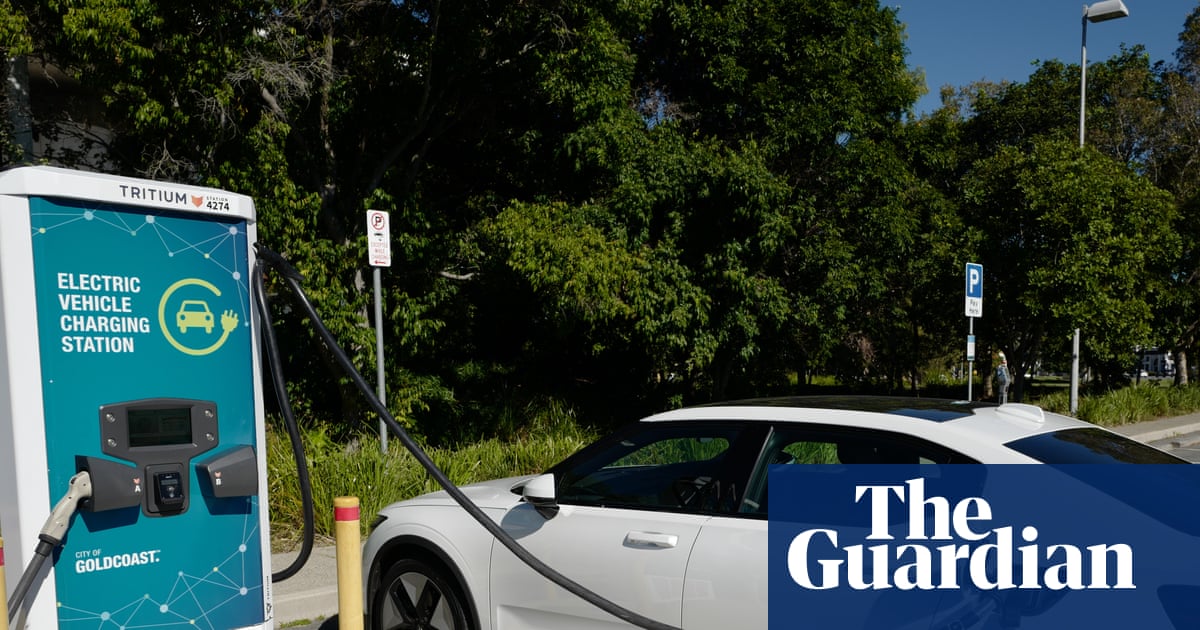
Capping lucrative diesel tax handouts to big business, building new “clean” refineries and targeting electric vehicle subsidies to less wealthy people could save Australians thousands of dollars in fuel per year, according to a major new report calling on the government to reduce reliance on imported fossil fuels.The Grattan Institute, one of the nation’s most respected thinktanks, has warned Australia imports too much of its fuel, and that the country must brace for more global supply shocks – like that from the war in Iran. Under a plan already attracting criticism from business groups, Grattan urged diesel handouts to mining and primary industries be curbed in favour of incentives for electric trucks and a huge expansion of the EV charging network.“Relying on fuel imports during an era of benign international relations and dependable strategic partners was a passable strategy.
But in a more dangerous and unpredictable world, it is no longer tenable,” the report, released on Sunday, warned.“Australia should expect the coming decades to be less stable than the past one. This means bracing, and preparing, for more oil shocks.”Australia imports 97% of its liquid fuel.
Grattan’s fuel plan report, Fuelling the Future, warns this “leaves us dangerously exposed to supply disruptions and price hikes”.It argues that the US-Israel war in Iran has driven up inflation and cost Australians nearly $18bn, and the federal government directly at least $3bn, creating an opportunity the government “should seize” to boost fuel security.Very little liquid fuel is produced or refined in Australia, with only two domestic oil refineries. But rather than boosting that number, Grattan says Australia should lower its reliance on imported fuels and fossil fuels generally by shifting towards EVs, including an ambitious target of 650,000 electric trucks nationwide by 2050.That alone would cut Australia’s diesel use by 5bn litres a year, Grattan forecast.
The report also calls for the fuel tax credit program – which costs Australia billions each year – to be capped at $35m per corporate group annually.The biggest user of that program – which refunds taxes on fuel for machinery and heavy vehicles travelling on private, rather than public, roads – is the mining sector. The fuel tax credit scheme has become a political hot-button issue, with big business campaigning for it to be preserved amid calls for it to be reined in.Tania Constable, CEO of the Minerals Council of Australia, rejected the Grattan proposal.Minerals Council of Australia chief executive, Tania Constable.
Photograph: Mick Tsikas/AAP“Australia does need stronger fuel security, but making diesel more expensive for regional industries won’t create a single extra litre of fuel, build a refinery or improve supply-chain resilience. Instead, it would increase costs for miners, farmers, freight operators and regional businesses, with those costs ultimately flowing through to Australian households,” she said.“If the goal is greater energy security, then Australia should be focused on increasing domestic production, expanding refining capacity and building more resilient supply chains – not making essential fuel more expensive.”But the Grattan report says capping the scheme would save the government $3bn annually, and hasten the electrification of the mining sector – which it said would help the mining sector in the long run.skip past newsletter promotionafter newsletter promotionThe report also recommends the government invest $1.1bn in a national network of chargers for EVs, as well as provide $2.4bn in vouchers for trucking firms to buy electric trucks.
It calls for federal vehicle standards to be boosted to incentivise cleaner cars, as well as a restructuring of EV subsidies “to target people least able to afford them”.Labor is widely expected to restrict current EV subsidies in next month’s mid-year economic update, as the government searches for budget savings.In other areas of fuel use, Grattan notes Australia produces no “clean” jet fuel, and recommends the government direct $6bn to the first generation of so-called “clean refineries” to make that fuel.Grattan says these refineries could provide nearly 10bn litres of clean jet fuel per year by 2050, but notes that it could cost $100bn to build them all, and that importing clean jet fuel would be cheaper.But it argues that $6bn – the savings generated from just two years of capping the fuel tax credits to mining companies – would cover a quarter of the cost of the first five refineries, kickstarting the sector and providing fuel security in future supply shocks.“Historically, making fuel meant making fossil fuels. But in an age of electrification and clean fuels, Australia now has more options,” the report said.