


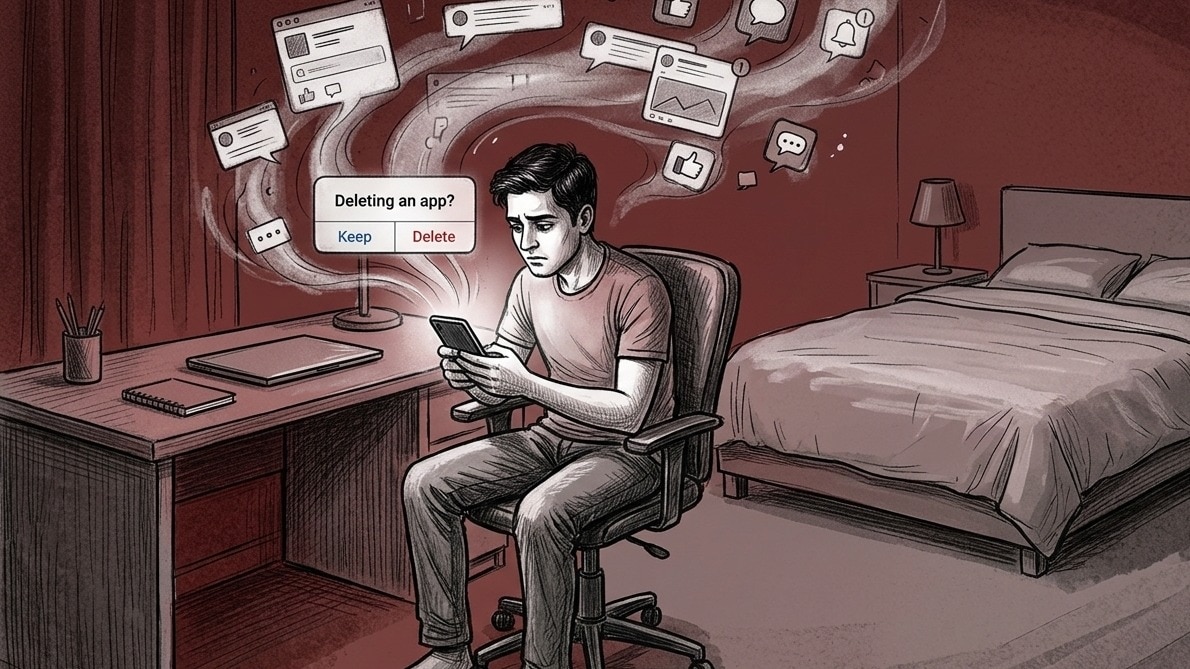
A Goa Institute of Management and IIM Kozhikode study reviewing 97 research papers finds that habits, emotional attachment, switching costs and organisational dependencies make abandoning technology difficult, even when users recognise its limitations or seek alternatives.IIM Kozhikode, GIM study explains why people struggle to quit technology (AI-generated image) Leaving a technology behind is not always as simple as deleting an app or switching to a newer system. Years of habits, emotional attachment, relationships and dependencies built around technology can make discontinuing its use surprisingly difficult, a new study by the Goa Institute of Management (GIM) and the Indian Institute of Management (IIM), Kozhikode, has found.Published in Information Systems Frontiers, the research reviews and synthesises 97 studies examining why individuals and organisations stop using technology.
The studies cover social media platforms, utility applications and organisational information systems.Smit Ghelani, Senior Lecturer at GIM, said people often focus on what technology helps them achieve but pay less attention to the habits and dependencies they develop through continued use."Over time, habits, relationships, routines and dependencies become part of our relationship with that technology," Ghelani told PTI. These connections can make it difficult to abandon a technology even when users recognise its limitations.
The same challenge applies to organisations looking to replace or retire systems that have supported their operations for years.FOUR FACTORS DETERMINE WHY PEOPLE QUIT TECHNOLOGYThe study found that technology discontinuance is rarely triggered by a single factor. Instead, it depends on the alignment of four interconnected elements: People, Technology, Task and Structure.
People: Expectations, emotions, habits and individual preferences that influence technology use.Technology: Performance, design, usability and technological obsolescence.Task: The purpose a particular technology or system serves.Structure: Financial costs, social pressure and organisational norms that influence continued use.According to the researchers, people tend to continue using technology when these four elements remain aligned. However, when that balance begins to change, pressure to discontinue its use starts building.The research also highlights why people and organisations sometimes remain dependent on systems they are dissatisfied with.
Habit, emotional attachment, switching costs and deep technical integration can make moving away from an existing technology difficult.SOCIAL MEDIA FATIGUE CAN PUSH USERS TO QUIT APPSThe study also examines how excessive digital engagement can influence people's decisions to abandon technology.Ghelani said relentless scrolling, constant notifications, and personalised recommendations on social media platforms can create information overload and fatigue.This can leave users feeling that they have lost control over their digital experiences, eventually pushing them towards permanently quitting a platform or application.However, the decision to leave is not always straightforward. Users may repeatedly uninstall and reinstall applications, reflecting the complicated relationship they develop with technology over time.WHY REPLACING OLD TECHNOLOGY IS DIFFICULT FOR COMPANIESReplacing older systems can be challenging for organisations because of hidden dependencies such as employee habits, established workflows and existing governance structures.
Even when better alternatives are available, these factors can make moving to a new system difficult.Such dependencies can increase replacement costs, disrupt routine operations and create frustration among employees. This makes it important for organisations to assess the systems and workflows built around existing technology before deciding to discontinue it.(With PTI inputs)- Ends