


IT HAS BEEN a bruising campaign for Republicans, who have faced an unpopular, omnipresent Donald Trump and voters furious over his policies. Having promised to lower Americans’ prices, the president has started a war and imposed tariffs that have raised them.
Attempts to gerrymander a victory in the House of Representatives look set to have failed—our forecast model gives Democrats a 94% chance of flipping the lower chamber. Republicans have been forced to defend Senate seats in former strongholds, with ad spending on these midterms expected to set a new record and surpass even the presidential election of 2024.Democratic nominee for U.S.
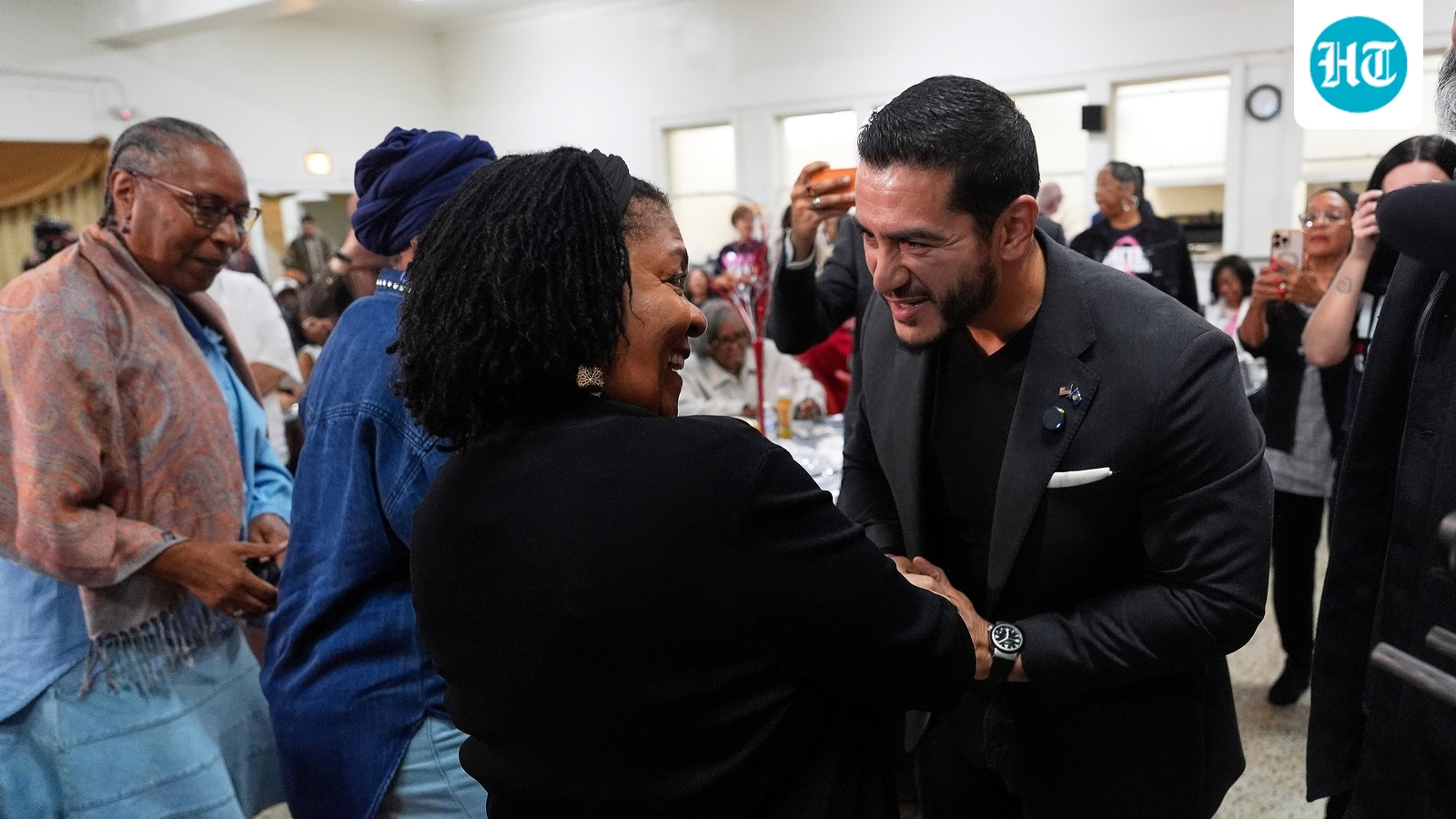
Senate Abdul El-Sayed greets supporters during a campaign event Wednesday, October 14. (AP Photo/Paul Sancya)But, as Americans head to the polls, Republicans are enjoying a good news cycle for the first time in months. In Michigan Haley Stevens, a pro-Israel Democrat who narrowly lost the party’s Senate primary to the more progressive Abdul El-Sayed (pictured), has issued a last-minute endorsement of Mike Rogers, the Republican candidate.
In Alaska’s Senate race, Mary Peltola, the Democratic nominee, is being shaken by a report in the New York Times that her campaign recruited a candidate with the same name as her Republican opponent, to deplete his votes. Will these fights matter?Both stories broke too late for polling averages to detect any impact from them.
Prediction markets have shrugged off the news, even as legal skirmishes over Ms Peltola’s campaign look set to drag on for weeks. On Kalshi Ms Peltola has the same 72% chance of victory she had on the eve of the Times piece, while Dr El-Sayed’s probability of victory rose to 78% by mid-afternoon on November 2nd.
The latter number reflects traders’ reaction to the final batch of surveys from the New York Times/Siena University partnership, America’s most prominent pollster. They were published on November 1st and imply not just a blue wave but a tsunami: Dr El-Sayed led by 11 percentage points, while Democrats in the other Senate battlegrounds were up by anywhere from one to seven points.The markets now have Democrats as 75% favourites to win the Senate.
Nate Silver, America’s most prominent quantitative election forecaster, gives Democrats an 82% chance. But The Economist’s own prediction model is more cautious, putting the probability of a Senate flip at just 53%.
The main source of this disagreement remains that our model predicts, based on history, that polls across the country will overestimate Democrats’ margin by about a point. That mismatch is more pronounced in states that usually vote for Republicans—which this year includes states crucial to Democrats’ hope of Senate control, such as Texas, Alaska, Iowa, Kansas and Ohio.Our model is roughly in line with the markets in light-blue and purple states, and much more sceptical of Democrats’ ability to burrow deep into Republican terrain.
Our estimates of the party’s win probability in the core red battleground states—Alaska, Iowa, Kansas, Ohio and Texas—are all around 20 percentage points lower than Kalshi’s prices, which corresponds to about 2.5 points of margin. In Ohio polls show a shrinking lead for Sherrod Brown, the Democrat, over the Republican incumbent, Jon Husted.Even so, our model favours Democrats in enough states—including Maine, Michigan and North Carolina—to win 49 Senate seats.
It gives them even odds in three more—Alaska, Ohio and Texas—that could be the 50th and majority-making 51st.That is testament to the repellent qualities of both Mr Trump and many of his anointed candidates, such as Ken Paxton in Texas and Roger Marshall in Kansas. States where a Democratic victory is unlikely, but far from impossible, now include South Carolina, which Mr Trump won by 18 points two years ago.
Lindsey Graham, who represented South Carolina in the Senate for more than 20 years, died in July and was replaced by his sister Darline, a political novice. Last week the New York Times/Siena polling team found the race to be tied.So, in the final days of the campaign, the parties have been making their last appeal to voters.
Mr Trump’s closing argument does not follow the usual tropes of the form; rather than offer a coherent defence of his record, themes include spurious claims that Dr El-Sayed is a jihadist, boasts about new pipes in the capital’s reflecting pool and adulation for Mr Husted’s posterior. The Trump show may help some candidates to turn out the base, but poses a problem in purple states.Democrats have a simpler message: that Mr Trump cares more about boosting his own fortune than about helping ordinary Americans. “We have an affordability crisis because we have a corruption crisis,” declared James Talarico at a rally in Houston on Saturday.
Mr Talarico is trying to become the first Democratic senator from Texas in more than three decades. Our model gives him a 52% chance of succeeding.
That the race is so close illustrates the opportunity created by Mr Trump’s unpopularity—and Democrats’ challenge of converting that into victory.