


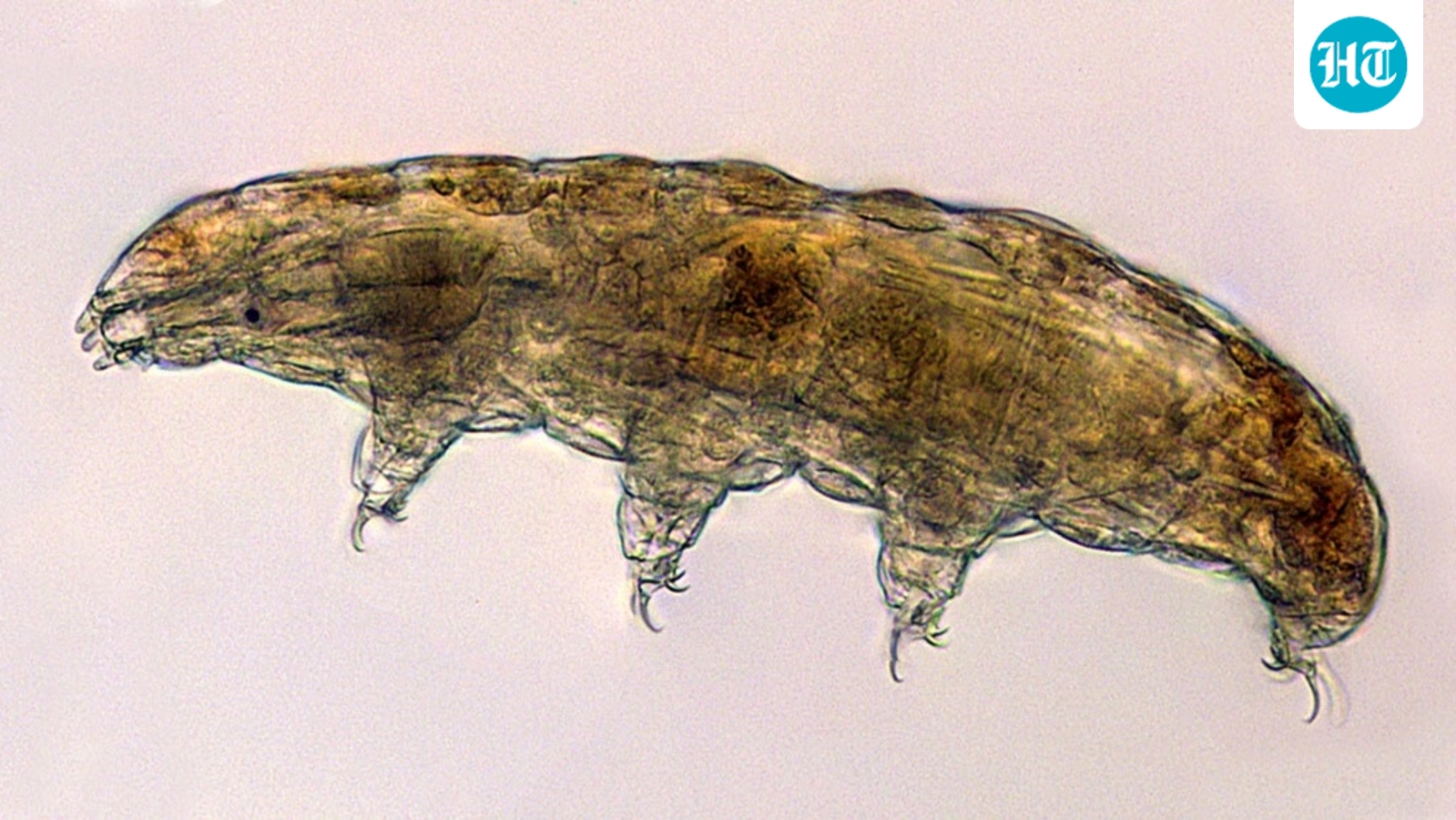
Tardigrades, whose name means “slow walkers” and which are also called “water bears” owing to their appearance under a microscope, are small invertebrate animals famous for their ability to withstand various forms of stress, including desiccation and freezing. The tardigrades were transported to the International Space Station by SpaceX’s 22nd commercial resupply mission on June 3, 2021.A preflight light micrograph of a typical terrestrial tardigrade of the Milnesium genus seen at 40X magnification. (NASA/ Boothby Lab)NASA’s mission report described this experiment as one of a series of scientific investigations carried out in the orbiting laboratory.
Known as Cell Science-04, the study examined how tardigrades respond to stress factors in outer space, as well as changes in genetic activity across several generations.Why did NASA use microscopic water bears?This experiment aimed to answer a broader question: How do organisms react when changes in their habitat affect their cells? It is not easy to replicate these conditions in laboratories on Earth.
By using a small organism that has already demonstrated its resistance to stress, scientists can study the mechanisms behind that resilience.Deep DiveNASA’s Cell Science-04 research overview identifies the experiment’s central objectives as characterizing short-term and multigenerational survival and identifying genes involved in adaptation to stressful environments. The investigation used Hypsibius exemplaris, a tardigrade species suited to laboratory research.
Scientists planned to examine how its gene expression changed after exposure to spaceflight conditions and compare those changes with results from control samples maintained on Earth.Gene expression is the process by which cells use information encoded in genes to make molecules necessary for their activities. Variations in gene expression can provide information about an organism’s response to stress.
Researchers also planned to apply RNA interference, a process used to inhibit specific genes, to determine whether candidate genes played a role in the tardigrades’ stress tolerance.Researchers compared the animals’ initial reactions with those observed after extended periods in space. In a NASA podcast interview, principal investigator Thomas Boothby explained that the team intended to study the first generation after about a week and another generation that had been maintained in space for roughly two months, representing approximately four generations.Researchers sent Hypsibius exemplaris tardigrades to the International Space Station to examine short-term responses and genetic activity over several generations. (NASA/Boothby Lab)What can scientists learn from the experiment?An organism’s immediate response to spaceflight may differ from changes that develop over time.
Studying successive generations allows scientists to investigate these differences. However, changes observed across generations do not, by themselves, prove that a trait is hereditary or that later generations adapt better.NASA also explained the potential relevance of this research to astronaut health in its article on microscopic organisms and spaceflight.
Studying how tardigrades protect themselves from harsh conditions could help researchers identify biological mechanisms worth investigating for the protection of astronauts during extended space missions. The research, however, did not establish that these mechanisms could directly protect humans.The potential applications remain research objectives, not proven medical benefits.
Tardigrades and humans differ substantially in their biology, so a mechanism that helps a microscopic animal cope with stress cannot automatically be applied to astronauts. Researchers would need to establish which processes matter, determine whether similar mechanisms operate in humans, and test any proposed protective measures.For NASA, the experiment formed part of a broader effort to understand how space conditions affect living systems at the cellular and molecular levels.
That knowledge could inform future research as space agencies plan missions that keep crews away from Earth for longer periods. Understanding biological responses to microgravity and other spaceflight stresses is one step toward identifying risks and investigating ways to reduce them.The tardigrades taken to the space station were not simply organisms accompanying a cargo delivery.
They allowed scientists to study changes in gene expression in response to the stresses of spaceflight and examine how those responses might differ across generations. Cell Science-04 was designed to improve understanding of tardigrades’ biological processes in space.
Whether the findings can eventually help researchers develop ways to protect astronauts remains an open question.The Hindustan Times US Desk brings you the latest news and developments from across the United States. The team covers everything from breaking news and politics to sports, business, entertainment and stories that are trending across the country.
Our coverage includes the White House, Congress, US elections, immigration and visa updates, H-1B, green cards, Social Security, education, jobs, layoffs, the economy, technology and major policy changes. We also closely follow stories that matter to Indian and South Asian communities in the US.
The desk covers major US sports, including the NFL, NBA, MLB and NHL, along with player news, injuries, schedules, results and major events. Entertainment coverage includes Hollywood, celebrities, television, streaming, music and pop culture.
We also report on breaking developments, major incidents, weather, public safety, court cases and other stories making headlines across the country. When a major policy or news development affects people's everyday lives, the team works to explain what happened, what it means and what readers need to know.
Alongside breaking news, the US Desk produces explainers and practical stories on topics such as immigration, Social Security, taxes, education, employment and government programmes. The team also works on science, tech, business and AI stories analyzing the impact they may have on people.
The team follows developments throughout the day, keeping an eye on official announcements, public records, reliable news sources and what people are talking about across the US.Read MoreInternational Space StationSpacexUs Local NewsGet the latest World News, breaking headlines and global updates from the US, UK, Pakistan, Bangladesh, Russia and other countries. Follow major international events on Hindustan Times.