


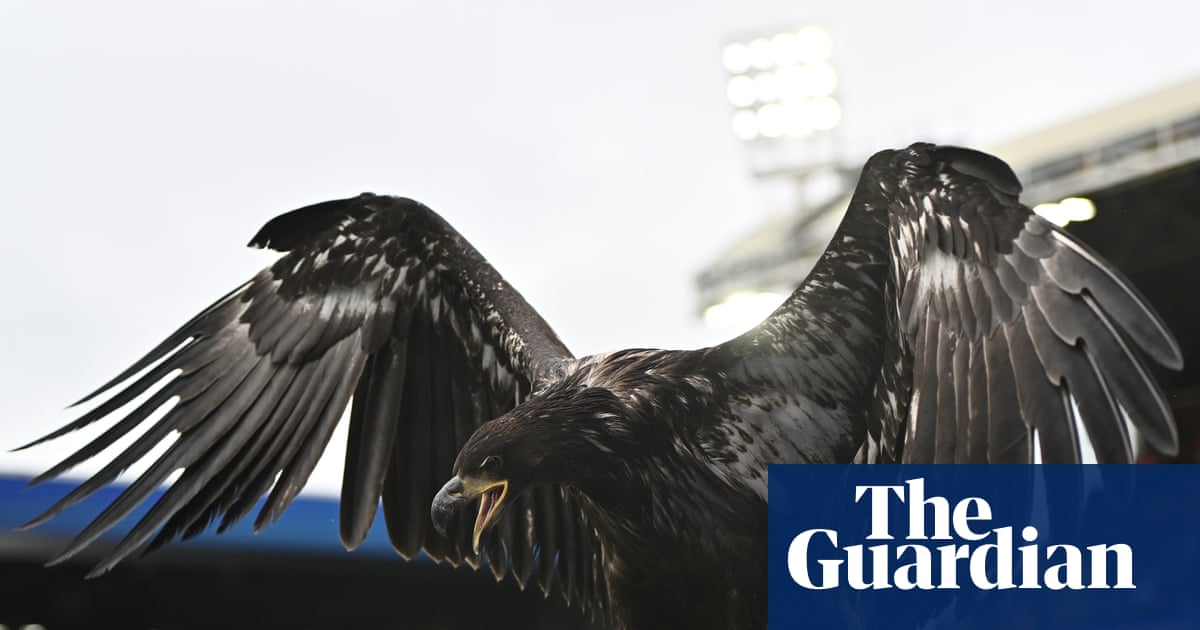
A prominent animal rights organisation has appealed to Crystal Palace to permanently retire their American bald eagle mascot, warning that the intense matchday environment can leave the bird terrified, confused, and distressed while creating potential hazards for attendees. In a formal communication sent to the club's chief executive, Sharon Lacey, People for the Ethical Treatment of Animals requested an immediate halt to appearances by the bird named Phoenix and a firm commitment to abandon the use of live animal mascots entirely.
Crystal Palace adopted the Eagles moniker in 1973 under manager Malcolm Allison, replacing their former nickname, the Glaziers. The tradition of a pre-match eagle display began in 2010 with Kayla, who served for ten years before passing away in 2020. Phoenix, a successor sourced from the Eagle Heights Wildlife Foundation in Kent, made her introductory appearance before a home fixture against West Ham in August 2024 at just four months of age, engaging with fans in the fanzone and appearing with her handler at half-time.
Although Phoenix was described by her caretakers as carefully prepared for the role upon hatching, she has not made subsequent appearances at Selhurst Park. Initial plans for her to perform a traditional pre-match flight across the pitch, a hallmark of Kayla's tenure, were shelved during the current season.
Peta's communication contends that packed stadiums characterised by intense illumination, booming sound systems, and rowdy supporters are entirely unsuitable environments for wildlife, posing dangers to both the animals and the crowd. The organisation highlighted historical incidents involving captive birds of prey in stadium settings, including collisions with physical structures and an event where a falcon embedded its talons into a supporter's scalp. They also recalled a 2015 occurrence involving Kayla, during which a visiting fan attempted to strike the bird amidst crowd disturbances at a League Cup fixture.
Dr Carys Bennett, a senior corporate projects manager at Peta, noted that bald eagles represent liberty, yet Phoenix is treated primarily as a form of entertainment for spectators. Pointing out that the club already employs a human mascot to motivate the crowd, Peta stressed that bringing a wild animal into a chaotic stadium is unnecessary and urged the organisation to leave Phoenix out of future matchday operations.
Crystal Palace did not provide a response to the initial correspondence or a subsequent inquiry, and representatives at Eagle Heights did not reply to questions regarding the animal's welfare. Peta's letter further emphasised that an eagle's natural inclinations, which include ranging over extensive territories and steering clear of close human interaction, clash sharply with the confines of a football ground. Even captive-bred birds maintain their innate behaviours, making them susceptible to frustration and anxiety when confined in such settings. Similar traditions exist elsewhere in European football, notably at Benfica, where a bald eagle named Águia Vitória performs before home matches at the Estádio da Luz.