


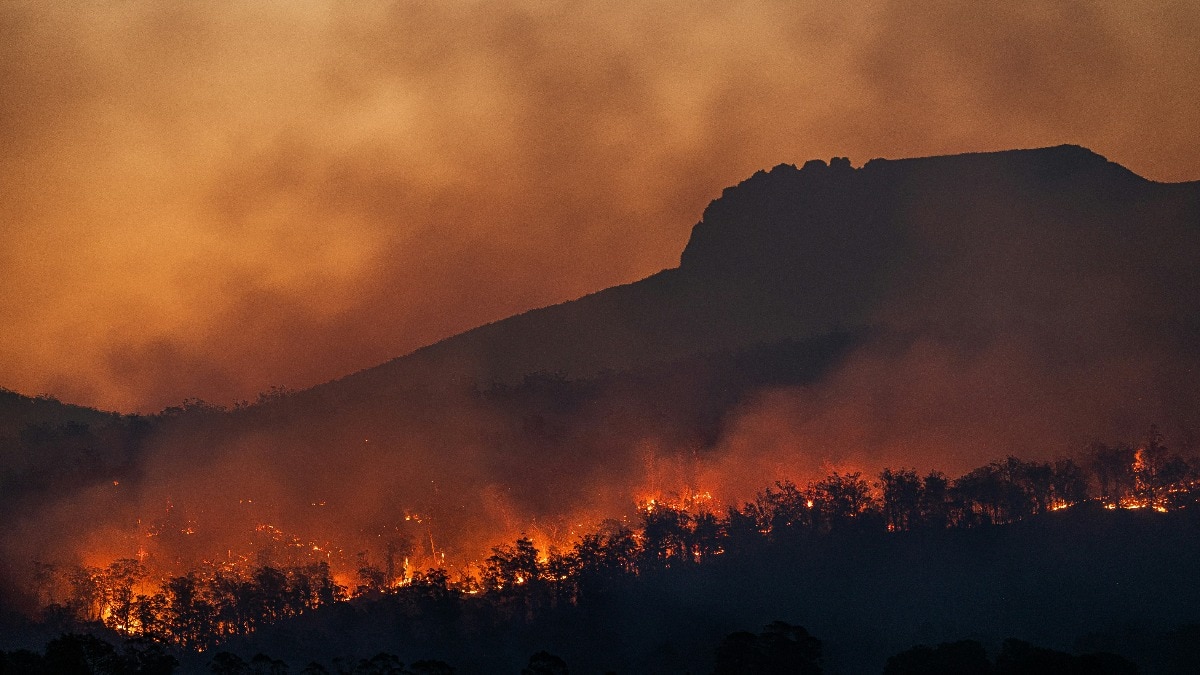
The UN warns that crossing 1.5°C of global warming is now unavoidable. The last glimmer of hope is radical emission cuts, which could still limit the overshoot and bring temperatures back down.A wildfire burns through a forest in Tasmania, Australia.
The world is running out of time to avoid crossing a critical climate threshold, with years of inadequate action to cut greenhouse gas emissions making it impossible to prevent global warming from temporarily exceeding 1.5°C, a new United Nations report has warned.The United Nations Environment Programme (UNEP), in its Emissions Gap Report 2026, warns that even if countries fulfil their existing climate pledges, global temperatures could rise by around 2.6°C by 2100. A coal power plant is pictured as it spews smoke into the atmosphere.
If current policies continue, warming could reach 2.8°C, increasing the risks of destructive heatwaves, floods, rising seas and damage to ecosystems.The warning does not mean that the Paris Agreement has failed entirely, but its central ambition of limiting warming to 1.5°C without exceeding that level is now out of reach. The challenge, now, is to keep the overshoot as small and short as possible, then bring temperatures back down.
Ice melts at the Skuta glacier near Kamnik, Slovenia. WHY IS THE 1.5°C THRESHOLD A BIG DEAL?Adopted in 2015, the Paris Agreement commits countries to keeping global warming well below 2°C above pre-industrial levels, while pursuing efforts to limit the rise to 1.5°C.
That half-degree may as well be the difference between a normal and an entirely abnormal period for our planet.Every additional fraction of warming increases the risks to human health, food and water supplies, coastal communities and wildlife. Higher temperatures also raise the chances of triggering irreversible changes in Earth's climate system.The 1.5°C threshold refers to the long-term global average temperature rise, not a single unusually hot year.Crossing it does not mean all climate action becomes futile, but the longer temperatures remain above it, the greater the damage and the harder recovery becomes.
A woman covers her face while walking along a road amid a heatwave in Prayagraj. CAN THE WORLD STILL LIMIT THE DAMAGE?UNEP has said that the world can still reduce the scale of the overshoot, but the required cuts are far steeper than current promises.To follow its most ambitious pathway, global greenhouse gas emissions must fall 18% by 2030, 45% by 2035 and 69% by 2040, compared with 2025 levels.For context, existing national climate pledges, which are the goals countries have promised to meet, would deliver only a fraction of these reductions.The report's best-case scenario sees warming peak at around 1.7-1.8°C before temperatures potentially return to 1.5°C by 2100.
Climate activists carry placards during a protest against fossil fuel giants. Even this outcome is uncertain and would require removing large amounts of carbon dioxide from the atmosphere, alongside deep and sustained emissions cuts.The consequences of delay are serious.Every year of inadequate action raises the likelihood of more severe climate impacts and makes returning to safer temperature levels harder.Crossing 1.5°C may now be unavoidable, but the extent of the damage is not predetermined.
What governments do this decade will help decide how unlivable the planet gets and how long it stays that way.- Ends