


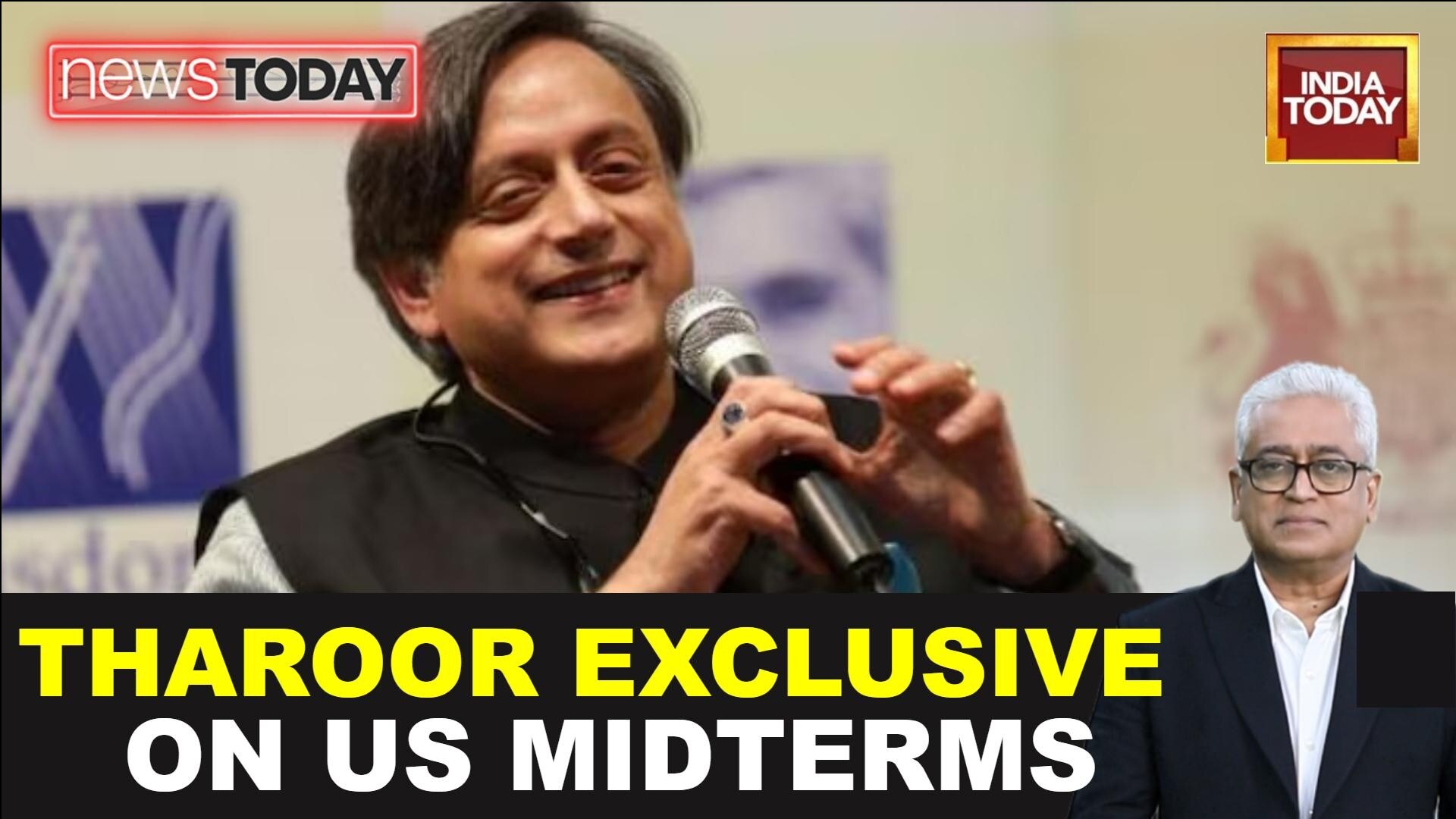
UPDATED: Nov 4, 2026 23:03 ISTIn an interview with Rajdeep Sardesai, Congress MP and Chairperson of the Parliamentary Standing Committee on External Affairs Dr. Shashi Tharoor evaluated the United States midterm election results, calling the verdict 'an extraordinary repudiation of President Trump and the party that has been remade in his name.' Tharoor noted that while the Democratic resurgence marks historic wins across battlegrounds, US foreign policy leeway means minimal immediate disruption to bilateral India-US engagements or ongoing trade negotiations.
However, he cautioned that issues surrounding potential Graham Act sanctions, competitive trade terms, and Washington's ties with Pakistan remain key factors. Connecting the political outcome to India, Tharoor argued that domestic anti-incumbency is driven by inflation, rising living costs, graduate unemployment, and voter roll controversies, urging the Indian opposition to question whether citizens are better off under current governance.
Read MoreVIDEOS FROM OTHER SECTIONSLATEST VIDEOSRajdeep's Take: Democrats' Historic US Midterm Sweep Is A Stunning Rebuke To Donald Trump 2.0The American electorate has delivered a decisive rebuke to Donald Trump's second term, handing historic victories to the Democrats. The outcome reflects growing discontent with geopolitical grandstanding, tariff wars, escalating confrontation with Iran, and the rising cost of living, while high-level corruption allegations deepened the disconnect between presidential promises and performance.
In a significant political shift, Democrats broke decades of Republican dominance in Texas, where James Talarico won a US Senate seat and Gina Hinojosa was elected the state's first Hispanic governor. Additionally, Abdul El-Sayed made history as the first Muslim American elected to the US Senate.US Midterm Verdict: Has Trump Lost His Political Grip?
Economy, Iran War & America's Future DebatedIn this debate, anchor Rajdeep Sardesai discusses the fallout of the US election results, where Democrats scored a decisive double flip of both the House and the Senate. Ravi Agrawal, Editor-in-Chief of Foreign Policy, analyses the political earthquake, calling the outcome a repudiation of Donald Trump's administration and the deeply unpopular war in Iran.
Agrawal argues that voters felt a profound sense of betrayal over foreign conflict and rising domestic fuel prices. Joined by American historian Allan Lichtman and The Economist foreign correspondent Shashank Joshi, the panel unpacks the key drivers of the Republican defeat, including inflation, corruption, and military strain.
Agrawal notes that while major shifts in India-US ties are unlikely, India may gain leverage in trade talks. He emphasizes that Trump is now entering a constrained 'lame duck phase' amid diminished US military power and an emboldened Congress.US Midterms: Democrats Flip Texas & Kansas, Make History As Trump Faces A New Political ChallengeDemocrats have secured major victories across the United States, breaching traditional Republican strongholds and flipping control of both the Senate and the House of Representatives.
In Texas, James Talarico won a Senate seat for the Democrats for the first time since 1994, while Adam Hamilton captured a Kansas Senate seat, marking the party's first victory there since 1932. In Michigan, Abdul El-Sayed won to become the first Muslim elected to the US Senate.
Key election issues cited include the rising cost of living and the West Asia war. In response, President Donald Trump shifted from initial defiance to acknowledging the outcome, expressing willingness to work with Democrats as his agenda faces new congressional resistance.US Midterm Results: Democrats Sweep House & Senate, Trump Loses Control Of Congress In Shock VerdictThe US midterm elections have delivered a dramatic verdict as the Democrats routed Donald Trump and his Republicans to take control of both the House of Representatives and the Senate.
Key Republican strongholds including Texas witnessed significant upsets, with the Senate and gubernatorial seats flipping away from the GOP, alongside key Democratic gains in states like Kansas. Driven largely by voter pushback against administration policies concerning inflation, rising diesel costs, the economy, and the war in Iran, the scale of the victory has reshaped the American political landscape, potentially placing the Senate out of reach for Republicans until 2032 and setting up new battlegrounds for 2028.