


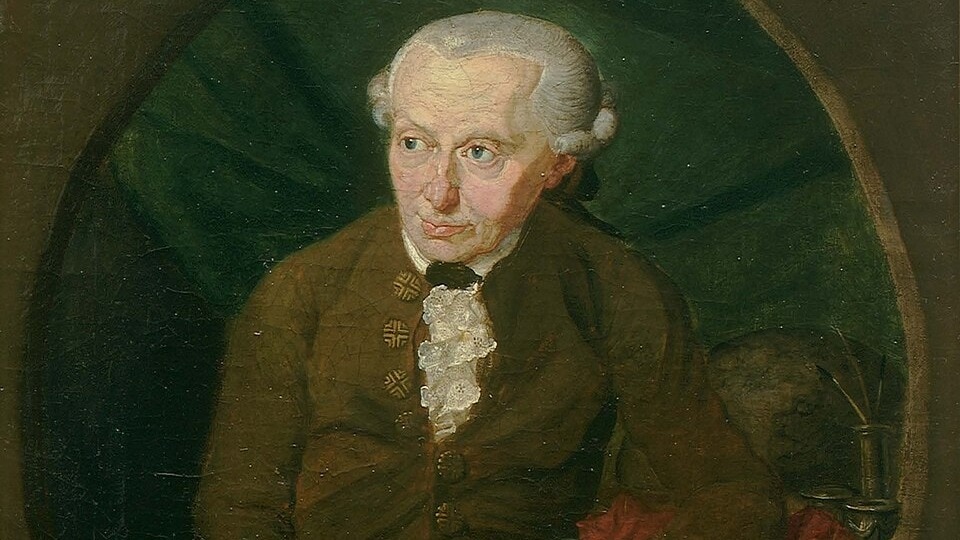
German philosopher Immanuel Kant argued that thinking alone is not enough to produce knowledge. His famous words explain why ideas need real experience and why what we observe must be understood through concepts.German philosopher Immanuel Kant argued that thinking alone is not enough to produce knowledge. “Thoughts without content are empty, intuitions without concepts are blind.”This is the original, widely recognised wording of the quote by Immanuel Kant, rather than “Thoughts without content are empty, intuitions without concepts are blind” being a modern motivational saying.It appears in his philosophical work Critique of Pure Reason, first published in 1781 and revised in 1787.
The passage is found at A51/B75 in the standard A/B pagination used by Kant scholars.THE PHILOSOPHER WHO QUESTIONED KNOWLEDGEBorn on April 22, 1724, in Konigsberg, then part of Prussia, Kant became one of the most influential thinkers in Western philosophy. His work explored how human beings acquire knowledge, how reason operates and what people can understand about the world.
His Critique of Pure Reason examined the relationship between experience and the mind's ability to make sense of it. Rather than treating knowledge as something that comes entirely from observation or thought alone, Kant argued that both are necessary.WHAT DOES THE QUOTE MEAN?The quote explains two connected ideas. “Thoughts without content are empty” means that concepts and ideas cannot give us knowledge of the world unless they connect with something that can be experienced.
Meanwhile, “intuitions without concepts are blind” means that simply receiving sensory information is not enough. We also need concepts to organise and understand what we see, hear or experience.For example, seeing an unfamiliar object gives us sensory information.
Identifying it as a particular object and understanding its features requires thought and concepts. For Kant, meaningful knowledge emerges when these two abilities work together.MORE QUOTES FROM IMMANUEL KANTHave the courage to use your own understanding!Act only according to that maxim whereby you can at the same time will that it should become a universal law.Enlightenment is man's emergence from his self-imposed immaturity.Kant's philosophy continues to raise a fundamental question about knowledge: how do we move from simply experiencing the world to genuinely understanding it?- Ends