


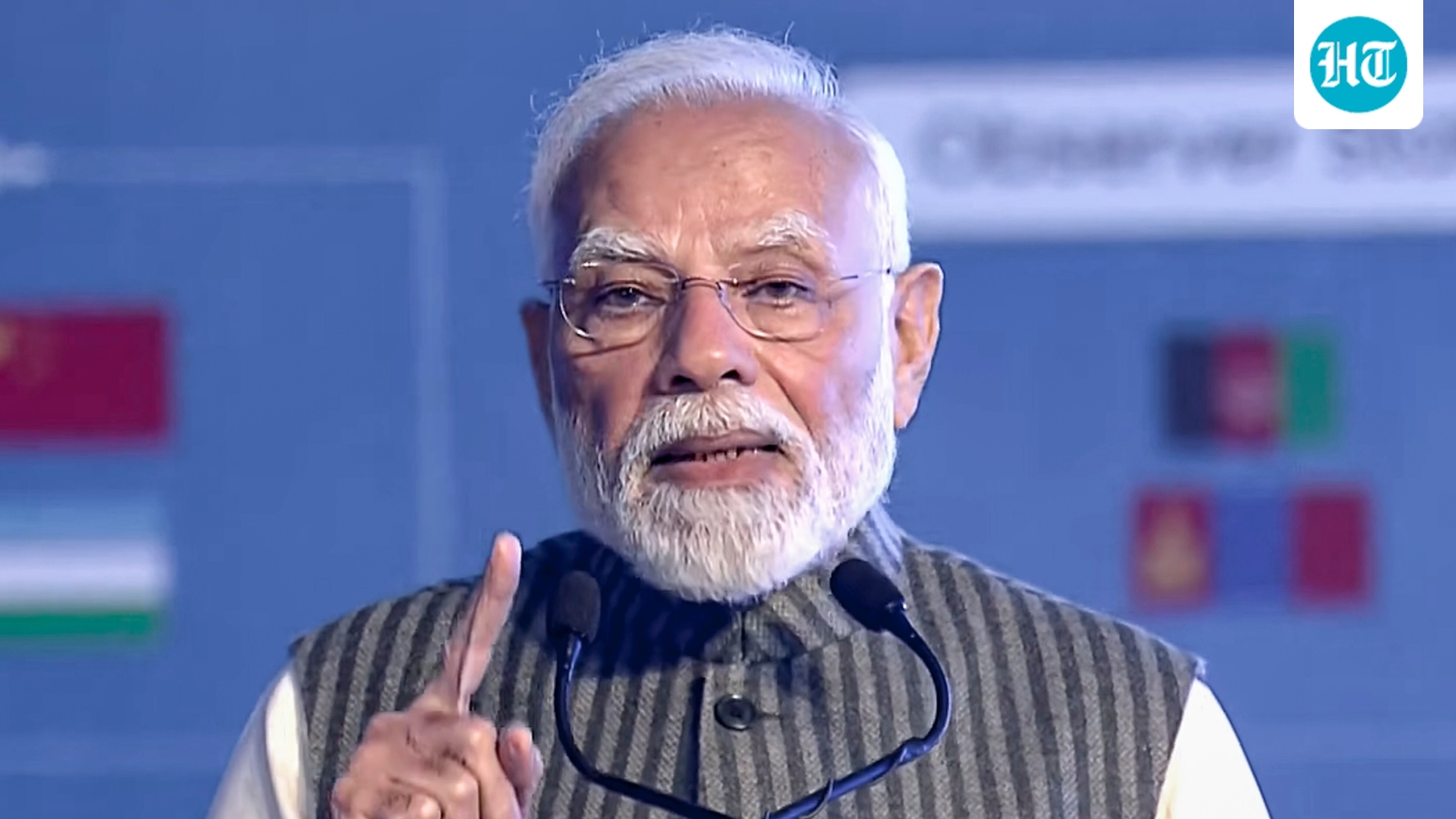
Cultural connections are the strongest guarantee of global peace, Prime Minister Narendra Modi said on Friday as he opened a Shanghai Cooperation Organisation (SCO) meeting in Delhi in the presence of leaders from 10 member countries, including Pakistan.PM Modi at Purana Qila for the first SCO Civilisation Dialogue. (PTI)Pakistan climate change minister Musadik Masood Malik – who is leading the country’s delegation at the first SCO Civilisations Dialogue Forum – is the first Pakistani leader to visit India in more than three years. He is also the first Pakistani minister to travel to India since the four-day conflict between the two sides in May 2025.
India targeted terrorist bases in retaliation for the Pahalgam terror attack, triggering the conflict.Speaking at the Purana Qila, Modi said that empires had changed the map of the world but civilisational dialogues had changed the way the world thinks, and that is why the SCO civilisational summit was not merely a ceremonial platform but a forum for giving the world direction.Deep Dive“At a time when discussions about war and unrest dominate the world, we in India are engaging in initiatives on civilisational dialogue and connectivity. This is also important because cultural connections are the strongest guarantee of global peace.
This makes this event all the more significant,” he said.Also Read |Culture play key role in fostering dialogue: Pakistan minister MalikThe Congress hit out at the government, saying it should be ashamed to invite a Pakistani minister but the Bharatiya Janata Party rejected the allegations.Malik dodged direct questions regarding cross-borde terrorism and Pakistan’s failure to take action against terror networks, even as he acknowledged the terror attacks suffered by India.“The issues we face are not limited solely to those between our two nations; they have become far broader and more extensive. As you have seen, challenges have emerged in our neighbourhood— in Iran, in central Asia, and in Afghanistan.
I do not wish to reduce such a significant, wide-ranging dialogue to a purely bilateral context,” Malik said.The minister admitted that India experienced numerous terror incidents but said Pakistan was as a victim.Also Read | ‘Umeed hai aana jaana rahega’: Pakistan minister after attending SCO meet in Delhi“Both sides must bring forward evidence. Our objective is to establish a transparent mechanism—a proposal we have put forward on several occasions.
Such a mechanism would help restore trust and could lead to viable solutions. Often, the necessary evidence is never presented,” Malik said.“We have suffered a great deal in the context of terrorism.
You, too, have experienced many such incidents,” he said, and pushed for generic regional discussions. Malik, a member of the ruling PML-N party, was among the Pakistani leaders who reacted strongly to India’s decision to suspend the Indus Waters Treaty as part of a package of punitive diplomatic and economic measures.The Congress hit out at the BJP, saying the government should be “ashamed” to invite a person who has “repeatedly” threatened India. “Threatened to cut off hands, threatened to shed blood.
Pakistan is not stopping its promotion of terrorism in our country and the Modi government is busy feeding them biryani and kheer,” Congress leader Supriya Shrinate said on XBJP leader Nalin Kohli rejected the charges. “India did not extend any special invitation to Pakistan. Our bilateral relations remain exactly as they were.
There can be no dialogue as long as terrorism is directed against us. This is a multilateral forum,” he said.Pakistan is the chair of the SCO Council of Heads of State for 2026-27.India is hosting the three-day multilateral event from November 20 to 22, bringing together participants from SCO member states, observers and dialogue partners to explore the region’s shared civilisational heritage and strengthen cultural cooperation.Also Read | Culture has key role in fostering dialogue, says Pak minister attending SCO forum in IndiaIn his speech, Modi said the 21st-century technology had created new possibilities for cultural connectivity around the world. “Digital platforms have made knowledge sharing, cultural exchange and international collaboration easier than ever before.
SCO countries should take full advantage of these new possibilities,” he said.Modi said the museums, libraries and archives in the nations safeguarded a priceless heritage spanning thousands of years. Ancient manuscripts, rare texts, historical documents and artworks revealed many facets of the interconnectedness, he added.“Today, technology offers tremendous opportunities to bring this heritage to the next generation,” he said.