


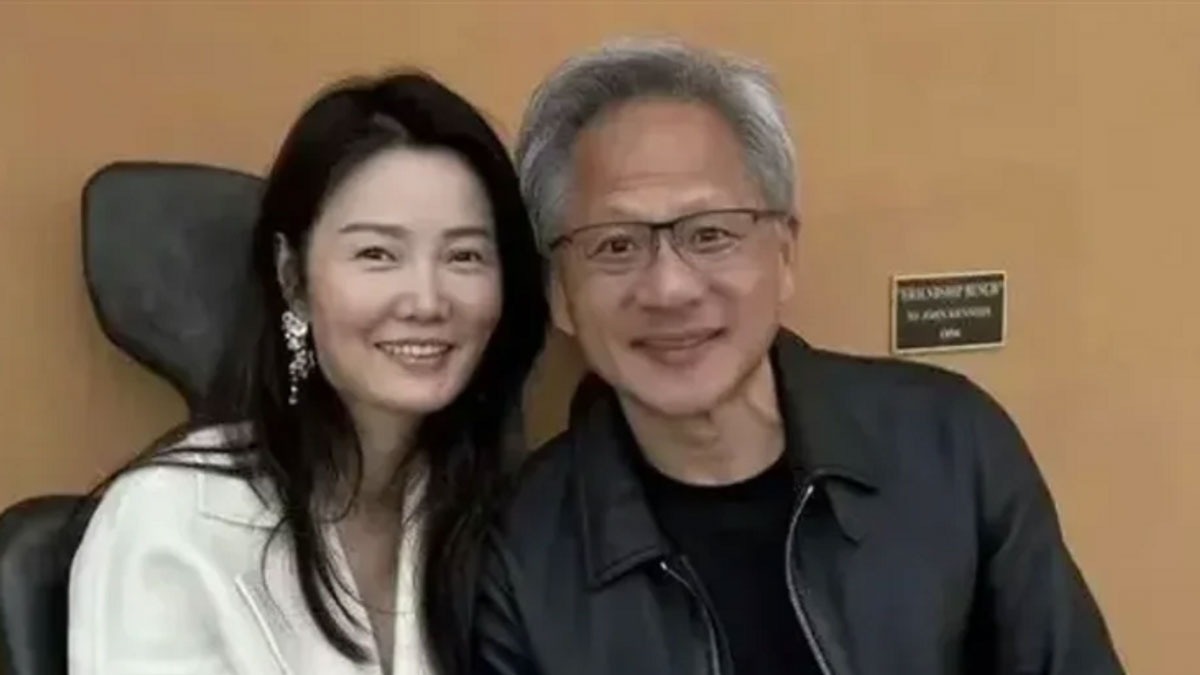
The battle for control over artificial intelligence (AI) is no longer confined to semiconductor factories, research laboratories or government technology programmes. It is increasingly being fought through corporate relationships, international business networks, financial intermediaries and, potentially, personal connections.The controversy surrounding former Nvidia CEO Jensen Huang and Chinese businesswoman Alice Huang offers a glimpse into this less visible side of the global technology rivalry.
More importantly, it raises questions that India cannot afford to ignore as it tries to establish itself as a major semiconductor and AI power.Meanwhile, in a parallel development, India has joined the US and eight other partner nations in signing the San Francisco Declaration under the Pax Silica initiative to safeguard critical AI supply chains—from raw materials to energy networks—against economic coercion and market-distorting practices amidst intensifying rivalry with China.Building on its entry into the US-led pact in February 2026, India brings a deep talent pool, critical mineral refining capacity, AI infrastructure investments and a commitment to trusted technologies to treat AI systems as shared national security assets. US intelligence agencies reportedly believe that Alice Huang, also known as Huang Le, was linked to Chinese intelligence and sought information about Jensen Huang and his business environment.
Her reported association with Singapore-based Megaspeed International, which has come under scrutiny over the possible diversion of restricted Nvidia AI processors to Chinese customers, has added to the concerns. Taiwan's disclosure that she visited the island eight times during 2024 and 2025 has brought another sensitive dimension to the case.These developments do not establish that Nvidia's confidential information reached Beijing or that Taiwan was used for espionage.
Jensen Huang has not been accused of knowingly assisting a foreign intelligence agency. Nvidia has said it has no reason to believe that its secrets or American national security were compromised.
Nevertheless, the allegations expose a vulnerability that goes beyond one company or executive: how easily can foreign intelligence agencies exploit the international networks surrounding strategically important technology businesses?Experts pointed out that for India, the question is particularly relevant. New Delhi is investing heavily in semiconductor manufacturing, AI, advanced electronics and digital infrastructure.
As these capabilities grow, so will the need to protect them from economic espionage, technology leakage and foreign intelligence collection.On November 12, Taiwan's Mainland Affairs Council disclosed that Alice Huang had visited the island eight times in 2024-25. She reportedly made three visits in 2024 and five in 2025, travelling on a Hong Kong passport under standard business visitor arrangements.
Taiwanese officials acknowledged that immigration authorities had received no special warning about her at the time. Security agencies are now examining the circumstances surrounding those visits.Frequent travel between Hong Kong, Taiwan, Singapore and mainland China is not unusual for businesspeople.
The visits, by themselves, are certainly not evidence of espionage. What has made them significant is the reported intelligence connection surrounding Alice Huang.
Taiwan's importance makes the issue particularly sensitive. The island sits at the heart of the global semiconductor industry, with advanced manufacturing capabilities essential to the production of chips used in AI systems, defence equipment, data centres and other critical technologies.
China wants greater access to advanced semiconductor capabilities while the US considers protecting its technological advantage a major national security priority.Several observers believe India has a direct interest in this competition. As New Delhi attempts to build domestic semiconductor manufacturing and attract international technology companies, protecting industrial information, research capabilities, personnel and supply chains will become just as important as attracting investment.The controversy gained international attention after reports identified Alice Huang as a suspected Chinese intelligence operative who had allegedly targeted Jensen Huang.
According to The New York Times, US intelligence agencies believed she had gathered information about the Nvidia chief and his business environment.On November 8, Nvidia announced an independent investigation into whether its CEO had been targeted by a foreign intelligence operation. Jensen Huang acknowledged an extramarital relationship and apologised to his family and company.
US president Donald Trump subsequently said the FBI was examining the matter.There is, however, an important distinction between a reported personal relationship and proven espionage. No established evidence shows that Jensen Huang knowingly shared confidential information or cooperated with Chinese intelligence.
Beijing has also rejected the espionage allegations.Yet the episode illustrates a challenge that conventional cybersecurity systems cannot always address. Intelligence collection does not necessarily begin with hacking a computer network or stealing classified documents.
It can involve cultivating relationships, gaining access to influential individuals and developing an understanding of the commercial and professional networks surrounding them.For technology companies, protecting computer systems is only one part of the security equation. Access to senior executives, researchers, investors and business partners can also carry strategic value.The Singapore connection has made the controversy more complicated.
Alice Huang's reported association with Megaspeed International has brought the company's international AI computing operations under scrutiny. Reports describe her background in Chinese finance and her position as the company's controlling shareholder.
Megaspeed became an Nvidia cloud partner and attracted attention over suspicions that it may have helped Chinese customers obtain advanced processors restricted under US export controls. Reuters has also examined shipping records indicating that Nvidia hardware entered Indonesia through a Megaspeed subsidiary.Experts maintained that these developments do not, by themselves, establish an export-control violation.
Singapore authorities have confirmed investigations involving Megaspeed, but have not established that Alice Huang was involved in espionage. Suspected technology diversion and intelligence operations are separate allegations and must be examined independently.An expert argued that the wider concern is how easily sensitive technology can move through international distributors, cloud providers, subsidiaries and third-country intermediaries. “This is a challenge India must anticipate as it develops its own semiconductor and AI ecosystem.
Transparent corporate ownership, credible investors, effective end-user verification and scrutiny of technology-sharing arrangements will be essential. Preventing unauthorised access to sensitive technology must become part of India's industrial security framework,” said the expert.The Nvidia controversy also needs to be viewed against the broader record of Chinese intelligence collection and technology acquisition.
The Center for Strategic and International Studies (CSIS) has catalogued 224 publicly reported instances of Chinese espionage, covering different methods of acquiring strategic information and technological capabilities. These include cyber operations, recruitment, corporate intermediaries, talent acquisition and attempts to obtain restricted technologies.A Jamestown Foundation analysis, ‘In the Online Age, PRC Foreign Intelligence Evolves’, examines how China's ministry of state security has adapted its intelligence-gathering methods through professional networking platforms, commercial consulting arrangements and third-country intermediaries.Such approaches can help identify individuals with access to valuable information and establish relationships with potential intelligence sources.
They are particularly relevant to industries such as AI and semiconductors, where expertise and commercially sensitive knowledge are spread across international networks.This broader record does not prove Alice Huang's alleged intelligence involvement. But it explains why governments are increasingly looking beyond conventional cyber threats when assessing the security of strategically important technology companies.Experts have established that for India, the implications extend well beyond the Nvidia investigation.
First, the country's semiconductor ambitions need a stronger national security framework. New Delhi wants to reduce dependence on overseas supply chains through investments in chip fabrication, packaging, testing and semiconductor design.
But protecting factories is not enough. Authorities must also examine beneficial ownership, foreign partnerships, technology transfers and access to sensitive industrial information.As the ecosystem expands, the risk of economic espionage and intellectual property theft will grow.
Second, India's AI infrastructure needs protection. Advanced processors, high-performance computing facilities and cloud infrastructure are increasingly strategic assets.
Their applications extend into defence, intelligence, financial services, communications and critical infrastructure. India's dependence on global suppliers for advanced computing hardware makes supply-chain transparency and end-user monitoring particularly important.Third, technology partnerships must be accompanied by stronger safeguards.
India is deepening cooperation with the US, Taiwan, Japan and Europe in semiconductors, AI and advanced electronics. These partnerships offer enormous opportunities, but trust cannot rest on diplomatic agreements and investment announcements alone.
It requires corporate due diligence, information security, regulatory coordination and confidence that sensitive technology will not be diverted or misused.Finally, India's intelligence and corporate security frameworks must evolve. Counterintelligence has traditionally focused on government institutions, defence establishments and classified information.
The expanding role of private companies in strategic technologies demands a wider approach. Senior executives, semiconductor engineers, AI researchers, consultants and supply-chain intermediaries may all have access to information of considerable national importance.
Better coordination between intelligence agencies, regulators and private industry is therefore essential.Taiwan, Singapore and Indonesia occupy increasingly important positions in global semiconductor and technology supply chains. For India, these networks offer opportunities but also security risks.
New Delhi needs stronger regional cooperation on investment screening, supply-chain security and intelligence sharing to prevent sensitive technology from falling into the wrong hands.The Nvidia controversy shows that cybersecurity alone cannot protect strategic technology. Business partnerships, investors, intermediaries and personal relationships can also create security vulnerabilities.
For India, technological sovereignty must mean not just building chip factories and AI infrastructure, but protecting intellectual property, sensitive information and supply chains. The lesson is clear: India's technological ambitions must be matched by equally strong safeguards against espionage and technology leakage.Subscribe to India Today Magazine- Ends