


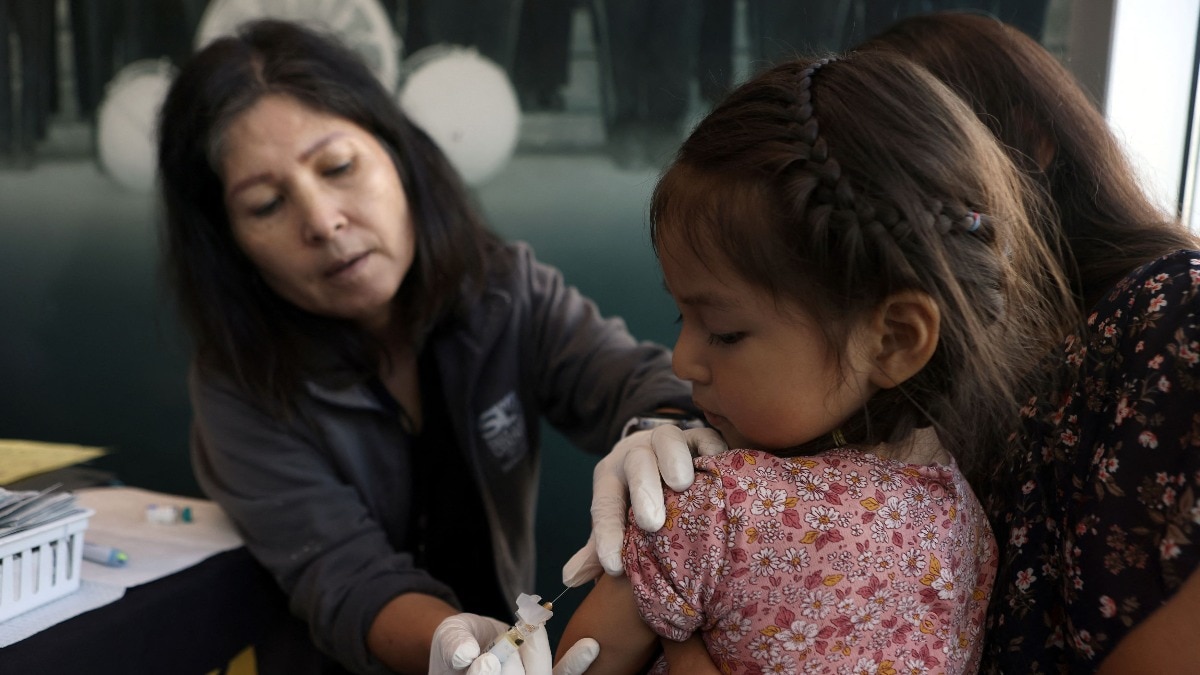
For decades, the US has managed to do something only a few nations have been able to: keep the disease called measles at bay. The World Health Organisation (WHO) declared in 2000 that the US had eliminated measles.
However, on Tuesday, the Pan American Health Organization (PAHO), a group within the WHO, stripped the US of the measles-free tag, saying the airborne virus was back in circulation in the country. So, what undid the major public health achievement built on the back of widespread vaccination and awareness programmes?The PAHO announcement that measles had re-established sustained transmission within the US comes amid a sharp resurgence of infections.
The US recorded 5,412 confirmed measles cases in 2026 as of November 13, according to the Centre for Disease Control (CDC). This is more than double of the 2,289 cases reported throughout 2025.
The American Association of Paediatrics reported at least 10 deaths from measles as of November 13.Measles, at least within public perception, is often associated with countries, mostly in the Third World, with weaker healthcare infrastructure and lower vaccination coverage. Its return to one of the world's richest countries is a reminder that a highly infectious virus does not respect borders and boundaries of any kind, and can quickly snowball into an outbreak, if vaccination coverage and awareness slips.MEASLES WAS ONCE CONSIDERED ELIMINATED IN THE USMeasles is a highly contagious viral disease that spreads through the air when an infected person coughs or sneezes.
According to the US CDC, the virus can remain infectious in the air for up to two hours after an infected person has left a room. Symptoms typically include high fever, cough, runny nose, and a characteristic rash.
While many people recover, measles can cause serious complications, including pneumonia, brain inflammation, blindness and death. Young children, particularly those who are malnourished or have weakened immune systems, are at greater risk.Before the introduction of the measles vaccine, the disease was widespread in the United States.
The CDC estimates that between three million and four million Americans used to contract measles every year. Around 400 to 500 people died annually, while thousands were left with lifelong complications.
The introduction of vaccination changed that trajectory. The US declared measles eliminated in 2000, following years of widespread immunisation and public health interventions.However, elimination did not mean eradication.
The virus continued circulating in other countries, and imported infections still occurred in the US. What the country had achieved was the interruption of continuous domestic transmission.HOW DID MEASLES MAKE A COMEBACK IN THE US?The most pressing factor behind measles making a comeback in the US are falling vaccination rates nationwide.The World Health Organisation recommends vaccination coverage of at least 95% to prevent sustained transmission and achieve community protection.When coverage falls below this threshold, the virus can spread more easily, particularly in communities where vaccination rates are considerably lower than the national average.The US is no longer above the 95% threshold needed to prevent new outbreaks from taking place.
According to the CDC, MMR vaccination coverage among US kindergarteners fell from 95.2% in the 2019–20 school year to 92.4% in 2025–26. This leaves approximately 280,000 kindergarteners vulnerable to measles.Driving down vaccination levels in the US is growing vaccine hesitancy and misinformation.The American Academy of Paediatrics (AAP) reported that approximately 96% of people infected with measles in 2026 were either unvaccinated or had an unknown vaccination status.
Two doses of the MMR vaccine, by comparison, are approximately 97% effective against measles.The resulting outbreaks have proved difficult to contain. The CDC recorded 43 new outbreaks in 2026, with 96% of confirmed cases associated with outbreaks, including transmission chains that began in 2025.
With more than 5,000 recorded cases and at least 10 deaths, 2026 has turned out to be a particularly bad year for the US in terms of measles.Measles is a very infectious disease, and can be deadly, especially for unvaccinated children. One does not have to look far to see what happens in the event of a nationwide measles outbreak.
Bangladesh, which failed to launch a mass MMR immunisation programme between 2020 and 2026, is in the middle of a persisting measles outbreak, which has killed more than 1,300 people since April, most of them young kids,For the US, the immediate priority is a sustained vaccination and public awareness campaign to close existing immunity gaps and prevent further outbreaks. Regaining measles elimination status will require interrupting endemic transmission for at least 12 consecutive months, alongside effective disease surveillance.But the more urgent task is to reverse the decline in immunisation coverage, which has fallen to 92.4% among kindergarteners, below the WHO-recommended 95% threshold.
Unless the US closes these gaps and rebuilds public confidence in vaccination, it risks further outbreaks, hospitalisations and preventable deaths.- Ends