


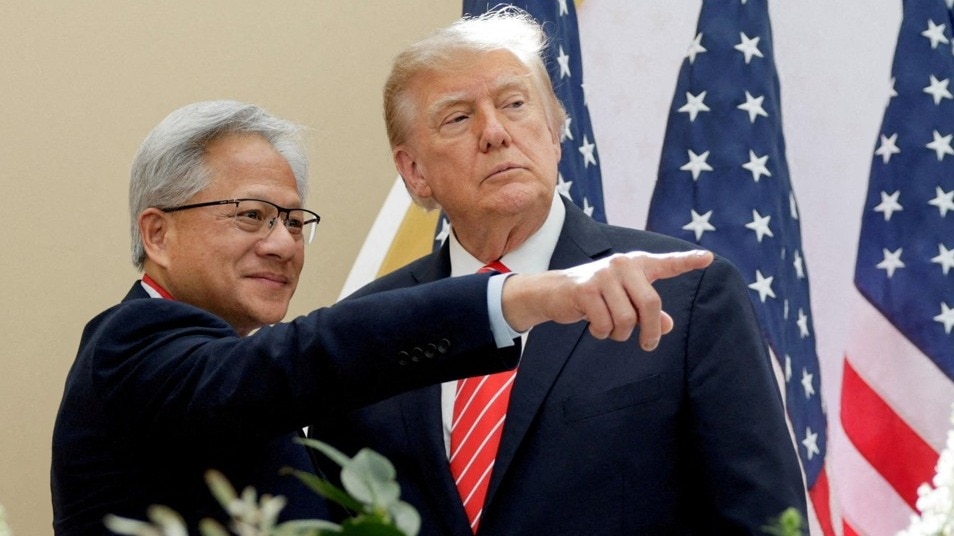
For years, Nvidia CEO Jensen Huang has been among the most influential corporate voices opposing a blanket US ban on advanced AI chip exports to China, warning Washington that shutting out the Chinese market would only strengthen domestic rival Huawei and hurt American technology companies.Now, a controversy involving his personal life and allegations of a Chinese intelligence operation could threaten to undermine that lobbying effort, potentially giving Washington an opening to tighten its grip on the world's most powerful AI chipmaker.Andrew Lu, a Taiwanese semiconductor analyst, believes the scandal could help the US achieve three strategic objectives that Huang has long opposed: weakening his influence in Washington against tighter China restrictions, reversing approvals for Nvidia's H200 chip exports to China and bringing the company's operations under greater national security scrutiny.In an analysis shared by semiconductor commentator Jukan on X, Lu argued that the controversy was not merely about exposing an affair but could have far-reaching implications for the technology battle between Washington and Beijing. He suggested that the US could use the allegations to push through restrictions that had previously faced resistance from Huang.
HUANG’S LOBBYING INFLUENCE UNDER SCRUTINYThe first potential casualty, according to Lu, is Huang's lobbying influence.Over the past two years, Huang has repeatedly argued against completely shutting China out of America's semiconductor ecosystem. His contention has been that abandoning the Chinese market would hand an enormous opportunity to Huawei and other domestic chipmakers, accelerating China's efforts to build an independent AI ecosystem while hurting American companies.
Huang has maintained that continued access to China would allow US technology companies to retain market share and technological influence. He has also argued that restrictions could ultimately benefit Chinese competitors by encouraging domestic alternatives.However, the allegations surrounding Alice Huang, a Chinese businesswoman and former executive at Singapore-based data centre company Megaspeed International, could complicate that argument.US intelligence officials reportedly believe Alice Huang was recruited by China's Ministry of State Security to gather information on Jensen Huang and potentially influence his position on selling advanced chips to China.
The two are not related.According to The New York Times, US authorities had been monitoring Alice Huang for more than a year and believed she was passing information to Beijing. A classified intelligence memo overseen by Secretary of State Marco Rubio this spring reportedly detailed concerns that she had been recruited to target the Nvidia chief.Nvidia initially described Huang's interactions with Alice as routine business engagements, with the company saying its regional cloud customers received ordinary business information, not sensitive trade secrets or information relevant to US national security.Huang subsequently acknowledged in a message to employees on November 8 that he had been unfaithful to his wife, apologising for the hurt caused to his family and colleagues.
Nvidia's board has since launched an independent investigation into the matter, while saying it has no reason to believe that national security or company secrets were compromised.Lu argues that the allegations could make it politically difficult for Huang to continue lobbying against tighter restrictions on China. Any defence of access to the Chinese market could now invite questions about whether his position was influenced by a suspected foreign intelligence operation.H200 EXPORT APPROVALS COULD FACE REVIEWThe second potential target is Nvidia's H200 business in China.Huang had lobbied the Trump administration to allow the company to sell more advanced AI processors to Chinese customers.
While his push for Nvidia's most powerful chips faced resistance from officials concerned about strengthening China's technological and military capabilities, President Donald Trump announced in December 2025 that H200 chips could be sold to approved Chinese customers under certain conditions.The US Commerce Department subsequently revised its licensing policy in January 2026, allowing applications for H200 and certain other advanced chips to be considered on a case-by-case basis, subject to security and compliance requirements.The decision marked an important concession to Huang's argument that American companies should not surrender the Chinese market entirely.But questions have since emerged over the companies cleared to handle the chips.In a separate investigation, The New York Times reported that it had visited Chinese companies approved by the Commerce Department to handle Nvidia's H200 processors. One such company, New Matrix, had a registered address in Beijing that appeared to be an empty office.
The newspaper also reported that the company's ownership had links to a private equity fund placed on a US trade blacklist in 2024.The findings raised concerns about whether companies with questionable ownership structures or connections to restricted entities could gain access to advanced American chips through the approval process.Separately, US authorities have investigated Megaspeed over suspicions that it helped Chinese companies gain access to Nvidia processors that were restricted from export. Megaspeed has described itself as a legitimate and compliant business.
Nvidia has also said it follows US government guidance on entities of concern.Lu believes the two investigations could create pressure on Washington to revisit H200 approvals and close loopholes that may allow restricted chips to reach China through third-party data centres and intermediaries in Singapore and elsewhere in Southeast Asia.CONGRESSIONAL SCRUTINY AND THE BIGGER PICTUREThe third objective, according to the analyst, could be to bring Nvidia under closer government scrutiny through congressional oversight and an independent investigation.The controversy has already prompted Republican leaders of three US House committees, Foreign Affairs, Intelligence and the Select Committee on China, to seek a closed-door briefing from Huang on November 18. In a letter dated November 4, the lawmakers sought explanations about the allegations and Nvidia's safeguards against foreign espionage.The scrutiny could extend beyond Huang's personal relationship to the company's internal security practices, its dealings with customers in Asia and the movement of advanced chips across international supply chains.For Lu, this could mark a turning point in how Washington deals with Nvidia, with national security considerations increasingly shaping decisions about where its processors can be sold and who can access them.The timing is particularly striking given Huang's public defence of engagement with China shortly before his admission.In an interview with Bloomberg's Emily Chang on October 14, Huang said he had done his best to persuade US policymakers about the importance of continuing to serve the Chinese market.
He also argued that the two countries were competitors, not enemies."I did my best to inform the policymakers in the United States of the importance of engaging the Chinese market and making sure that we serve that market for as long as we can," he said.He added that although the US and China competed with each other, "they're not our enemies".The remarks, made less than a month before his admission of the affair, underline how firmly Huang had continued to defend commercial engagement with China even as US intelligence agencies were reportedly examining the relationship.The White House was also reportedly aware of the intelligence concerns much earlier. According to The New York Times, Trump was briefed roughly a year ago about the surveillance of Alice Huang, while the classified memo overseen by Rubio was circulated among senior officials this spring, ahead of the president's May trip to China.There is, however, no established evidence that the US government orchestrated the exposure of the relationship or that Huang passed sensitive company information to Beijing.
China has rejected the espionage allegations as baseless, while Nvidia's board has said its investigation will examine all available information.Lu's argument is that Washington's national security establishment could use the controversy to advance a tougher approach to Nvidia's China business, particularly at a time when the company remains central to the global AI race.Whether the allegations ultimately lead to tighter export controls, the reversal of H200 approvals or greater congressional oversight remains to be seen. But with Huang's lobbying influence under renewed scrutiny and lawmakers seeking answers, Nvidia's ability to navigate the US-China technology battle could face one of its biggest tests yet.- Ends