


Hunting Alice Bell begins with a familiar scene. A woman has been found guilty of aiding and abetting Jason Nash (Simon Pegg), a murderous anaesthetist and also her former boyfriend.
A furious crowd has gathered to bang on the van as it takes her away to serve 18 months in prison. But the woman under the blanket is a decoy – the real Alice Bell is being smuggled out of another exit.
The mob’s bloodlust is deferred but not satisfied. Upon her release, Bell will be given a new identity.Several years later, the life of Fran Da Silva (Alexandra Roach) is about to change for ever.
She’s sitting down to breakfast with her husband and two teenage stepchildren when a brick crashes through the window. She’s ostracised at work.
The kids come home from school with bloody noses and tales of abuse. At the insistence of social services, the family’s infant daughter is sent to live with her grandmother.The online campaign against Da Silva is the handiwork of an online orchestrator styling himself as True Crime Buster, who has decided that Fran is Alice Bell.
He’s a transparent grifter, superpowered by attention. He argues for the public’s right to know certain facts while simultaneously proving precisely why they can’t be trusted with them.
He talks about “feminazis”. You know the type.Murderous anaesthetist … Simon Pegg as Jason Nash.
Photograph: Channel 4/Enda BoweThis six-part drama, created by David Baddiel and Guardian film critic Peter Bradshaw, was apparently partly inspired by the story of Ian Huntley’s former girlfriend Maxine Carr – particularly the women who were forced to deny being her. Was finding the real Carr ever that important?
In the social media age, the thirst for anonymised rage is often the point. And perhaps, in Orwellian terms, there’s a modern Room 101 reserved for women implicated in awful crimes?Inevitably, there’s a dodgy cop involved too: Ralf Little’s Graham Hunter.
The police’s role in the narrative is ambiguous and jarring. For a start, the family don’t call them until their home is surrounded by masked vigilantes wielding clubs.
But there’s another problem: if the philosophical heart of the show lies in exploring the ways in which groundless conspiracy theories take hold, why introduce the possibility of another, arguably even more far-fetched one? This plotline feels like a category error; something that belongs in a different drama, with less serious intentions.Hunting Alice Bell often feels like a mess, then.
But if it’s a mess, it at least has the good grace to be a hot one. It’s punchy and compelling in its implausible way.
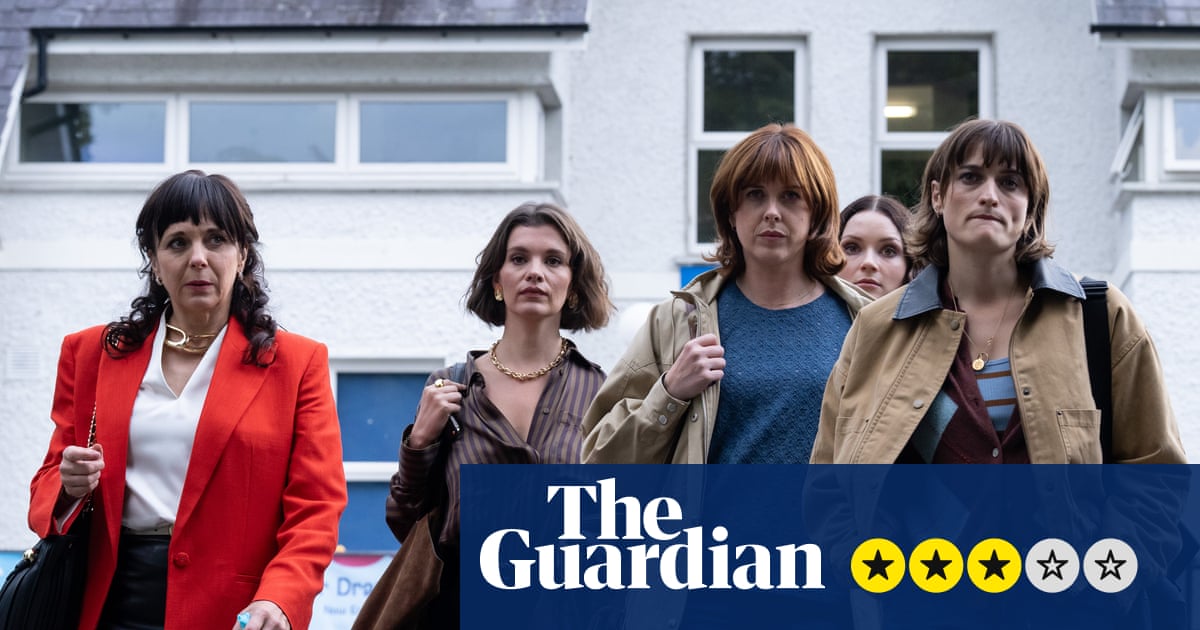
Fran finds that she’s not the only woman who might be (but almost certainly isn’t) Alice Bell. Soon, there’s a small support group for women who have been accused of being her.
They begin their first meeting by intoning solemnly, one by one, (and therefore, slightly comically) “I am not Alice Bell”. They become a cause celebre.
They are invited to conferences and make media appearances. But is everyone in the group telling the truth?
Speculation mounts. The hunt for Alice Bell risks turning into a high-stakes, real-life version of The Traitors.At various stages of the series, the momentum risks dying in a hail of bullet-points.
There are nods to the manosphere, to “incel” culture, to our compulsive urge to document our lives. Everything is a little too on the nose.
It shares DNA traces with another Channel 4 drama Tip Toe, exploring a series of contemporary moral messages without a great deal of subtlety. The writing, though, lacks Russell T Davies’s surefooted way with dialogue and characterisation.
It also doesn’t quite know what it is. Is it a study in modern manners?
A whodunnit? A social satire?
Hunting Alice Bell tries to be all of those things, all at once.It’s at its strongest once it settles down and allows itself to be what it truly is: a twisty thriller. Can the Not Alice Bells hold themselves together, clear their names, and, as is ironically suggested by Fran, stay friends for life?
Without wishing to spoil it, none of these women are flawless or even particularly functional (and why should they be?) so you doubt their chances. But the show does stick the landing, and it does so cleverly, by using viewers’ likely confirmation bias against them.
Do we find Alice Bell? That’s besides the point.
We find a lynch mob culture in which, like it or not, plenty of us are only a few clicks away from banging on the side of a police van ourselves.