


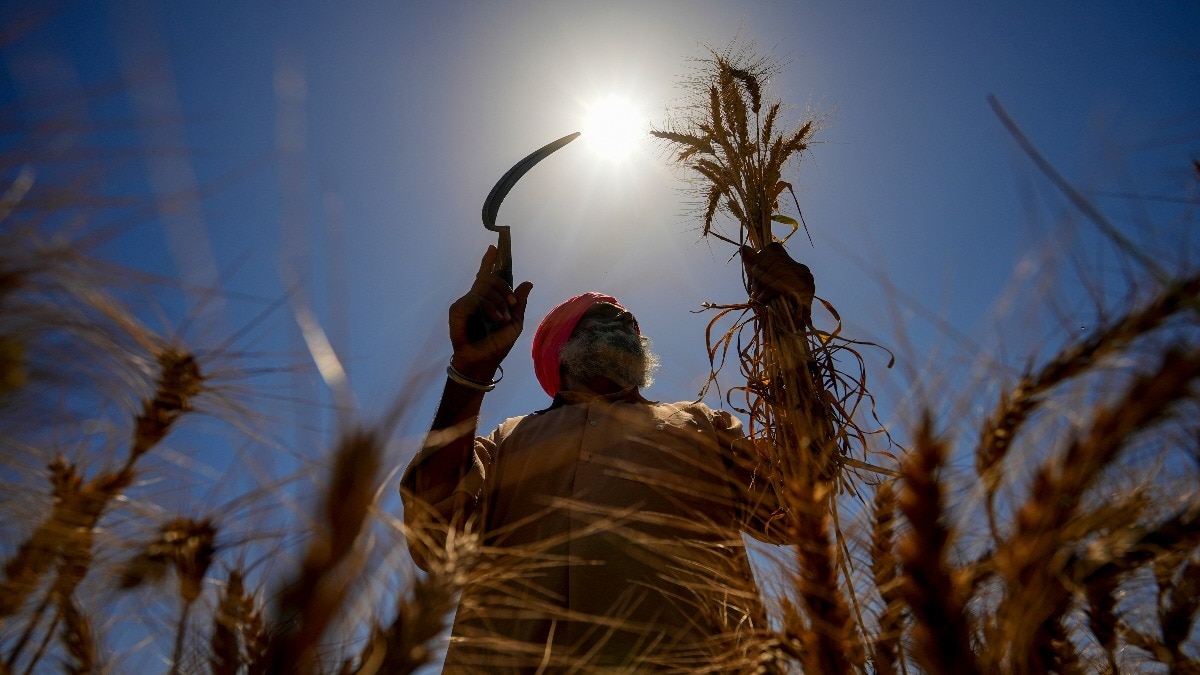
Industry leaders discussed drones, precision farming and equipment rentals at the Bharat Agriculture Conference 2026. The technologies could reduce costs, raise productivity and create income opportunities for farmers and women.A major suggestion during the session was to develop an app-based platform that would allow farmers to rent agricultural machinery whenever required. (Credits: PTI) Agricultural drones, precision farming and rental-based access to farm machinery could reshape India's agriculture sector by improving productivity, reducing input costs and creating additional income opportunities for farmers, industry leaders and experts said at the Bharat Agriculture Conference 2026.Speaking during a session titled 'Agricultural Revolution: New Tools', representatives from the Mahindra Group, the drone industry and NITI Aayog discussed how technology could help farmers move beyond conventional tractor-based mechanisation towards more efficient and precise farming practices.One of the key proposals emerging from the discussion was an app-based platform that would allow farmers to book agricultural equipment on demand, similar to ordering food or booking a cab, instead of investing large sums in machinery they may use only occasionally.DRONES CAN REDUCE SPRAYING TIME FOR HOURS TO MINUTESAnoop Kumar Upadhyay, Co-Founder & Director, IoTech World, said drones had become an important farm machinery tool, particularly for spraying pesticides and other agrochemicals.
Giving the example of sugarcane cultivation, he said spraying becomes difficult when crops grow five to six feet tall. Agricultural drones can address this problem while reducing water consumption and the time required for spraying."Drone se spray karne se hamare jo kheti mein jo lagat hoti hai, jahan 200 liter pani use ho raha tha, ab 10 liter pani use hota hai spray karne ke liye," he said.
He added that spraying an acre, which earlier took two to three hours, could now be completed in around seven minutes using drones.Drones also reduce farmers' direct exposure to pesticides, as operators can control the machines remotely rather than walking through fields while spraying chemicals.He said GPS-based technology and sensors could help identify patches of unhealthy crops and spray only those areas instead of treating an entire field. According to him, scientific assessments conducted with agrochemical scientists have shown that drone-based spraying can increase agricultural output by 10-15 per cent.
He also said the company had sold around 4,000 agricultural drones in India, with women owning 40-45 per cent of them.NAMO DRONE DIDI CREATES INCOME OPPORTUNITIES FOR WOMENThe discussion also focused on the growing participation of women in agricultural mechanisation.The speakers referred to the Centre's Namo Drone Didi programme, under which 15,000 drones are intended to be provided to women-led self-help groups, along with training.Anup said drone operations offered women an opportunity to earn additional income without having to undertake physically demanding farm work.He explained that a woman operating a drone could spray around 10 acres in two hours and earn Rs 300 per acre. This could translate into daily earnings of Rs 2,000-3,000, depending on the work available.He said Maharashtra, Uttar Pradesh, Telangana, Andhra Pradesh and Haryana had reported encouraging adoption of agricultural drones.Harsh K Rai, CEO, Farm Division & Growmax, Mahindra Group also acknowledged the need to develop machinery suited to women farmers.He said companies had started examining whether tractors, tillers and other agricultural implements needed different designs and product variants to make them more comfortable for women users. "Female-friendly products" would be an important area of research and development, he said.KV Raju, Member Agriculture, NITI Aayog also stressed the need for training women to operate agricultural equipment and take up activities such as planting, transplantation, grading, sorting and storage.A major suggestion during the session was to develop an app-based platform that would allow farmers to rent agricultural machinery whenever required.KV Raju said farmers often invest lakhs of rupees in tractors and other equipment but do not use them throughout the year.
A rental-based model could improve machinery utilisation and reduce the financial burden on small farmers. He suggested creating an online platform through which farmers could access tractors, harvesters, transplanters, weeders and other agricultural implements on demand.The proposal drew support from the drone industry representative, who described the concept as "drone as a service" (DaaS).He said an agricultural drone could spray around 30 acres in a day, but small landholdings meant that an individual farmer might need it for only a limited period.Buying a drone, which could cost Rs 7–8 lakh along with training and insurance, might not make economic sense for every farmer.
Instead, trained agri-entrepreneurs could offer spraying services to multiple farmers and earn through rentals.The speakers also discussed expanding the concept beyond drones to a wider 'farming as a service' model covering different agricultural machines.MECHANISATION MUST IMPROVE PRODUCTIVITY, NOT JUST INCREASE MACHINERYHarsh Rai said agricultural mechanisation should focus on improving output from every acre rather than simply increasing the number of machines used in farming.He said Mahindra was investing in research and development in electric tractors, hybrid tractors and alternative-fuel-based technologies to improve sustainability. Fuel efficiency would remain important during the transition towards greater electrification of agricultural machinery, he added.Raju said private companies would play an essential role in India's mechanisation drive by developing new equipment and demonstrating its benefits to farmers.He also outlined the broader agricultural vision for 2047, saying the primary sector, including agriculture, horticulture, livestock, fisheries and forestry, had been assigned a target of contributing $6 trillion to the proposed $30-trillion Indian economy.He said planning was under way to assess the mechanisation requirements of different states and crops, the deployment of drones and harvesters, and the training needed to help farmers adopt new technologies.The session concluded with a call for greater public-private collaboration and wider access to agricultural machinery through digital platforms, with speakers suggesting that India Today and Aaj Tak could help assess the availability of farm equipment for rental across the country.- Ends