


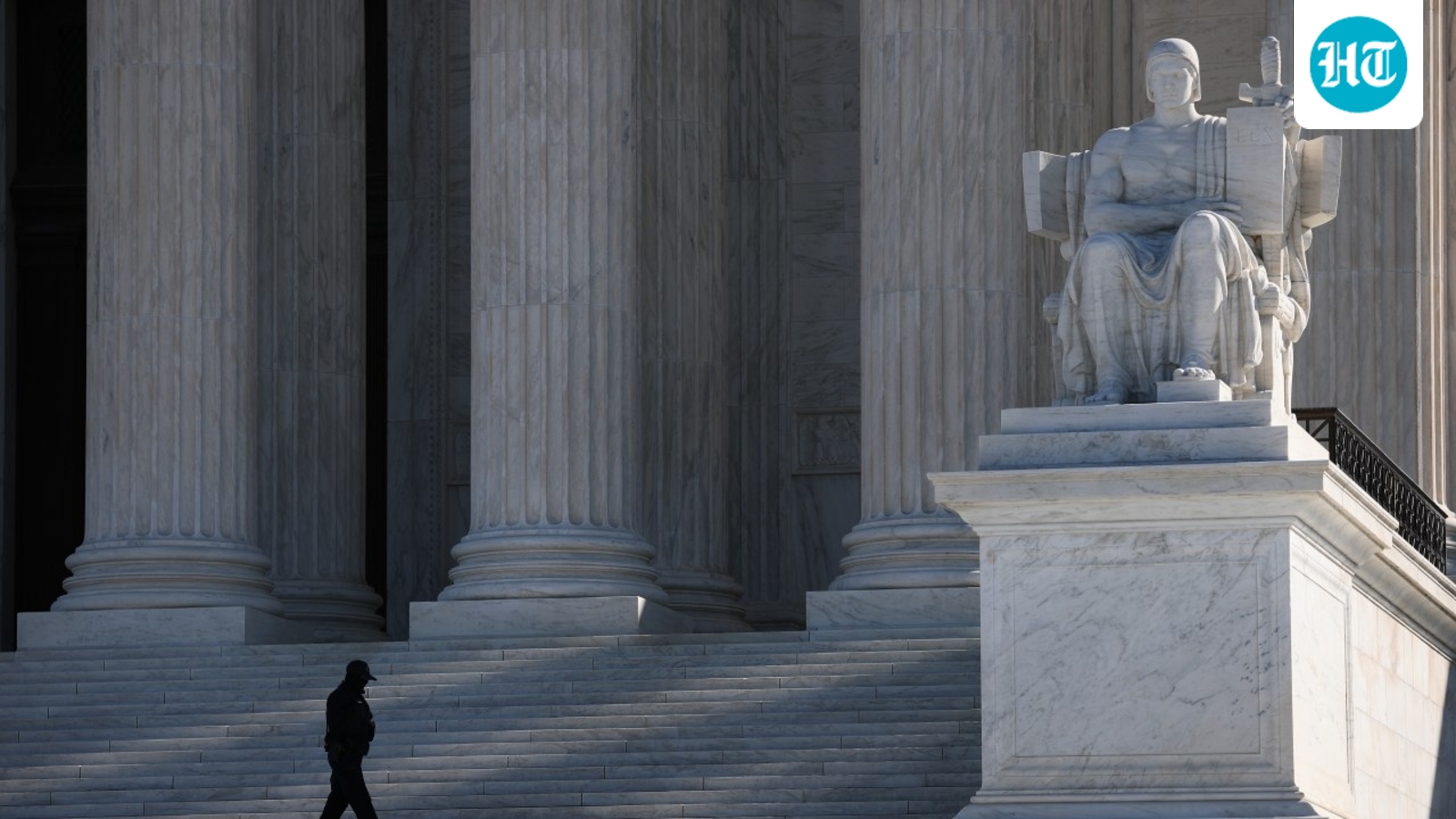
WASHINGTON—From gerrymandered voting maps to the latest surge in political spending, the Supreme Court’s fingerprints are all over the 2026 midterms.The Supreme Court Building in Washington, D.C.A string of decisions from the court’s conservative majority has rewritten the rules that govern American elections, and this fall’s fight for Congress is the first to feel the full effects.A June ruling that struck down a campaign-finance law has prompted a torrent of ads financed by political parties, with most of that spending coming from the GOP. A landmark ruling in April on the Voting Rights Act means that three House districts in Southern states are expected to flip from Democratic to Republican next month.
And this cycle’s wave of turbocharged redistricting is the culmination of a 2019 ruling that said federal courts have no role in supervising partisan gerrymandering.Perhaps the court’s most visible impact is on TV airwaves in battleground states. Until this year, federal law capped how much money the parties could spend in direct coordination with candidates.
The court declared those caps unconstitutional under the First Amendment.In response, the two parties have poured more than $100 million into TV advertisements that they coordinate with candidates, according to the firm AdImpact, which tracks political advertising.In key races that could determine control of the Senate, the spending has far surpassed what would have been allowed if the caps were still in effect. In Ohio, for instance, the cap for each party would have been $1.2 million for the 2026 cycle.
But through the end of September, the Republican Party’s Senate fundraising committee spent $23 million in coordination with incumbent Jon Husted, while its Democratic counterpart spent $5.7 million in coordination with challenger Sherrod Brown, according to campaign-finance disclosures.In Michigan, the cap would have been $1.1 million. Without the cap, the Republican Senate committee has spent $13.4 million in coordination with candidate Mike Rogers, while the Democratic Senate committee has spent $4.6 million in coordination with candidate Abdul El-Sayed.Similar spending patterns have emerged in other Senate battlegrounds, such as Iowa and Maine.Justice Elena Kagan, who dissented in the case on coordinated spending, drew attention to its consequences in an appearance at Catholic University’s law school on Tuesday.“The people of America look around at this political system and think that all this money chasing all these political candidates is a nightmare.
And they’re right,” Kagan said.Kagan, an Obama appointee, also criticized ideologically polarized rulings that have made it easier for states to aggressively redraw congressional districts for political gain.Chief Justice John Roberts’s 2019 majority opinion in Rucho v. Common Cause said that extreme partisan gerrymandering “leads to results that reasonably seem unjust”—but that federal judges aren’t equipped to referee such disputes.
Then, earlier this year, in Louisiana v. Callais, the court narrowed the Voting Rights Act and seemed to accept partisan gerrymandering as a valid goal of state legislatures.
Partisan advantage, Justice Samuel Alito wrote in the majority opinion in Callais, is “a constitutionally permissible criterion that states may rely on as desired.”Tabatha Abu El-Haj, a law professor at Drexel University, said the court’s evolving language about partisan gerrymandering has seemed to validate the practice.“There was always partisan gerrymandering,” she said. “But now, it’s gone from a fact of politics to a legitimate constitutional interest.”The decision in Callais allowed three states—Alabama, Louisiana and Tennessee—to quickly dismantle House districts where Black voters had held a majority or near-majority. Republicans are now favored to flip all three of those seats.
And other Southern states may follow suit and eliminate more majority-Black districts by 2028.Meanwhile, states around the country have engaged in unusual mid-decade redistricting designed to maximize partisan advantage. Republican-controlled states, prodded by President Trump, have led that effort, but a counter-effort by Democrats in California is expected to offset much of the potential Republican gain.Not all of the Supreme Court’s recent election-related rulings have helped Republicans.
In June, the court rejected a Republican-led challenge to state laws that count ballots if they are mailed by Election Day and arrive shortly afterward. Last month, the court blocked a Trump administration plan to impose new requirements for mail ballots, and it stopped a long shot effort to install a pro-Republican voting map in Missouri.Other high-stakes midterm litigation is brewing in lower courts.
The Trump administration is attempting to block California from counting mail ballots from 20,000 people that the administration says may not be American citizens, and the administration on Friday sued to prevent the certification of Alaska’s Senate results if the Republican candidate loses.Any postelection litigation challenging results after Nov. 3 might have to be resolved by the high court, too.Write to James Romoser at james.romoser@wsj.com and Neil Mehta at neil.mehta@wsj.com