


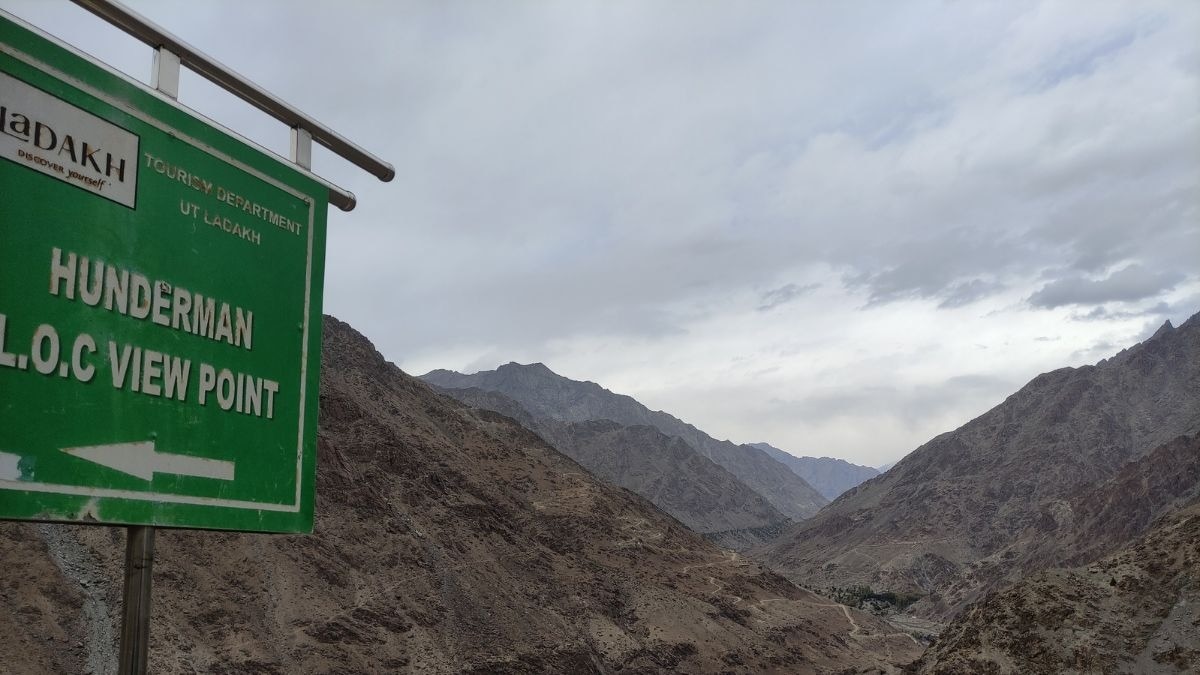
The Suru, originating from the Panzella Glacier, runs through the Suru Valley past Kargil town and meets the Dras and Shingo rivers. It further continues across Hunderman village in Kargil into Pakistan-administered Baltistan, where it is known as the Kargil river.The Shyok river, rising from the Rimo Glacier, drains northern Ladakh, including Nubra Valley and Galwan, before entering Gilgit-Baltistan and meeting the Indus near Keris in Skardu.
Since these are cross-border waterways, unrecovered bodies are often feared to have drifted into the Gilgit-Baltistan. Javed Ali, in-charge of Al-Mahdi Scouts, told INDIA TODAY that social media reports this year alone indicated three to four unidentified bodies recovered from rivers in Baltistan and buried there.
He believes many such bodies could be of accident victims from India, although official confirmation is awaited.Specific cases compiled by the group illustrate the pattern. In 2018, two boys from Hardas fell into the Shingo river; their bodies were never found.
In 2022, a 25-year-old woman slipped into the same river near Kaksar and was untraceable. In June 2023, an eight-year-old girl reportedly fell into the Shingo at Chanigund.
The same year, a car accident near Kaksar left two boys untraced; fragments of the vehicle were later recovered, suggesting it had left the road, but no witnesses confirmed the exact location. A 30-year-old man was also reported missing from Chanigund under unclear circumstances.More recent incidents follow the same trajectory.
In March 2025, two boys from Drass were travelling from Kargil towards their hometown when their vehicle plunged into the Drass river; neither body has been found. In April 2025, a youth from Kharbu village disappeared and remains missing.
On May 15, an 18-year-old from Budgam drowned in the Shingo river—there is no trace of him yet. On June 27, 2025, a 22-year-old girl from Drass fell into the Drass river; her body has not been located.This year, an incident on June 23 involved a car carrying four people.
Two bodies were retrieved from the Drass river; the other stayed missing. Roughly three months later, social media reports indicated those remains had been found in Pakistan-administered territory.
According to Al-Mahdi Scouts, an official confirmation is yet to come. In July, a 32-year-old man fell into the Suru river and has not been found.A rare instance of closure came for nine-year-old Zulqarnain Ali of Hunderman, the last inhabited village before the LoC.
On the afternoon of March 20, he and his six-year-old cousin Ali Akbar were playing near the Suru river, especially forceful at its confluence with the Shingo. Both children fell into the icy waters.
Akbar’s body was recovered the next day near Hunderman; Zulqarnain was swept downstream into Baltistan.After sustained efforts by local leaders, the Ladakh administration and some Indian-Pakistani coordination, Zulqarnain’s remains were returned for burial on May 5 through the Teetwal-Keran crossing in Kupwara. The border crossing, closed to civilians since 2019, was temporarily reopened for the transfer.“I thank God that my son’s body was returned to me and his funeral could be held here—perhaps someone’s prayers were answered,” Zulqarnain’s father Mohammad Hussain told INDIA TODAY.
He shared that it is an extremely difficult period when the body of a loved one is found on the other side of the border and cannot be brought back. “Ask those who have gone through this tragedy. I cannot describe what those 40-odd days were like for me,” he said.Zulqarnain’s body had been recovered on the same evening of the mishap in Gangani village across the LoC, just 2.5 km downstream of Hunderman. “Had the body been handed over to us from Brulmu, the village adjoining ours across LoC, it would have taken just a few hours.
But from the time it was exhumed and received by us in Kupwara on May 5, it still took four days,” Hussain said, noting the absence of any formal India-Pakistan mechanism in Kargil to address humanitarian tragedies.The return of Zulqarnain’s body was widely welcomed as a rare humanitarian gesture. Community members and political leaders in Kargil praised the cooperation while stressing the need for a permanent arrangement. “If a crossing is opened with Pakistan from the Kargil side on humanitarian grounds for such special occasions, it would be of great benefit to the families whose loved ones are recovered from the river on the other side and buried there,” Hussain said.Residents and local social and political organisations have repeatedly called for a border crossing or ‘humanitarian’ coordination facility near Hunderman.
A formal representation has been made to the Ladakh administration.“It has been a long-pending demand of the people here that India and Pakistan construct a meeting hall at Zero Point near Hunderman village. This would facilitate meetings of divided families on both sides and also serve as a mechanism for special occasions, such as the exchange of bodies of accident victims,” said Nazir Mehdi Mohammadi, member of the lieutenant governor’s Advisory Council for the Union territory of Ladakh.
He added that he has already submitted a memorandum to the Union territory administration as well as the Union home ministry.Mehdi Mohammadi said he will raise the matter in the next Advisory Council meeting. He informed that it had been suggested to the administration to place mesh barriers across the Shingo and Suru rivers to prevent bodies of accident victims from being washed away across the LoC.Mehdi Mohammadi is also the president of Anjuman Jamiat-ul-Ulama Isna Asharia, an influential social and religious organisation of Kargil.
The organisation has been vocal about opening the Kargil-Skardu road that passes through Hunderman village for humanitarian purposes.The rivers recognise no India-Pakistan boundaries. Until a practical system is established, many families in Kargil will keep waiting—sometimes indefinitely—for the return of those they have lost to the rivers and remain buried across the LoC as the ‘unidentified’.Subscribe to India Today Magazine- Ends