


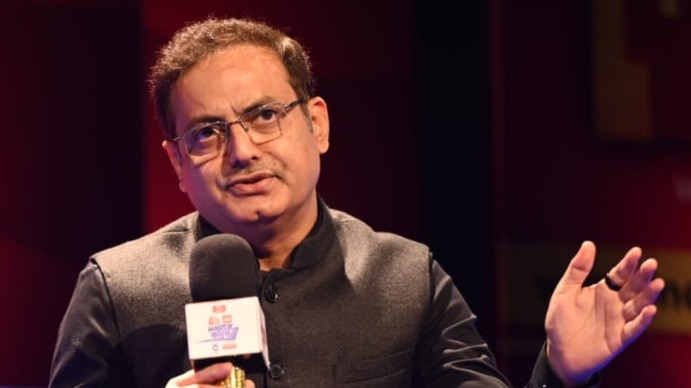
Vikas Divyakirti discussed AI, career choices and UPSC preparation with students at India Today Masterclass. He urged them to value aptitude, human skills, enjoy all years in college and learn there.
Artificial intelligence is changing the nature of work, and students must choose careers by looking at how technology may affect them in the future, educator and Drishti IAS founder Vikas Divyakirti said during an interaction with students.He said jobs involving repetitive tasks, such as translation, legal research and drafting, were increasingly being taken over by AI. Students should therefore focus on careers that require human judgement, communication and specialised knowledge.“Look for careers that have a higher chance of surviving human intervention,” he said.CAREER CHOICES, UPSC PREPARATION, FAILURE AND THE IMPORTANCE OF LANGUAGE SKILLSGiving the example of the legal profession, Divyakirti said AI could handle much of the research and drafting work, but lawyers who can present arguments effectively in court would continue to have opportunities. “Now, only lawyers who can speak fluently and present their arguments effectively in court will be effective,” he said.He advised students to consider both their interests and abilities before choosing a career.
A profession may offer money and social status, but that does not necessarily mean a person is suited for it. “Both are important — my attitude and my interest, and my aptitude, the areas I am best suited for,” he said.Speaking about his own career, Divyakirti said he had considered becoming a university teacher even after securing a government job. He eventually chose teaching because it suited his interests.“I haven't regretted my decision to leave my job for even a second,” he said.On the need for coaching for competitive examinations, he said it was not compulsory.
Students with a strong academic background and the ability to study independently could prepare on their own. Those who needed structured guidance or had gaps in their preparation could consider coaching.He also advised college students not to begin UPSC preparation too early at the cost of their university experience.“A good college is better than any coaching institute,” he said, adding that students learn important skills through classroom discussions, sports, college festivals, trips and other activities.Divyakirti said these experiences help students develop teamwork, communication and the ability to deal with different situations.Responding to a question from a UPSC aspirant who had cleared the preliminary and mains examinations but failed to make it to the final list, he said the decision to attempt again should depend on the candidate's circumstances, including financial responsibilities and family pressures.He also asked students not to feel ashamed of failure or distance themselves from friends and family after an unsuccessful attempt.“I should embrace my defeat like a medal,” he said, adding that the effort made in pursuing a difficult goal was also worth recognising.On the importance of English, Divyakirti said students should not treat it as opposed to Hindi.
While Hindi had gained wider reach through social media, much of the research in science, technology and other fields remained available in English.“Why should there be any hostility towards any language?” he said, encouraging students to learn more languages.He said knowing multiple languages could also benefit people in the long run and advised students to learn two, three or even five languages.The interaction also covered the need for financial literacy, health education and sex education in schools. Divyakirti said students should be taught practical subjects that help them manage their lives, including how to save and invest money and understand their health.On the changing attention spans of young people, he said social media and the fast pace of daily life had influenced how the younger generation consumed information.
He said the environment around them, rather than the young people themselves, should also be considered when discussing impatience.His message to students was to look beyond a single examination, assess their abilities and interests, and prepare for careers that can adapt to changes brought by technology.- Ends