


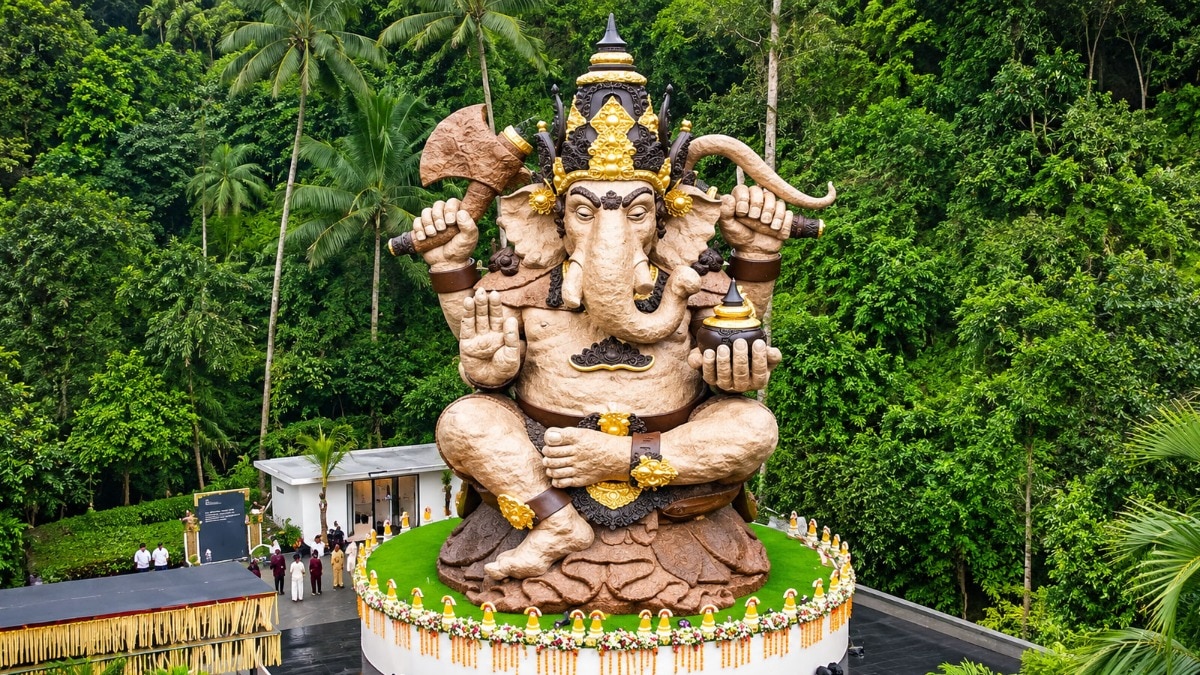
A giant Lord Ganesha sculpture has found a place in Bali, Indonesia, and it is making headlines for more than its religious significance. Standing around 50 feet tall, the artwork has earned a Guinness World Records recognition for its unique craftsmanship.Standing around 50 feet tall, the Lord Ganesha idol in Bali, Indonesia, is the world's tallest supported synthetic rattan sculpture.
A towering figure of Lord Ganesha, woven from synthetic rattan, now stands in Bali, a Hindu-majority province in the Muslim-majority nation of Indonesia. Known for its rich Hindu heritage, Bali has now earned a place in the Guinness World Records by erecting a 50-foot-tall sculpture of the Hindu deity, making it a new landmark on the popular tourist island.The sculpture, measuring 15.315 metres (50 feet 2 inches), has been recognised as the world's tallest supported synthetic rattan sculpture.
Created by Alas Harum Bali, it depicts Ganesha, the god associated with wisdom, success, good fortune and new beginnings.The Indonesian Embassy in New Delhi shared the development on Facebook, announcing that the sculpture had been unveiled in Gianyar, Bali, Indonesia. The Embassy's post drew attention to the cultural significance of the installation.Guinness World Records Indonesia also confirmed the record, recognising the 15.315-metre structure in the category of tallest supported synthetic rattan sculpture.
The distinction is specific to the material and construction used, rather than the claim that it is the world's tallest statue of Ganesha. The installation is particularly striking given Indonesia's religious and cultural landscape.
Indonesia is the world's largest Muslim-majority nation, with Islam being the country's predominant religion. However, its cultural history also has deep Hindu and Buddhist influences, which continue to find expression in its temples, monuments, art and traditions.Bali, in particular, is a stronghold of Hinduism in Indonesia, with Hindu religious practices woven into everyday life.
The island is home to numerous Hindu temples, known locally as pura, which are central to its religious and cultural identity. Some of its most prominent temples include Pura Besakih, often called the Mother Temple of Bali, and the sea temple of Tanah Lot.
Hindu epics and mythology also have a visible place in Balinese culture.The Ramayana, for instance, is regularly brought to life through traditional dance and theatre performances. The famous Kecak dance, often performed for tourists, draws on episodes from the epic, including the abduction of Sita by Ravana and the battle to rescue her.
The Ramayana and Mahabharata have also influenced Balinese painting, sculpture and storytelling traditions.The Ganesha sculpture in Gianyar, thus adds another monumental representation of a Hindu deity to an island where Hindu traditions remain deeply rooted.- Ends(Written By: Anand Singh)