


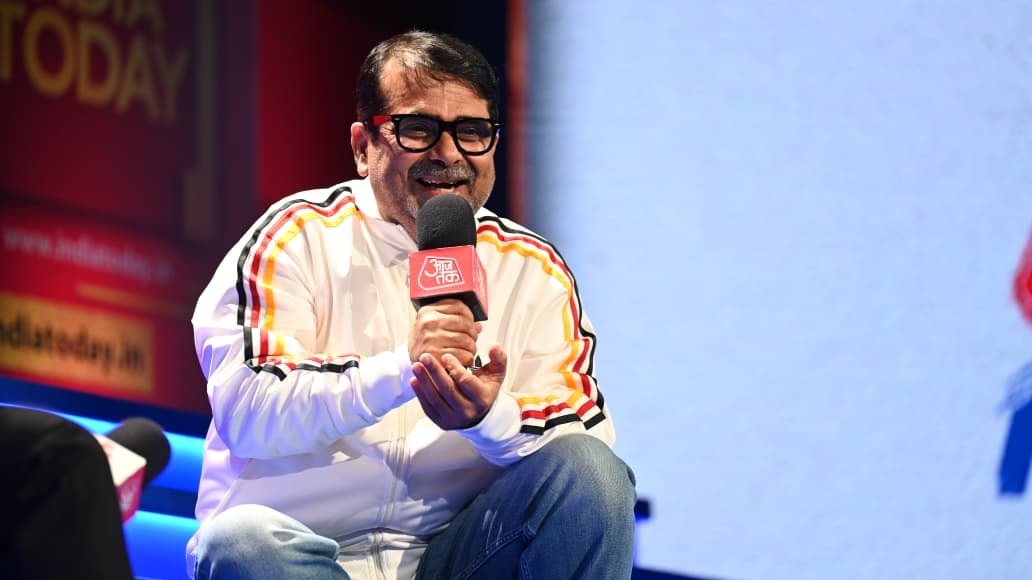
What does it take to succeed in life? Is academic qualification enough, or do young people need to develop practical skills and learn to adapt to changing circumstances?
UPSC coach Avadh Ojha addressed these questions during a conversation with Panini Anand, Managing Editor, TVTN, at the Aaj Tak Masterclass 2026.Drawing from his own experiences as a teacher and former UPSC aspirant, Ojha spoke about the importance of questioning conventional thinking, understanding subjects rather than memorising them, and developing the ability to navigate life's challenges.He also urged young people to move beyond the traditional obsession with government jobs and recognise the opportunities available through skill development.WHY DOES INDIA NEED MORE SKILLED YOUNG PEOPLE?Addressing the growing concerns around employment and competition, Ojha said that India does not necessarily have a shortage of jobs but faces a shortage of people with the right skills. "One of the biggest challenges facing young people today is the shortage of skills. Education should help students become more capable of solving problems, rather than leaving them confused," he said.He illustrated his argument with the example of a young man he had encountered who had completed an MS degree but was working as a barber after pursuing professional training.
According to Ojha, the individual was earning around Rs 50,000 a month. The example, he explained, demonstrated that practical skills could create meaningful employment opportunities, irrespective of traditional ideas about professional status."Everyone cannot become an IAS officer.
Someone has to become an entrepreneur, someone has to become a businessman, and someone has to take the first step in a different direction," he said.Ojha also urged students to overcome what he described as a feudal mindset that makes people look down upon certain professions.He revealed that he had worked at a restobar for seven months and said nothing was embarrassing about taking up any honest job.IS UPSC PREPARATION ABOUT KNOWLEDGE OR UNDERSTANDING?When asked whether UPSC preparation was more about acquiring knowledge or developing the right mindset, Ojha emphasised that understanding concepts and connecting different subjects were essential."UPSC preparation is more about understanding. You have to understand the subject, not just read it," he said.Explaining his approach, he spoke about how geography, economics, politics and history are interconnected.
According to him, understanding these relationships helps aspirants develop a broader perspective, which is particularly important for those who eventually become policymakers.He explained that geographical conditions influence economic development, which in turn shapes political structures and historical developments.Ojha also highlighted the importance of getting the basics right. Referring to his 25-year teaching career, he said that students who had a strong understanding of fundamental concepts were better equipped to handle competitive examinations."Competition is not the result of hard work alone; it is the result of practice," he said, encouraging aspirants to work through previous years' question papers and strengthen their fundamentals.CAN LOVE AND AMBITION EXIST TOGETHER?The conversation also touched upon relationships, romantic commitments and career aspirations, particularly among young people.Responding to a question about balancing love, ambition and personal challenges, Ojha said relationships should contribute positively to an individual's growth."If your friendship is helping both of you rise, it is a good friendship.
If your relationship is elevating both individuals, it is a good relationship," he said.He further explained that young people should not necessarily avoid relationships while pursuing their ambitions. Instead, they should assess whether their relationships are helping them grow or holding them back.Using historical references and anecdotes, Ojha discussed the difference between relationships that inspire individuals to achieve more and those that distract them from their goals.He also cautioned against treating professional ambitions and personal relationships as competing priorities, arguing that both can coexist when individuals have clarity about their goals.WHY IS FINANCIAL INDEPENDENCE IMPORTANT FOR FREEDOM?Highlighting the connection between financial independence and personal freedom, Ojha said economic strength plays an important role in determining the choices individuals can make."Financial independence leads to social independence," he said, explaining that economic freedom gives individuals greater control over their personal and professional lives.He referred to actor Neena Gupta as an example, pointing out that financial independence can provide people with the freedom to make unconventional personal choices despite societal expectations.According to Ojha, young people should focus on building their abilities and becoming financially independent rather than allowing social pressures to dictate their decisions.HOW SHOULD YOUNG PEOPLE DEAL WITH FAILURE?When asked how students should respond when they continue to work hard but fail to achieve their goals, Ojha challenged the conventional understanding of failure."Failure does not exist in the way people think it does.
Middle-class people either win or learn," he said.He stressed that aspirants should not rely on hard work alone but should focus on preparation strategies, conceptual clarity and consistent practice.He also encouraged young people to recognise when they need to change their approach instead of repeatedly making the same mistakes.CAN AI REPLACE THE ROLE OF A TEACHER?With artificial intelligence providing access to enormous amounts of information, a student asked Ojha how young people could identify what information to trust.In response, he highlighted the continuing importance of teachers and mentors in the learning process."AI may become as advanced as possible, but it will never eliminate the importance of a guru," he said.According to Ojha, access to information does not automatically translate into understanding. Students need guidance to interpret information, develop perspectives and apply their knowledge effectively.He also urged young people to keep pace with technological developments, particularly artificial intelligence, and make skill development an integral part of their education.Concluding his interaction, Ojha urged students to move beyond conventional career expectations, develop practical skills and become financially independent.
His central message was that education should not simply prepare young people to clear examinations but should equip them to understand the world, solve problems and make informed decisions.- Ends