


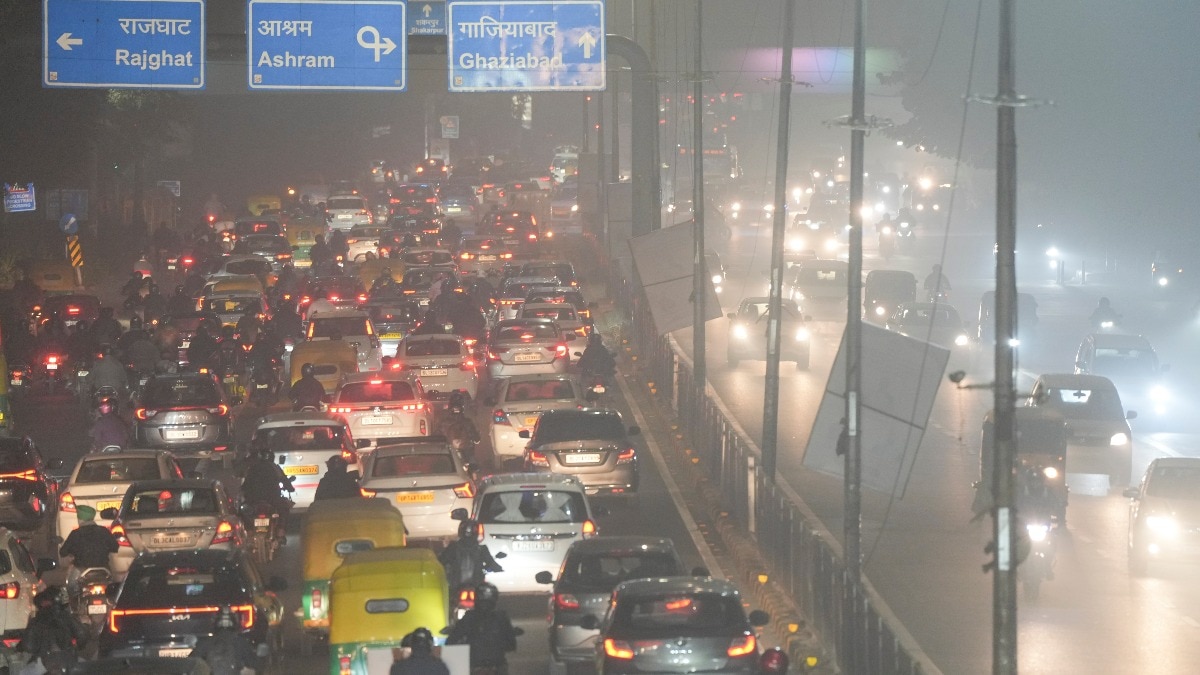
If you drive to Delhi from Noida, Gurugram, Ghaziabad or another city in the National Capital Region (NCR), your vehicle's emission standard could determine whether you can enter the capital this winter.From November 1, 2026, to January 31, 2027, Delhi will restrict the entry of certain petrol and diesel vehicles registered outside the capital that do not meet Bharat Stage VI (BS-VI) emission norms. The measure is part of the city's winter pollution-control plan.
Electric and CNG vehicles, along with specified emergency and official-duty vehicles, are exempt from this particular restriction.A separate “No PUC, No Fuel” policy requires vehicles to have a valid Pollution Under Control Certificate (PUCC) to obtain fuel in Delhi. The two measures have different requirements, so motorists should check both their vehicle's emission category and their PUC status before travelling.WHAT DOES BS-VI MEAN?Bharat Stage emission norms are India's standards for regulating pollutants released by motor vehicles.
They set limits on emissions such as nitrogen oxides, carbon monoxide, hydrocarbons and particulate matter. Each successive stage introduces tighter emission limits.
India moved directly from BS-IV to BS-VI, skipping BS-V, with BS-VI standards becoming mandatory nationwide for new vehicles from April 1, 2020.The emission category indicates the standard a vehicle was designed to meet. It is different from a PUC certificate, which records whether a vehicle meets applicable pollution limits when tested.HOW TO CHECK IF YOUR CAR IS BS-IV OR BS-VI Motorists can check their vehicle details through the government's VAHAN database, accessible via the Parivahan Sewa website.Open the vehicle-details service, commonly listed as “Know Your Vehicle Details”, and enter your registration number.
After completing the required verification, look for the “Emission Norms” or “Norms” field in the vehicle record. It should identify the applicable standard, such as Bharat Stage IV or Bharat Stage VI.If the information is unavailable or unclear, check your physical or digital Registration Certificate (RC).
You can also consult Form 22, the manufacturer's certificate containing details of the vehicle's compliance with applicable standards. An authorised dealer or the manufacturer can help confirm the category if your documents do not provide a clear answer.Do not rely on the registration year alone.
Although BS-VI became mandatory for new vehicles from April 1, 2020, checking the official record is the safer way to establish your vehicle's category, particularly if it was registered around the transition period.IS YOUR VEHICLE ALLOWED INTO DELHI?The announced restriction targets petrol and diesel vehicles registered outside Delhi that do not meet BS-VI norms. If your vehicle falls into this category, you will need to make alternative travel arrangements for entering the capital during the notified period.Petrol and diesel vehicles registered outside Delhi that meet BS-VI norms are not covered by this particular restriction.
CNG and electric vehicles are also exempt, as are specified emergency vehicles, including ambulances, fire tenders and police vehicles.The measure specifically concerns vehicles registered outside the capital; it does not mean that every older vehicle is automatically barred from every road across the NCR. Other applicable pollution-control and traffic rules may still apply.WHAT IF YOUR CAR MEETS BS-VI NORMS BUT HAS NO VALID PUC?Meeting BS-VI norms does not automatically exempt a vehicle from the PUC requirement.Delhi's separate “No PUC, No Fuel” policy requires motorists to have a valid Pollution Under Control Certificate to obtain fuel.
A BS-VI vehicle can still have an expired PUC certificate, while a valid PUC certificate does not make a non-BS-VI vehicle eligible to enter Delhi if it falls under the entry restriction.Check the validity date on your certificate before travelling. If it has expired, visit an authorised PUC testing centre to have your vehicle tested and obtain a valid certificate.
Motorists can use the Parivahan portal to access relevant vehicle and certificate services.WHAT SHOULD COMMUTERS DO BEFORE NOVEMBER 1?The first step is to confirm the vehicle's emission category through VAHAN, the RC or manufacturer documentation. If you drive a petrol or diesel vehicle registered outside Delhi, establish whether it meets BS-VI norms before planning a journey into the capital.Next, check your PUC certificate's validity, regardless of the vehicle's emission category.
If your vehicle is covered by the entry restriction, plan an alternative way to travel into Delhi during the period in which the measure applies.The entry restriction is scheduled to run until January 31, 2027. The PUC-related fuel requirement is a separate measure, and motorists should check the applicable notifications for the latest implementation details.- Ends