


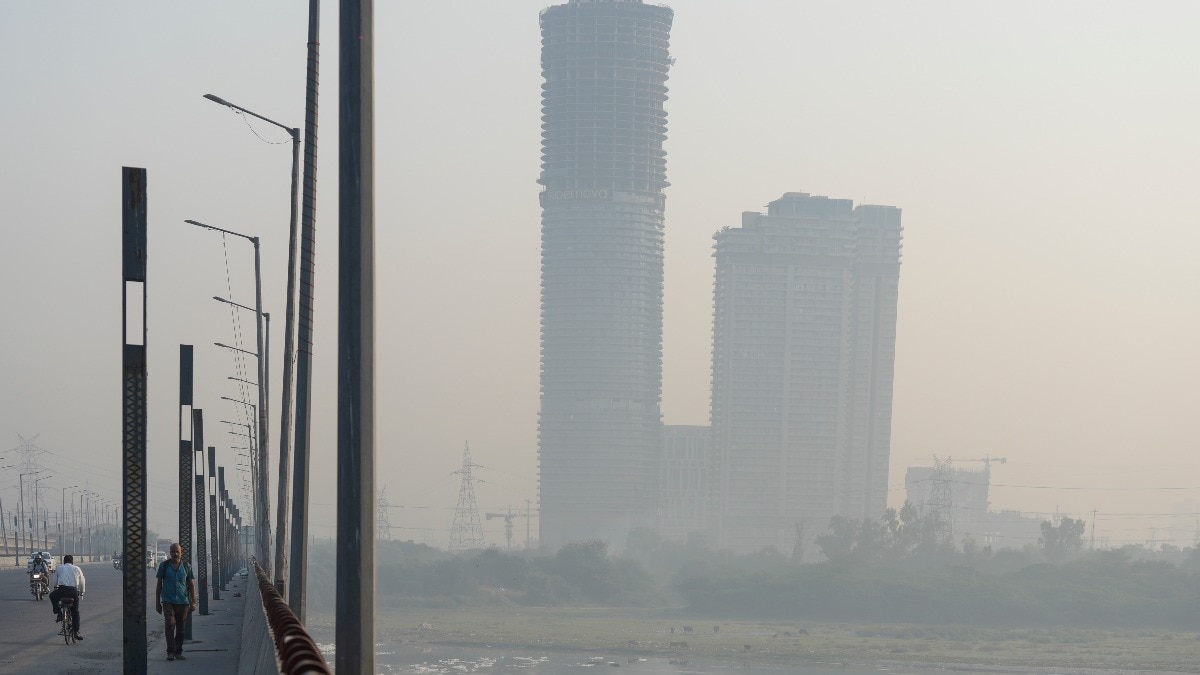
Delhi's air quality showed a modest improvement on Saturday morning, October 24, but the dip in pollution offers little comfort to residents as the capital heads deeper into its annual smog season.According to AQI.in, Delhi's Air Quality Index (AQI) stood at 296 at 9:31 am on October 24, down from 337 at the same time on Friday. The 41-point drop suggests some improvement, but the air remains heavily polluted.
People row a boat amid haze on the Yamuna river, in New Delhi. Separately, the official city-level AQI, as recorded by the Central Pollution Control Board (CPCB) was 190 on Saturday morning, at 8 am, placing it in the 'Moderate' category under India's official air-quality scale.Although figures from different platforms vary, the underlying trend remains the same.
Pollution was down, but the question is why and for how long? A graph illustrating Delhi's AQI in the last 24 hours.
WHY DID DELHI'S AQI IMPROVE?The improvement comes amid changing weather conditions that can influence how quickly pollution builds up over the city.Stronger winds help carry pollutants away, while stagnant air allows emissions from vehicles, construction, industries and other sources to accumulate. Delhi's air had deteriorated as monsoon rains ended and winds weakened, allowing pollution to build up again.The relief, however, does not mean pollution sources have been reduced.Delhi's air quality has already worsened this month, despite the introduction of the first stage of the Graded Response Action Plan (GRAP), which brings in measures to curb pollution.WILL THE RESPITE LAST?The improvement is an optimistic sign, but the situation is bound to get worse going forward.
Winter is almost here, and the pollution levels are likely to reach new heights and stay there for longer periods. A thick layer of toxic foam covers the Yamuna river surface amid haze, in New Delhi.
The Air Quality Early Warning System for Delhi, run by the Indian Institute of Tropical Meteorology (IITM), forecast that air quality would remain in the 'Poor' category from October 24 to 26, with similar conditions possible over the following six days.The forecast also points to weaker winds by October 25 and 26, which could make it harder for pollutants to disperse.A small improvement in a single morning's reading, therefore, is no guarantee of cleaner air in the days ahead. Unless weather conditions remain favourable and emissions are brought down, the respite could prove short-lived.- Ends