


Delhi's air quality remained firmly in the danger zone on Tuesday morning, November 10, with the Air Quality Index (AQI) recorded at 414 at 9:01 am, according to AQI.in.While the reading was still alarmingly high, it was lower than the 523 recorded at the same time on Monday, suggesting a slight improvement after days of worsening pollution. A graph illustrating Delhi's AQI in the last 24 hours.
But with the capital continuing to struggle with toxic air, an incoming western disturbance has raised hopes of some relief. The question is whether it will be enough to clear the pollution hanging over Delhi-NCR.WESTERN DISTURBANCE TO ARRIVE IN NORTH INDIAAccording to the India Meteorological Department (IMD), a western disturbance is expected to affect the western Himalayan region from Tuesday night, November 10.
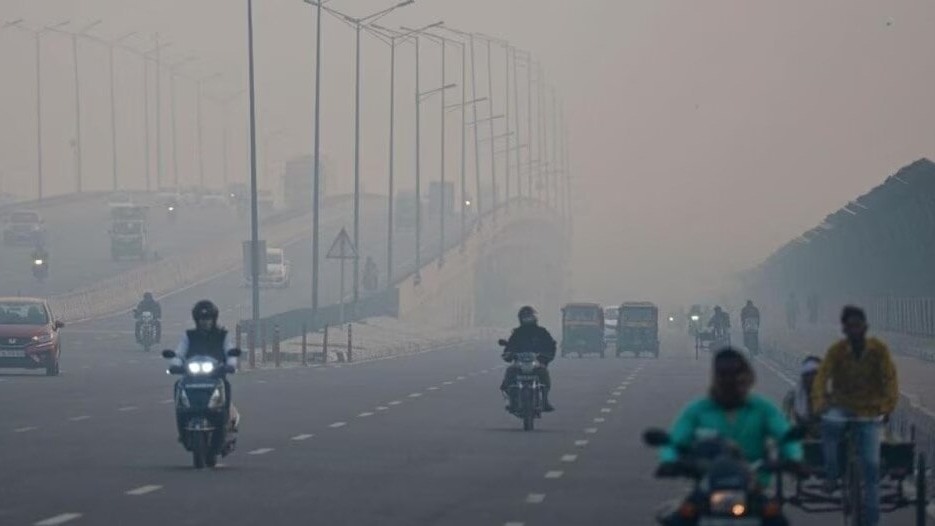
Such weather systems generally bring rain and snowfall to the hills and can also influence weather conditions across the northern plains. Vehicles move on road amid a thick layer of smog in New Delhi.
This time, however, Delhi is unlikely to benefit from it, as the IMD has forecast no rainfall in the capital between November 10 and 15. Meanwhile, Jammu and Kashmir and Ladakh are expected to receive widespread rain and snowfall, while Himachal Pradesh could also see rainfall at isolated places.Punjab, however, may receive some rain later in the week, but there is no similar forecast for Delhi.Temperatures in the capital are also unlikely to change significantly, with maximum temperatures expected to remain between 27 and 30°C and minimum temperatures between 14-17°C WILL DELHI REMAIN POLLUTED?The absence of rain is particularly concerning because rainfall helps bring dust and other pollutants down from the air.
Stronger winds can also carry pollutants away, preventing them from accumulating over the city.However, with wind speeds generally expected to remain between 5 and 15 kmph, there may not be enough natural assistance to clear the polluted air.Morning fog could further complicate the situation by limiting the movement of pollutants.The timing is far from ideal too, given how acutely pollution has worsened since Diwali. Residents burst firecrackers while wearing face masks during Diwali in New Delhi.
Delhi recorded an average AQI of 376 on November 8, according to the Central Pollution Control Board (CPCB), making it the capital's most polluted Diwali in five years.The situation deteriorated further overnight, with AQI.in recording a staggering peak of 1,331 at 1:31 am on November 9, while the AQI at 8:01 am reading stood at 663.While Tuesday's lower reading shows some improvement, the absence of favourable weather conditions means Delhi-NCR residents may have to contend with dangerously polluted air for several more days.- Ends