


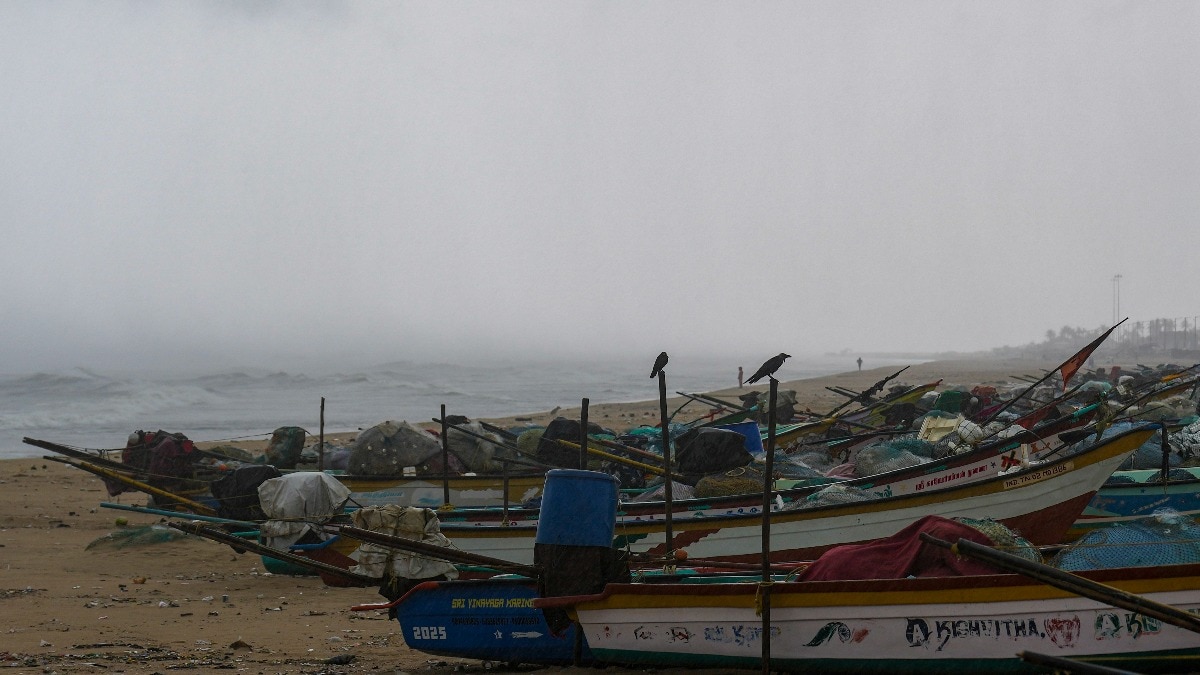
The Centre on Monday sounded an alert in four states and Puducherry and stepped up preparedness as Cyclone Arnab intensified over the Bay of Bengal and moved towards the Andhra Pradesh coast, where it is expected to make landfall on the morning of October 28. Andhra Pradesh, Odisha, Telangana, Chhattisgarh and Puducherry have been placed on alert.In its morning bulletin on Monday, the India Meteorological Department (IMD) said the cyclonic storm was centred over the east-central and adjoining west-central Bay of Bengal at 5:30 am.
It was located around 650 km east-southeast of Visakhapatnam and was moving westwards at a speed of 15 kmph.The storm is expected to intensify into a severe cyclonic storm by midnight on Monday and further strengthen into a very severe cyclonic storm on Tuesday.According to the IMD, Arnab is forecast to cross the Andhra Pradesh and Yanam coasts between Bapatla and Visakhapatnam, close to Yanam, by the forenoon of October 28. It is likely to bring sustained wind speeds of 115–125 kmph, with gusts reaching up to 140 kmph.
CENTRE REVIEWS PREPAREDNESS AHEAD OF ARNAB LANDFALLAmid the approaching storm, the Cabinet Secretary chaired a meeting of the National Crisis Management Committee (NCMC) to assess preparedness and coordinate relief measures. Authorities in eastern Uttar Pradesh and Bihar have also been asked to remain vigilant in view of the forecast of heavy rainfall.National Disaster Response Force (NDRF) and State Disaster Response Force (SDRF) teams have been deployed, with additional personnel kept on standby.
The Army, Navy, Air Force and Indian Coast Guard have also kept their rescue and relief teams ready. The Cabinet Secretary directed officials to prioritise the safety of residents, minimise damage to property and ensure uninterrupted essential services.
He also stressed the need for their swift restoration in the event of disruptions.Fishermen have been advised against venturing into the sea between October 26 and 29.The Ministry of Home Affairs, National Disaster Management Authority (NDMA) and IMD are closely monitoring the situation and coordinating with the states concerned.- Ends