


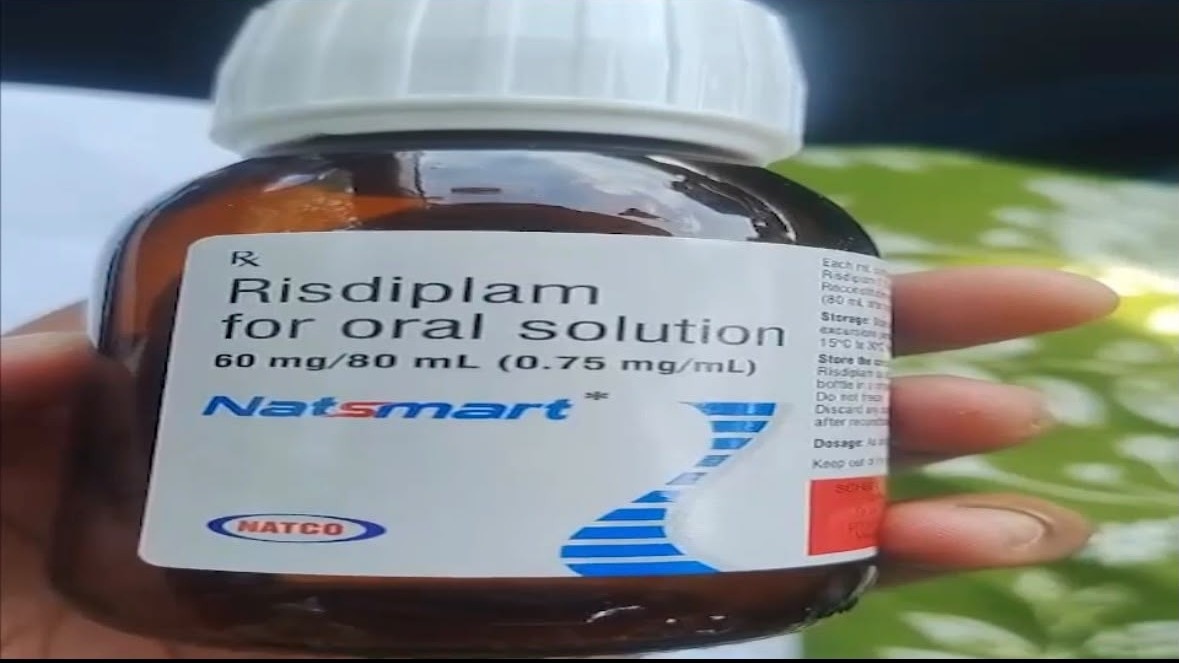
Kerala’s free treatment programme for children with spinal muscular atrophy (SMA) has come under scrutiny after a government hospital reportedly distributed medicine carrying a label stating “for clinical trial”.The controversy has also raised questions about regulatory approval, the evidence needed to establish that a generic drug works as well as its original version, and whether parents have been adequately informed about the treatment their children are receiving.The issue is particularly sensitive because SMA is a rare genetic disorder that progressively weakens muscles and can be fatal in its more severe forms. Treatment can improve survival and slow disease progression, but the cost of medicines has historically put them beyond the reach of many Indian families.Kerala has been an exception.
Since 2022, it has been the only Indian state to provide free SMA therapy to eligible children, and currently around 200 patients are estimated to benefit from the programme. The latest row, however, has erupted as the state, this week, has replaced the innovative and expensive drug Evrysdi distributed for SMA patients thus far, with a cheaper made-in-India generic version, Natsmart.HOW THE PROGRAMME EVOLVEDThe Kerala government first launched its initiative to provide free SMA medicines in 2022.
It was expanded into the Kerala United Against Rare Diseases (KARE) programme in 2023, providing approved medicines and specialised care to children with SMA under the age of 12. The programme uses a hub-and-spoke model to coordinate treatment and has established a patient registry to help monitor beneficiaries.The state started procuring Evrysdi, which has risdiplam as the active ingredient marketed by Swiss pharmaceutical company Roche under a negotiated agreement, but its procurement price under the scheme had not been disclosed.Risdiplam is one of three medicines used to treat SMA.
It modifies the processing of SMN2 messenger RNA, helping the body produce more survival motor neuron (SMN) protein. A deficiency of this protein causes the progressive muscle weakness associated with the disease.Treatment is most effective when started early, particularly in infancy, but older patients can also benefit.
The medicine does not cure SMA but helps address the underlying protein deficiency and can slow disease progression.The financial stakes, however, have been enormous.The original imported medicine could cost around Rs 72 lakh annually during the first two years of treatment and Rs 56 lakh annually thereafter. Kerala's negotiated procurement made treatment accessible to families who might otherwise have been unable to afford it.A major development in making risdiplam more affordable also came last year after the Delhi High Court allowed Hyderabad-based Natco Pharma to manufacture its generic version.Subsequenty, Natco launched its version, Natsmart, at Rs 15,900 per bottle, nearly 97% below the price of the imported original, which had cost as much as Rs 6.2 lakh per bottle.The generic had the potential to substantially reduce the cost of treatment and make public funding programmes more sustainable.WHAT TRIGGERED THE CONTROVERSY?This week, Sree Avittom Thirunal (SAT) Hospital in Thiruvananthapuram started distributing generic risdiplam.Parents of the patients, however, noticed that the packaging carried the words “Physician Sample” and “For Clinical Trials Only”, prompting fears that their children were being given an experimental drug instead of the medicine they had been receiving.On October 20, Leader of the Opposition and former Kerala chief minister Pinarayi Vijayan raised the issue and demanded an enquiry, alleging that medicines intended for clinical trials had been distributed without parental consent.He questioned whether children with a serious genetic disorder were being treated as test subjects and called for accountability from the state health department.Hospital authorities, reports suggest, have rejected the allegation that experimental medicines were being administered.
They have said the drug distributed is the generic risdiplam approved by the Central Drugs Standard Control Organisation (CDSCO).Yet, the episode has left two questions at the centre of the controversy: why was medicine bearing such labels distributed to patients, and what evidence establishes that the generic version is an appropriate substitute for the original drug?While the packaging alone does not establish that the medicine is an unapproved experimental drug, at the same time, the hospital's assurance of regulatory approval does not, by itself, explain why the trial-related labelling appeared on the product supplied to families.Meanwhile, parents are also worried that the replacement does not bode well for their children who had so far been receiving the original molecule by Roche.Archana Panda, co-founder and director of patient advocacy at the Cure SMA Foundation of India, told India Today that families were not opposed to cheaper treatment but wanted evidence that the generic was bioequivalent to the original.Her concern is that approval may have been based on chemical equivalence alone.Pharmacologists, too, say that a medicine containing the same active ingredient is not automatically proven to perform identically in every respect.Bioequivalence studies assess whether the rate and extent of absorption of the generic differ significantly from those of the reference drug. Such evidence helps regulators assess whether the products can be considered therapeutically equivalent.Panda also said parents had requested that at least children already receiving Roche's medicine be allowed to continue with it.India Today has reached out to Natcho for its comment on the development.
This copy will be updated if and when a reply is received.- Ends