


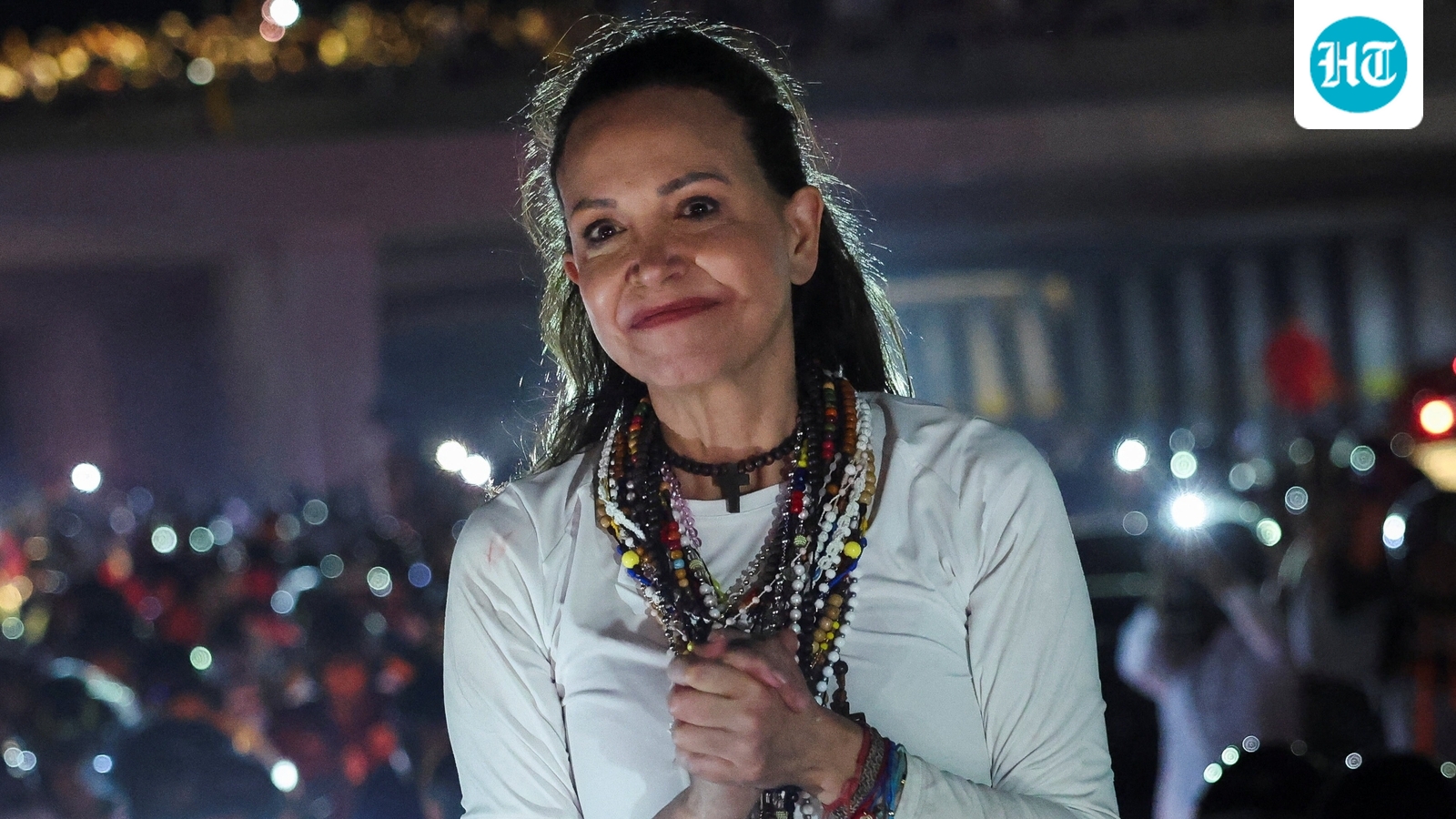
IT WAS, AS is her style, a homecoming laden with symbolism. When the first images of the opposition leader María Corina Machado emerged from inside Venezuela after a near ten-month exile on October 25th, they showed her surrounded by supporters next to the statue of the Divina Pastora.
The shrine, inside a church near the western city of Barquisimeto, depicts the Virgin Mary as a shepherdess guiding her flock. Shortly before she appeared Ms Machado had posted a cryptic message on X: “I am here.
With you all.”Venezuelan opposition leader Maria Corina Machado reacts while greeting supporters as she arrives in Caracas after travelling by road from Barquisimeto, where she made her first public appearance following her return to the country after nearly a year abroad, in Caracas, Venezuela, October 25, 2026. REUTERS/Leonardo Fernandez ViloriaHer theatrical return caught millions of Venezuelans—and possibly the country’s ruling regime—by surprise.
For months the wildly popular politician had been promising to come back “soon” to Venezuela. She had lived there in hiding until December, when she left the country clandestinely to collect the Nobel peace prize in Oslo.
In recent months she had made several attempts to go back, mostly via commercial and private aircraft. On each occasion the regime had managed to foil her plans.
This time it appears she quietly crossed the land border from Colombia. What help she received from the United States government is unclear.
She is reported to be accompanied by an American private security team.However she managed to get back, her presence in Venezuela looks set to complicate the unusual, cosy relationship the administration of President Trump has formed with the disreputable regime of Delcy Rodríguez. The latter has been running the country since January 3rd, when United States troops captured her ex-boss, Nicolás Maduro, and whisked him and his wife, Cilia Flores, to face charges of drug trafficking in New York.Mr Trump claimed not to know about Ms Machado’s return when he was asked about it on Sunday. “She is a very nice woman,” he said. “She gave me her Nobel Prize, so how can I say anything else?” In January Ms Machado handed the Nobel medal, which she won for her campaign for democracy in Venezuela, to Mr Trump (who claimed he deserved it more).
She said at the time she made the gesture in gratitude for his “decisive support of our cause”.She has since had reason to doubt the extent of that support. While Mr Trump never hesitates to praise Ms Rodríguez—whom he calls “terrific”—he has long appeared ambivalent towards Ms Machado, who is far more popular among Venezuelans.A former congresswoman from a once wealthy industrialist family, she organised the opposition election campaign in 2024.
When banned from standing for the presidency herself, she put forward a stand-in, an elderly former ambassador, Edmundo González. Mr González won the vote by a landslide.
He never took office because Mr Maduro, with the connivance of his entire entourage (including Ms Rodríguez) declared a fake result. In the weeks that followed, a vicious tightening of political repression began, forcing Mr González into exile, Ms Machado into hiding, and hundreds of opposition activists into jail.Ms Machado has called for new elections in Venezuela to be held by next July, and has made it clear she will be putting her name forward as a candidate.
This proposal has not yet received Mr Trump’s backing. “I don’t think they’re ready [for elections] yet,” he said in September.His focus instead has been on portraying the capture of Mr Maduro, and what has followed in Venezuela, as an unmitigated success. He spins it as giving America total control of Venezuela’s vast proved oil resources.
His government in August secured “majority control” of 65bn barrels of the country’s oil, about a fifth of its proven reserves, in an agreement with Venezuela and a private oil company. He claims that Venezuelans are “dancing in the streets” in celebration of all he has achieved.Mr Trump’s problem, and Ms Machado’s opportunity, is that this is not true.
Few Venezuelans view his propping up of Ms Rodríguez (who is widely loathed), or their own economic situation, as anything like success. Mr Trump’s own popularity in Venezuela has slumped in recent months. “He got rid of Maduro, which is good, but it is basically the same shit here,” said Eduardo, a computer technician in Caracas, the capital.While Ms Machado has been outside the country, the United States has backed tentative transition talks led by another opposition leader, Dinorah Figuera.
The regime’s side of these negotiations has been led by the head of the national assembly, Jorge Rodríguez, Ms Rodríguez’s brother. Discussions concluded last week with agreements for more talks on judicial and legal reforms.
More than 1,000 political prisoners have been released this year. Over 300 more remain locked up.
On October 22nd Ms Figuera went to the presidential palace for her first public meeting with Ms Rodríguez, a signal of reconciliation.“The conditions allowing for the safe return of Ms Machado to Venezuela is the direct result of the US supported reconciliation talks which has already seen hundreds of political prisoners freed and hundreds of political opposition figures return from exile,” said the American secretary of state, Marco Rubio, on October 25th. That same evening, Ms Machado was on her way, with a caravan of supporters, to the capital. “Very soon I will be with you,” posted Mr González, the winner of the 2024 election.
Venezuelans may well soon be dancing in the streets—but not to Mr Trump’s tune.