


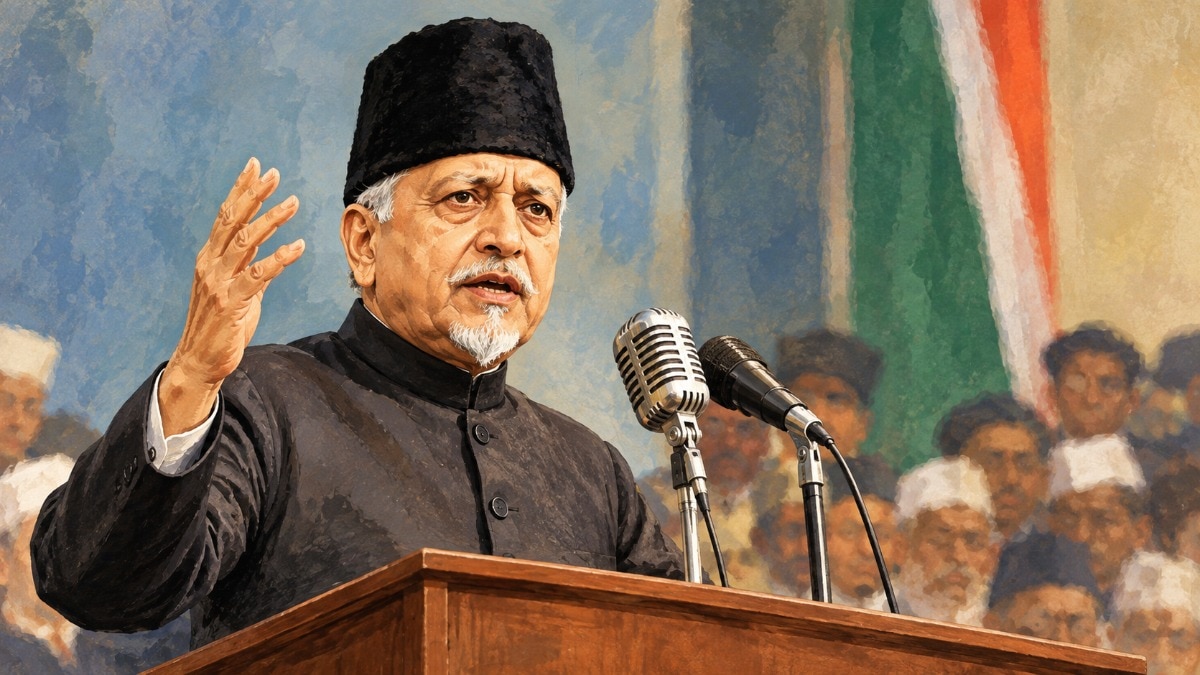
National Education Day 2026 honours Maulana Abul Kalam Azad, India's first Education Minister, whose vision shaped the country's education system through institutions such as IITs and UGC, while championing inclusive, accessible and holistic learning.National Education Day 2026: History, significance and Maulana Azad's contribution(Photo- AI genrated) India observes National Education Day every year on November 11 to mark the birth anniversary of Maulana Abul Kalam Azad, the country's first Education Minister after Independence. But beyond the annual commemorations, the day also offers an opportunity to revisit the vision of a leader who believed that education was central to building a strong, progressive, and inclusive nation.From establishing institutions that would shape higher education to advocating universal access to schooling, Azad's contribution continues to influence India's educational landscape decades after his tenure.WHY IS NATIONAL EDUCATION DAY CELEBRATED ON NOVEMBER 11?Born on November 11, 1888, Maulana Abul Kalam Azad served as independent India's first Education Minister from 1947 to 1958 under Prime Minister Jawaharlal Nehru.A freedom fighter, scholar and educationist, Azad believed that education should not remain restricted to privileged sections of society.
He advocated free and compulsory education for children up to the age of 14, alongside greater opportunities for women's education, vocational training and learning in one's mother tongue at the primary level. In September 2008, the Ministry of Human Resource Development announced that November 11 would be observed as National Education Day in recognition of his contribution.
The first observance took place that year.INSTITUTIONS THAT CARRY HIS VISIONOne of Azad's most significant contributions was laying the groundwork for institutions that would become pillars of India's higher and technical education system. IIT Kharagpur, India's first Indian Institute of Technology, began functioning in May 1950 and was formally inaugurated by Azad on August 18, 1951.
Its establishment marked an important step towards building India's scientific and technological capabilities.He also played a significant role in strengthening university education. The University Grants Commission (UGC) was formally inaugurated by him in 1953 before becoming a statutory body in 1956.
Today, it remains central to maintaining academic standards and supporting higher education institutions.His vision extended beyond science and technology. The Indian Council for Cultural Relations was established in 1950, while institutions such as the Sangeet Natak Akademi, Sahitya Akademi and Lalit Kala Akademi helped promote India's performing arts, literature and visual arts.The All India Council for Technical Education (AICTE), established in 1945, also reflects the broader importance of technical education that Azad championed, although it predates his tenure.MORE THAN A DAY OF REMEMBRANCENational Education Day is therefore not simply about remembering India's first Education Minister.
It is also about revisiting the foundations on which the country's education system was built.Azad's emphasis on accessibility, scientific thinking, technical learning, and cultural awareness remains relevant as India continues to expand educational opportunities and strengthen its institutions.- Ends