


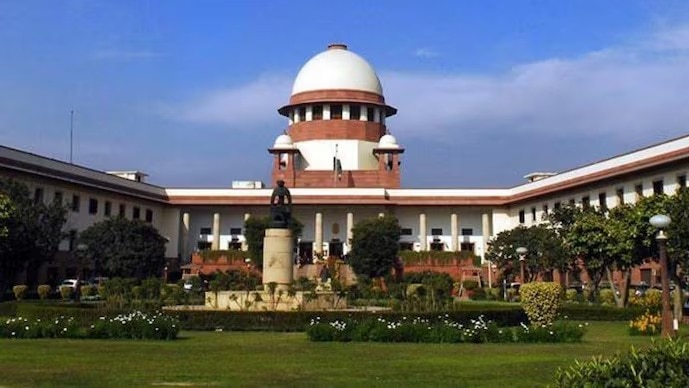
An expert committee has submitted its proposed rank-based NEET admission system to the Supreme Court. The proposal seeks to prevent diluted eligibility standards while addressing vacant postgraduate medical seats.
A 12-member expert committee constituted to review the NEET admission system has recommended replacing the existing percentile-based qualifying system for NEET-PG and NEET-SS with a rank-based merit system.The committee submitted its report to the Supreme Court on November 3. It said that admissions should be based on candidates' ranks rather than the existing percentile-based eligibility system.
The National Medical Commission (NMC) has given in-principle approval to the proposal, with implementation proposed from 2027. The detailed rules, however, are yet to be finalised.The committee has also said that minimum eligibility standards should not be lowered merely to fill vacant postgraduate medical seats.
It observed that admission requirements should not be substantially reduced for this purpose.Among its other recommendations are lower fees for non-clinical postgraduate courses and exemptions from service bonds for candidates taking pre-clinical and para-clinical subjects. The committee has also suggested measures to address delays in counselling and the recurring problem of vacant seats.
The Supreme Court has granted the petitioners time to file their responses to the report and adjourned the hearing.HOW THE ISSUE AROSEThe recommendations follow a dispute over repeated reductions in the NEET-PG qualifying cut-off to fill vacant seats during counselling. In 2023, the qualifying percentile was reduced to zero across categories.
This allowed candidates with negative marks to become eligible for counselling. The cut-off was lowered again in 2024, when it was brought down to 15 percentile for General and EWS candidates and 10 percentile for reserved categories.The issue came up again during the 2025-26 admission cycle.
On January 13, 2026, the National Board of Examinations in Medical Sciences (NBEMS) issued a revised cut-off for the third round of NEET-PG counselling.The qualifying percentile for General category candidates was reduced from the 50th to the 7th percentile. For General PwD candidates, it was lowered from the 45th to the 5th percentile.
For SC, ST and OBC candidates, it was brought down from the 40th percentile to zero. The revised criteria also allowed candidates with negative marks to qualify.The decision was taken after a large number of postgraduate medical seats remained vacant.
According to figures placed before the Supreme Court, 95,913 additional candidates became eligible for counselling following the reduction.The move was challenged before the Supreme Court by petitioners who questioned whether such a sharp reduction in eligibility standards was consistent with maintaining the quality of postgraduate medical education.SUPREME COURT SEEKS A LASTING SOLUTIONIn May 2026, the Supreme Court called for an institutional mechanism to address the recurring problem of cut-off reductions. The Bench of Justices P.S.
Narasimha and Alok Aradhe observed that the issue arose repeatedly during admission cycles, causing difficulties for candidates and leaving seats vacant.The Court also raised concerns over the effect of reducing qualifying standards on medical education.Following the proceedings, the Centre informed the Court in August 2026 that it had constituted a 12-member committee headed by the Director General of Health Services. The panel was asked to examine the existing admission system, identify its shortcomings and suggest measures that could be implemented.The committee has now submitted its report, recommending a change in the admission system from 2027.The proposed rank-based system, along with the other recommendations, is intended to address the recurring difficulties in postgraduate medical admissions while maintaining minimum eligibility standards.The final decision will depend on the rules framed by the authorities and the further proceedings before the Supreme Court.- Ends