


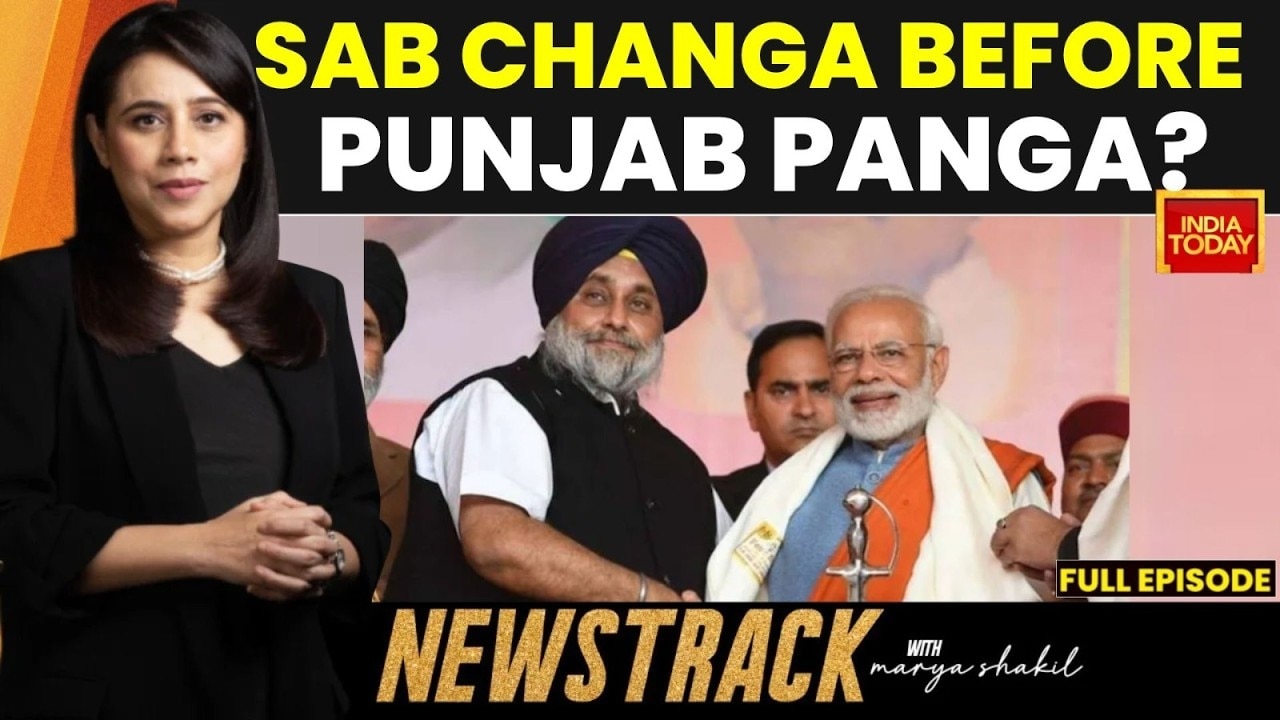
UPDATED: Oct 23, 2026 23:29 ISTFresh political signaling from the Bharatiya Janata Party and Shiromani Akali Dal has reignited speculation regarding a potential reunion ahead of the 2027 Punjab Assembly elections. SAD Chief Sukhbir Singh Badal expressed openness to joining hands with like-minded parties while targeting both the ruling Aam Aadmi Party and Congress, recalling the governance and peace under the previous SAD-BJP coalition rule.
Meanwhile, Union Home Minister Amit Shah projected the formation of a National Democratic Alliance government in Punjab. The long-standing partnership had snapped in 2020 over the central farm laws after decades of joint governance.
Panellists debated the electoral viability and arithmetic of an alliance, highlighting seat-sharing dynamics, past vote-share trends, and issues surrounding law enforcement and the narcotics crisis in the state. Read MoreVIDEOS FROM OTHER SECTIONSLATEST VIDEOSPunjab Polls Reunion Debate: Maheshinder Grewal, Dr S.S.
Channi, Bikramjit PassiA debate on the potential reunion between long-time allies Shiromani Akali Dal and the Bharatiya Janata Party ahead of the upcoming Punjab assembly elections. Senior Akali Dal leader and former cabinet minister Maheshinder Singh Grewal indicated that regional political equations necessitate an alliance, stating, 'In politics, no permanent enemies, no permanent friends.' BJP Punjab chief spokesperson Dr S.S.
Channi emphasized historical cooperation for communal harmony and development, leaving final decisions to the party high command. Aam Aadmi Party national spokesperson Bikramjit Singh Passi dismissed both parties as having lost credibility in Punjab, asserting that their joint or separate efforts would yield zero results while defending the AAP government's record on law and order and anti-narcotics enforcement.
Political analyst Rashid Kidwai noted the structural complexities of seat-sharing and predicted a tightly contested or hung assembly if political alignments shift, highlighting the electoral stakes across Punjab's major political fronts.Drinking Water Wastage, Inaction at Sultan Bazar Under Metro PillarsA ground report from Sultan Bazar in Hyderabad highlights severe drinking water wastage occurring beneath metro pillars 1204 and 1203. Despite appeals by Chief Minister Revanth Reddy to conserve drinking water, treated municipal tap water has been flowing continuously onto the streets of this busy commercial area.
Local shopkeepers and residents stated that the leakage has persisted for years, running daily for several hours. Commuters and traders reported significant inconvenience, noting that the water flow causes slippery roads, accidents, and damage to market goods.
Residents pointed out that multiple complaints lodged with local corporators and metro rail authorities yielded no redress, as officials allegedly claimed digging around the pillars could compromise the metro structures. Visual evidence shows persistent water escaping from numerous spots along the pillar base, reflecting official inaction.Election Commission Accountability: S.Y.
Quraishi, Ashok Lavasa, GVL Narasimha RaoA high-stakes discussion on the Election Commission of India focuses on recent course corrections and controversies surrounding the Special Intensive Revision (SIR) process. Former Election Commissioner Ashok Lavasa highlighted that rolling back decisions on Form 6, ECI net review, and Form 7 amounts to an admission of mistakes, stressing that accountability must be fixed.
Lavasa noted, 'The principal issue now would not only be that so many crores of people were disenfranchised quite unfairly, but to fix the accountability on who took these decisions and why were these decisions taken.' Former Chief Election Commissioner Dr S.Y. Quraishi contended that unilateral decisions without multi-member consensus were illegal, arguing that the election process had been vitiated.
In response, senior BJP leader and former Rajya Sabha MP GVL Narasimha Rao defended the SIR exercise, stating that voter list revisions were long overdue and aligned with standard democratic electoral cleanups globally.