


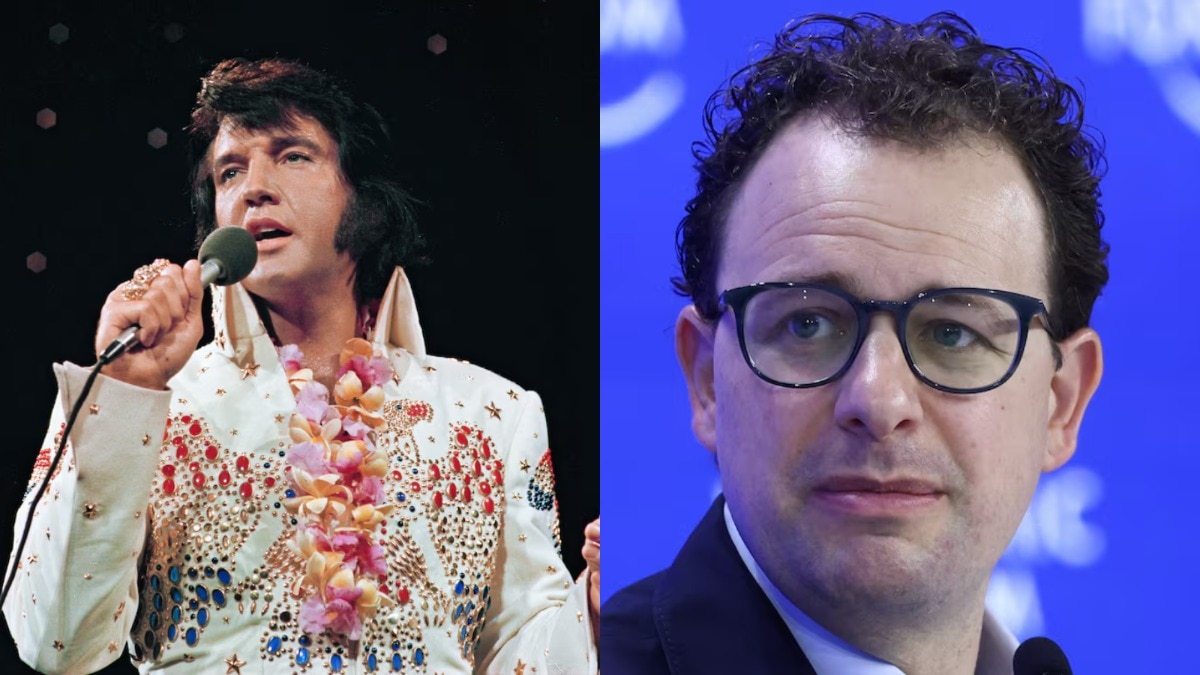
Legendary American singer Elvis Aaron Presley, known as the “King of Rock and Roll”, is now part of another AI copyright controversy. Authentic Brands Group, the licensing company that controls key rights to Presley’s music and likeness, has sued Anthropic for allegedly using 274 of his songs to train its AI models without permission.
The lawsuit adds to the growing list of copyright battles facing AI companies over how they use creative works to train their technology.The case was filed on Friday, October 23, first reported by Billboard. The complaint reportedly names songs such as Can't Help Falling in Love, Don't Be Cruel and All Shook Up.
Lead attorney Richard Busch accused Anthropic of building its business on copyright infringement, writing in the lawsuit, “The Elvis Plaintiffs bring this action to enforce these exclusive rights against the defendant that has built its entire business model based on copyright infringement at a scale never seen before.” Anthropic had not immediately commented on the lawsuit, according to reports.AI music companies face growing copyright battlesAs AI expands into more areas of knowledge and the arts, concerns among artists and intellectuals are growing too. The tale of copyright lawsuits against AI firms like Anthropic is not new; earlier, AI music generator Suno, for instance, was sued in 2024 by major music companies, including Universal Music Group, Sony Music and Warner Records, over allegations of unauthorised use of copyrighted recordings.
Suno later settled with Warner Music Group and said it would work with the music industry, while disputes with other labels continued, according to the reports provided.Authors say AI firms used their books without permissionMusic is not the only creative field caught in this fight. Authors have also accused AI companies of using their books without permission to train large language models.
For instance, in her recently published essay ‘Apocalypse Now and Then’, Booker Prize-winning writer Arundhati Roy alleged that Anthropic used her books without permission to train its large language model (LLM). Describing the settlement notice she received following a class-action lawsuit, Roy wrote, “I received a notice offering to throw me a couple of thousand dollars per title as a settlement.
These are books that took me a lifetime of living, and several years of writing.” Comparing the experience to having “the organs of my body harvested without my knowing.” In June of this year, another copyright lawsuit followed more than 100 authors have filed a lawsuit against Anthropic, accusing it of using their books without permission to train its AI models. If we go back even a little, we come to the Bartz v.
Anthropic case, where Anthropic agreed to a reported $1.5 billion settlement with affected authors.With musicians and writers now challenging how their work enters AI training datasets, the legal question is becoming harder for tech companies to ignore. - Ends