


There was a phase in Telugu cinema when, regardless of commercial success, a wave of films made me fall in love with the industry. Brochevarevarura, Agent Sai Srinivasa Athreya, C/o Kancherapalem, Pelli Choopulu and Jersey were among those films that made audiences, even outside the Telugu states, look at Telugu cinema with a newfound respect for its content.
2026 has given me a taste of that feeling again, especially with films like Rao Bahadur, Epic and on November 19, ENE Repeat. And arriving in the same weekend, Dulquer Salmaan's Aakasamlo Oka Tara only solidifies that feeling further.Think about it.
A scene that could easily have been designed as a conventional hero-elevation moment, with a husband supporting his wife's dreams, takes an entirely different turn when the protagonist says, "I didn't do anything. I just didn't stop her.
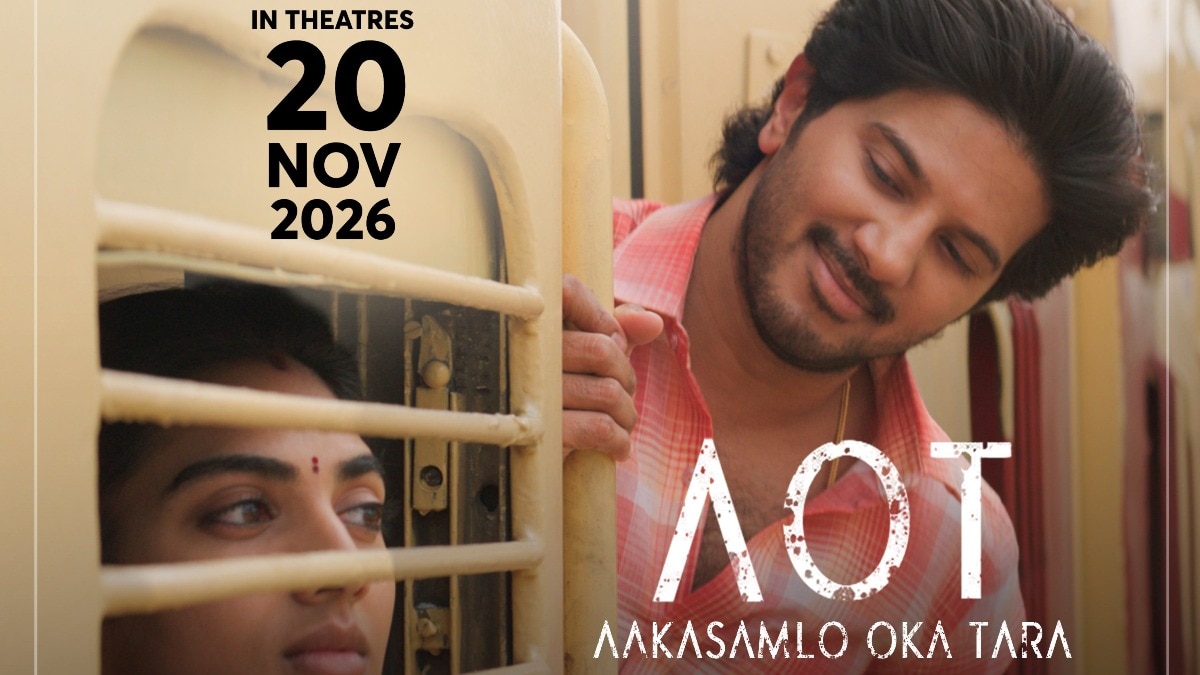
I don't think that needs to be praised." When a film approaches a moment like this with such sensitivity, you know you have walked into a story with sensible writing and genuine emotional depth. That is exactly what Aakasamlo Oka Tara offers, and it has moments like these in abundance.Kalpana (Satvika Veeravalli) is a young girl from a village who dreams of becoming an astronaut.
But her father sees little value in educating his daughter and gets her married at the age of 16. Her husband, Krishna (Dulquer Salmaan), gradually realises that her ambition is not a passing childhood fantasy but something she genuinely wants to pursue.
Recognising what the dream means to her, he quietly decides to stand by her. What follows is a moving story about dreams, marriage, family responsibilities and the simple yet profound idea of supporting someone you love.The central story isn't entirely new, but the way director Pavan Sadineni and his writing team approach the characters and emotions makes all the difference.
Krishna is never portrayed as a saviour. This isn't a story where a man derives validation from a woman's dream or where her success exists merely to make the hero look good.
The dream is hers. All he does is ensure that nobody, himself included, becomes an obstacle in her pursuit of it.
It sounds simple, but it gives the film some wonderfully written moments. The confrontation between Krishna and his sister is one such instance.
It offers a fresh, heartwarming justification for his actions without falling back on familiar dramatic tropes. There is also a lovely sequence in the second half involving Rohini (Shruti Haasan) and Krishna, where he explains why a driver like him married a scientist like her.
It is a beautifully conceived moment, and the way it unfolds on screen makes it difficult not to get emotional. These sequences work because they emerge naturally from the characters rather than being forced upon the audience for an emotional response.
The marriage itself is the film's biggest achievement. It feels lived-in, with two people gradually figuring out what they mean to each other.
Love here isn't about grand gestures. It is about recognising someone's potential, giving them the space to pursue it and being happy to stand beside them when they finally get there.
There are several layers to Krishna and Kalpana's relationship, and the film patiently peels them one by one as the story progresses. That nuanced understanding of marriage is what makes their equation so refreshing.Dulquer Salmaan is terrific.
There is a maturity and restraint in the way he plays Krishna, and he never demands attention or tries to dominate a scene. He understands the kind of film he is part of and allows the character's quiet strength to speak for itself.
After Sita Ramam and Lucky Baskhar, this is another Telugu performance worth remembering. One can't help wondering why more Telugu actors aren't picking stories and characters like these.
But it is wonderful that Dulquer continues to embrace them.Debutant Satvika Veeravalli is a pleasant surprise. The entire film rests on the audience believing in Kalpana's dream, and she makes that journey convincing.
She handles the transition from a schoolgirl to a married woman with remarkable maturity. Her innocence and vulnerability suit the character, and she never comes across as a newcomer.
The emotional sequence involving her father is another highlight.Shruti Haasan, playing Rohini Kariappa, brings a quiet gravity to the film. Her screen time may be limited, but every appearance counts.
Her interactions with Kalpana carry an unspoken sense of mentorship, as she recognises something of herself in the young woman's determination. Ruhani Sharma, as Bijili, also makes her brief appearance count, while the extended supporting cast adds to the film's warmth.The technical departments complement the storytelling well.
Sujith Sarang's cinematography gives the village setting a warm, lived-in quality, while GV Prakash Kumar's music and background score enhance the emotional moments without overpowering them. Gunnam Gangaraju's dialogues deserve special mention for making the conversations between Krishna and Kalpana sound so natural.
The space-related portions in the second half are also considerably more extensive than the trailer suggests. While the visual effects have a few shortcomings, they don't significantly affect the experience.
The production values, backed by Geetha Arts and Swapna Cinema, are impressive. That said, the film isn't without flaws.
The dubbing is the most noticeable issue. In several close-ups and emotionally important conversations, there is a mismatch between the actors' lip movements and the dubbed dialogues, occasionally pulling you out of the moment.
The second half could also have benefited from tighter editing. Several sequences are staged with the weight of a climax, making the film feel as though it is reaching its conclusion multiple times.
Even after what feels like the emotional culmination, there are another 10 to 20 minutes left. Those portions have their moments, but a more streamlined narrative would have made the experience considerably better.These shortcomings, however, feel rather minuscule compared to the emotional high the film delivers.
Aakasamlo Oka Tara is a beautiful, emotionally rewarding film that reminds a Telugu cinema lover why they fell in love with the industry in the first place. At a time when thoughtfully written, feel-good stories are more than welcome, Pavan Sadineni delivers a film that understands the beauty of relationships and the importance of letting people dream.
It may not be flawless, but it comes remarkably close. More importantly, it is the kind of film you walk out wanting to recommend to your family and friends.- Ends