


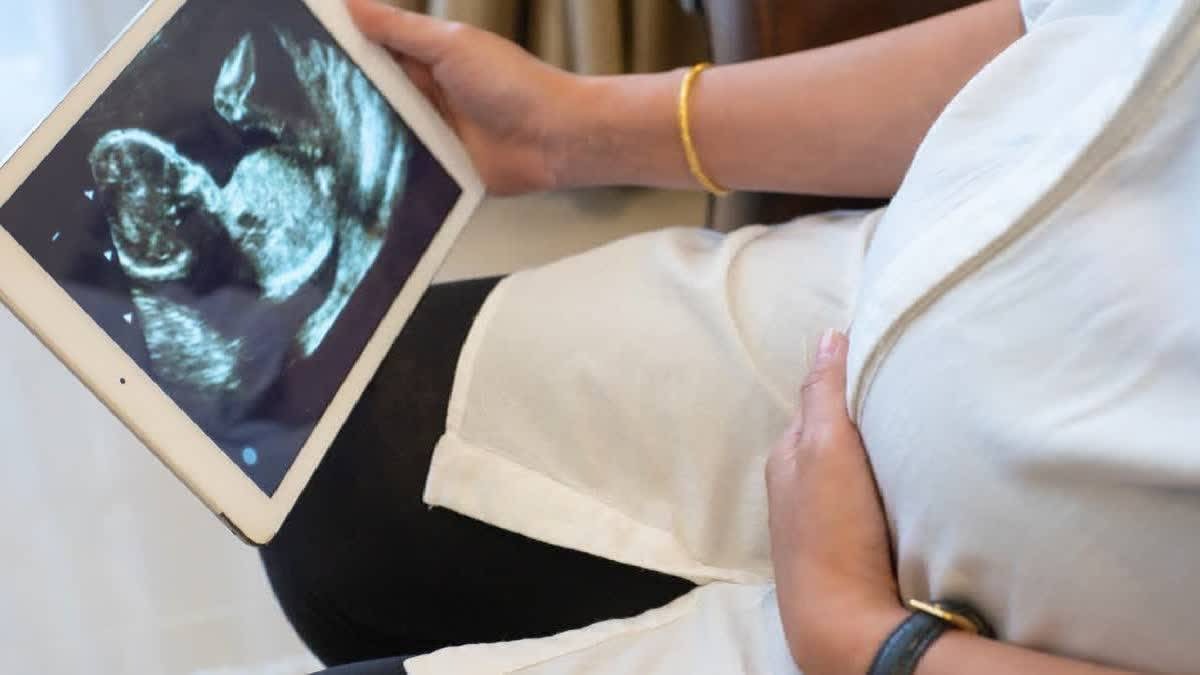
Dr. Sankalp Jain explains why couples should undergo individual fertility assessment before choosing IVF.
His advice reframes infertility as a shared medical and emotional concern.Dr. Sankalp Jain explains why couples should undergo individual fertility assessment before choosing IVF.
For couples trying to conceive, the journey can involve more than medical tests and treatment. Age, reproductive health, lifestyle, emotional stress and the pressure to have a child can all become part of the experience.
Yet, when pregnancy does not happen as expected, IVF is not necessarily the only option to explore.In a conversation about fertility, Dr. Sankalp Jain, MBBS, FNR, PGDID (Australia), PGD in Sexology and Psychosexual Therapy, The American College of Sexologists (USA), discusses why fertility needs to be understood as a concern involving both partners, why the pressure to conceive can affect relationships, and why a proper assessment matters before deciding on treatment.IVF IS AN OPTION, NOT ALWAYS THE FIRST STEPIn vitro fertilisation (IVF) has made parenthood possible for many people who face difficulties conceiving.
However, the decision to pursue it should follow an assessment of the underlying fertility concern rather than an assumption that every couple struggling to conceive needs assisted reproduction immediately.In the interview, Dr Jain argues that IVF should not automatically become the first recommendation. The appropriate approach, he says, depends on the couple's medical history, test results and individual circumstances.
Some fertility problems may require specific treatment, while others need further investigation before a suitable course of action can be determined. Conditions such as endometriosis or blocked fallopian tubes, for instance, may require specialist evaluation.This does not diminish the role of IVF.
Rather, it highlights the importance of understanding when it is appropriate and discussing the available options with a qualified fertility specialist.INFERTILITY IS NOT JUST A WOMAN'S CONCERN One of the most persistent misconceptions surrounding infertility is that the woman is primarily responsible when a couple cannot conceive.However, male reproductive health also needs to be assessed. Sperm count and quality, hormonal factors and other reproductive concerns can influence a couple's ability to conceive.
In some cases, both partners may have contributing factors.Dr Jain highlights the need to move away from placing the entire burden of conception on women. Fertility evaluation, he says, should involve both partners rather than focus exclusively on the woman's reproductive health.This approach is important not only for identifying possible medical causes but also for reducing the blame and stigma that couples may face from families and society.AGE MATTERS, BUT FERTILITY IS INDIVIDUALAge is another important consideration when discussing fertility.
Female fertility generally declines with age, partly because the number of available eggs decreases and egg quality can change. Increasing age is also associated with a higher risk of chromosomal abnormalities and miscarriage.Male fertility can change with age as well, including changes in sperm quality, although the pattern differs from that of female reproductive ageing.In the interview, Dr Jain discusses the importance of understanding these age-related changes rather than relying on the experiences of celebrities or other people who conceive later in life.
Individual experiences cannot predict what will happen for every couple.At the same time, age alone does not determine whether someone will conceive naturally. A person's reproductive health, medical history and other factors also matter.For those planning a pregnancy later in life, an individual consultation can help clarify their circumstances and whether any evaluation is appropriate.LIFESTYLE AND METABOLIC HEALTH DESERVE ATTENTIONFertility cannot be understood in isolation from overall health.
During the conversation, Dr. Jain points to obesity, insulin resistance, smoking, substance use, stress and other lifestyle-related concerns as factors worth considering when assessing reproductive health.Metabolic health is particularly relevant because conditions affecting insulin regulation and hormonal function may be associated with reproductive difficulties.
Smoking and the use of anabolic steroids can also adversely affect reproductive health.Dr Jain also raises concerns about highly processed diets and air pollution. These are areas of ongoing scientific investigation, and their effects should not be treated as identical or as a definitive explanation for an individual's fertility difficulties.The practical takeaway is to address known health concerns, avoid smoking and non-prescribed anabolic steroids, maintain a balanced diet and seek medical advice for conditions that may affect reproductive health.There is no single lifestyle change that guarantees conception.
Equally, difficulty conceiving should not automatically be interpreted as evidence that someone has made the wrong lifestyle choices.THE EMOTIONAL PRESSURE OF TRYING TO CONCEIVETrying to conceive can turn an intimate part of a relationship into a source of anxiety. Couples may begin to plan intercourse around the fertile window, worry about whether they are doing enough and feel disappointed when pregnancy does not occur.Dr Jain discusses how this pressure can affect both partners.
Women may face expectations from family and society, while men can experience stress around sexual performance and their perceived responsibility to father a child.When the process becomes dominated by targets, repeated questions and the fear of failure, intimacy itself can become stressful. This may affect a couple's emotional well-being and their relationship.The answer is not to blame stress for infertility or suggest that relaxing will automatically lead to pregnancy.
Instead, couples should be able to discuss their concerns without shame, support each other and seek professional help when needed.Fertility treatment can be emotionally demanding, and counselling or psychological support may help people navigate the experience.WHY BOTH PARTNERS NEED THE RIGHT TESTSFertility investigations should be guided by a clinician rather than undertaken indiscriminately or based on online advice. The appropriate tests depend on the couple's age, medical history, how long they have been trying to conceive and any symptoms or known conditions.In the interview, Dr Jain mentions tests such as anti-Mllerian hormone (AMH) assessment in women and semen analysis in men.
These can provide useful information in the right clinical context, but neither test alone can establish the complete picture of fertility or guarantee whether natural conception will occur.Other investigations may be recommended depending on the findings. A clinician may assess ovulation, hormonal factors, the uterus and fallopian tubes, or further male reproductive factors as appropriate.Couples should also be cautious about interpreting isolated test results or starting fertility supplements without professional guidance.
An abnormal result does not always mean pregnancy is impossible, and a normal result does not guarantee conception.WHEN SHOULD A COUPLE SEEK MEDICAL ADVICE?Couples do not need to wait indefinitely before discussing fertility concerns with a healthcare professional. As a general guideline, an evaluation is recommended after 12 months of regular, unprotected intercourse without conception when the female partner is under 35, and after six months when she is 35 or older.An earlier consultation may be appropriate when the female partner is over 40 or either partner has known risk factors, such as irregular or absent periods, a history of reproductive conditions, previous cancer treatment or a suspected male fertility problem.A consultation does not automatically mean IVF.
It is an opportunity to understand the possible reasons for difficulty conceiving and discuss appropriate next steps.THE CONVERSATION NEEDS TO CHANGEThe growing visibility of IVF has made fertility treatment more familiar, but it has also made it important to distinguish awareness from the assumption that every couple needs the same intervention.As Dr Jain's discussion highlights, fertility involves two partners and may require consideration of reproductive, hormonal, metabolic and emotional factors. Some couples will need assisted reproductive technology; others may benefit from different medical interventions or further evaluation.The most important step is not to compare one's journey with someone else's or assume that a particular treatment is inevitable.
It is to seek an individual assessment, understand the available options and make informed decisions together.Fertility is not a measure of a person's worth, and difficulty conceiving is not a reason for shame. A more informed, balanced conversation can help couples approach the process with greater clarity, realistic expectations and support.- Ends