


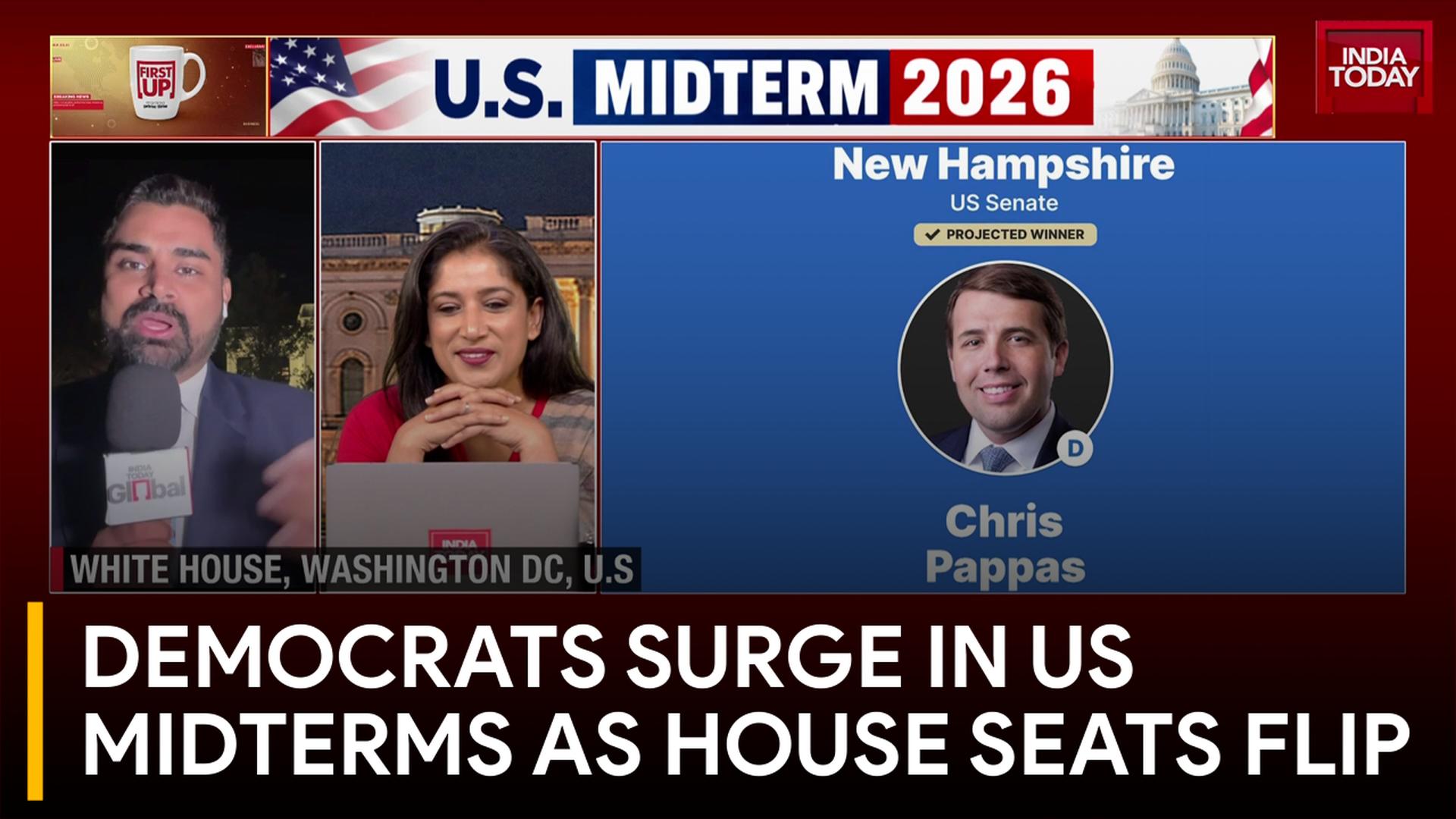
UPDATED: Nov 4, 2026 08:55 ISTEarly results from the United States midterm elections indicate significant gains for the Democratic Party, pointing to an apparent wave against the policies of the administration. Projections show Democrats crossing the 100-seat mark in the House of Representatives, establishing a lead of nearly 50 seats over Republicans and flipping four key states.
Discussions highlight that the outcome could compel President Donald Trump to govern alongside a Democratic-led Congress for the first time, altering legislative strategy from January 2027. While GOP campaign efforts focused on battleground states such as Texas, North Carolina, and Pennsylvania, early reporting shows Democratic momentum extending into contested Senate races.
Officials and observers also note that potential shifts in legislative control could redirect presidential focus toward executive actions, veto powers, foreign policy, and early positioning among prospective candidates ahead of the 2028 presidential campaign. Read MoreVIDEOS FROM OTHER SECTIONSLATEST VIDEOSUS Midterms: Democrats Flip North Carolina Senate Seat as Key Races Remain TightEarly US midterm election results indicate notable gains for the Democratic Party in key contests across the country, though control of the United States Congress remains undecided.
In a major breakthrough, Democrat Roy Cooper flipped a Republican-held Senate seat in North Carolina by defeating Michael Whatley, while Jon Ossoff held Georgia and Chris Pappas secured New Hampshire. Crucial Senate races in Ohio, Maine, Alaska, Texas, and Iowa are still being counted.
Meanwhile, the battle for the House of Representatives remains intense, with Democrats seeking a net gain of three seats to capture the 218-seat majority. Several Indian American candidates also contested prominent races, including Suhas Subramanyam winning re-election in Virginia and Pia Dandiya winning Florida's 22nd Congressional District, while Vivek Ramaswamy trailed in Ohio's gubernatorial race.
With high-stakes issues shaping the vote, analysts observe that a shift in either congressional chamber could significantly impact Donald Trump's legislative agenda and executive oversight during his presidency.US Midterms: Democrats Lead Early Projections as Key Senate and House Seats DecidedEarly projections from the United States midterm elections indicate significant gains for the Democratic Party across key House, Senate, and gubernatorial contests. Democrats secured early leads in congressional tallies, picking up seats in North Carolina, while Roy Cooper delivered a victory speech after capturing a United States Senate seat for the state.
Jon Ossoff claimed a Senate seat in Georgia, and Helena Foulkes won the Rhode Island gubernatorial election. Meanwhile, Republicans saw Byron Donalds secure the Florida governorship and Ashley Moody win re-election to the Senate from Florida.
Inside the White House, President Donald Trump monitored incoming results from the East Room alongside cabinet members, including Marco Rubio. Analysts noted that while early counts placed Democrats significantly ahead in the House toward the 218-seat majority threshold, final outcomes remain contingent on key battleground states, including Ohio, Michigan, and Texas, as polling closes and votes are tabulated across different time zones.Vivek Ramaswamy Trails In Ohio Governor Race Amid Ad Backlash And Economic IssuesVivek Ramaswamy is trailing in the Ohio governor's race with nearly 40 percent of the vote counted, falling behind Democratic rival Amy Acton despite earlier campaign appearances by Donald Trump.
Analysis during the bulletin highlighted that a controversial advertisement, which drew bipartisan rebuke and calls from Ohio's sitting Republican governor to be withdrawn, significantly damaged Ramaswamy's standing. Discussants pointed out voter disconnect in post-industrial Ohio towns, compounded by broader economic headwinds including inflation and price spikes.
While Ramaswamy initially entered the contest as a strong contender, the fallout from the campaign strategy and failure to address pressing voter issues have contributed to a steep downturn in his electoral numbers.US Election Results, Battle For Senate Control And Indian American VoteAs vote counts progress in the United States congressional elections, attention remains focused on pivotal battleground contests and the balance of power across both chambers of the legislature. Early indicators suggest shifting dynamics in legislative races, with potential ripple effects on governing majorities.
Within the broader electoral landscape, discussions encompass voter participation patterns and the specific concerns of the diaspora community regarding trade duties, bilateral tariff negotiations, and skilled worker visas. While observers note shifting political allegiances linked to immigration policies and online hostility, assessments also focus on proposed adjustments to trade levies and visa compliance oversight.
Projections indicate intense fights across competitive districts, with final tallies set to define the overall balance in the legislative chambers and shape future policymaking.