


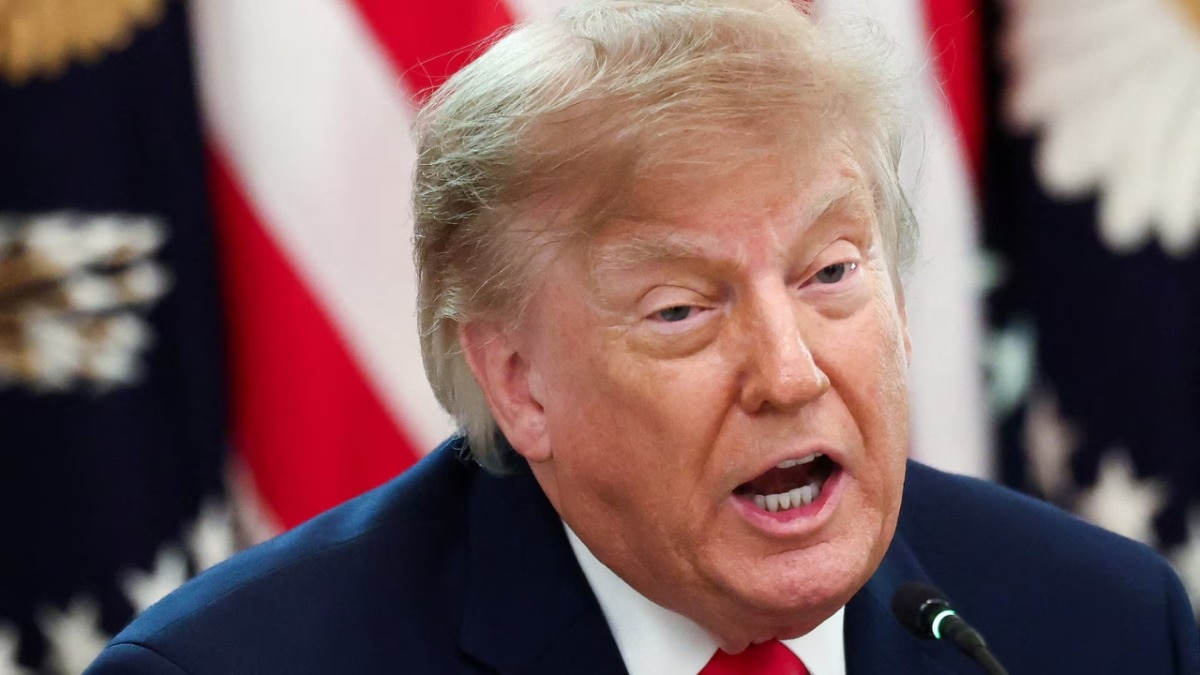
US President Donald Trump confirmed that American forces carried out limited strikes against an Iranian air-defence system on Qeshm Island, which a strategically important location near the Strait of Hormuz. He said the small-scale military action targeted an Iranian anti-aircraft system that had recently been built."They knocked out -- they built a little bit of an anti-aircraft device and we knocked it out in about 15 minutes, maybe five," Trump told reporters after arriving in West Palm Beach, Florida.The strikes came at a particularly sensitive moment.
While the US military has carried out limited attacks in the region, Trump has simultaneously indicated that Washington and Tehran are still talking about a possible way out of the wider conflict.STRIKES REPORTED ON QESHM ISLANDIranian state media reported two missile strikes in the Suza area of Qeshm on Friday (local time). The reports followed the sound of explosions on the island.
Iran's army also claimed that its air-defence forces intercepted and destroyed an American MQ-9 Reaper drone over Qeshm. The reported strikes were not the first US military action around the Strait of Hormuz in recent days.
On Monday, explosions were reported on Qeshm and nearby Hengam islands, as well as in the mainland area around Bandar Abbas. The US military described its action at the time as defensive strikes.US Central Command, which oversees American military operations across the Middle East, later described the situation around Qeshm as relatively calm.
Qeshm is not simply another Iranian island. The narrow waterway connects the Persian Gulf with the Gulf of Oman and is used by a large share of the world's oil and gas shipments, where any military confrontation can quickly affect international shipping and energy markets.
For Washington, keeping the waterway open is a major security concern. For Tehran, the area is central to its military strategy and its ability to influence traffic through the strait.TRUMP SAYS TALKS WITH IRAN ARE MAKING PROGRESSDespite the military action, Trump said diplomatic contacts with Iran were continuing."We're dealing with them now.
They want to make a deal," Trump told reporters."We've made a lot of progress with Iran," he added, without explaining what had been agreed or how close the two sides were to a formal understanding. Trump's message on Iran has swung between confrontation and diplomacy in recent days, as he has threatened further strikes while leaving the door open to a deal.The major obstacle remains Iran's nuclear programme and the wider terms of any agreement designed to end the conflict.Tehran has been seeking major concessions, including an end to the US blockade on Iranian ports, sanctions relief, the release of frozen Iranian assets and compensation for war damage.
Iran has also demanded an end to hostilities across the region, including Israeli military operations in Lebanon.Trump has previously rejected some of these demands.Iran has consistently maintained that its nuclear programme is peaceful. At the same time, its stockpile of highly enriched uranium has remained a major concern for Western governments and international nuclear monitors.Alongside the military developments, the US stepped up its effort to gather intelligence on Iran's nuclear programme.Washington is also trying to gather fresh intelligence on Iran's nuclear programme.
The US Central Command said Friday that it was offering up to USD 20 million to anyone who could provide information about Iran’s nuclear facilities, equipment or personnel involved in the programme. The offer also covers information about the movement of nuclear equipment or people linked to the programme.
Informants could be eligible for relocation as well. The reward is being offered through the State Department's Rewards for Justice programme.DIPLOMATIC EFFORTS CONTINUE ACROSS THE REGIONAt the same time, regional governments have stepped up diplomatic efforts to prevent the conflict from turning into a wider war.Qatar rejected reports that negotiations between Washington and Tehran had failed."Promoting such false claims serves only those seeking to prolong the war and destabilise the region," said Majed al-Ansari, spokesperson for Qatar's Ministry of Foreign Affairs.
Qatar's Prime Minister and Foreign Minister Sheikh Mohammed bin Abdulrahman bin Jassim Al Thani also said mediation efforts were continuing."For the past couple of weeks, we have worked with colleagues in the US administration who have very genuine intentions to find a way to contain the situation and de-escalate it," he said during an event at Oxford University.WHY THE LATEST STRIKES ARE SIGNIFICANTThe timing of Friday's strikes is particularly important because they followed the US midterm elections, in which Trump's Republican Party suffered major losses. The election setback has increased pressure on the administration, particularly over the economic consequences of the conflict and higher fuel prices.Trump has sent mixed signals on Iran in recent days, alternately threatening tougher military action and suggesting that negotiations could still bring the conflict to an end.The latest strikes therefore send a mixed but important signal: the US is still prepared to use military force against Iranian targets, even while diplomatic channels remain open.- Ends