


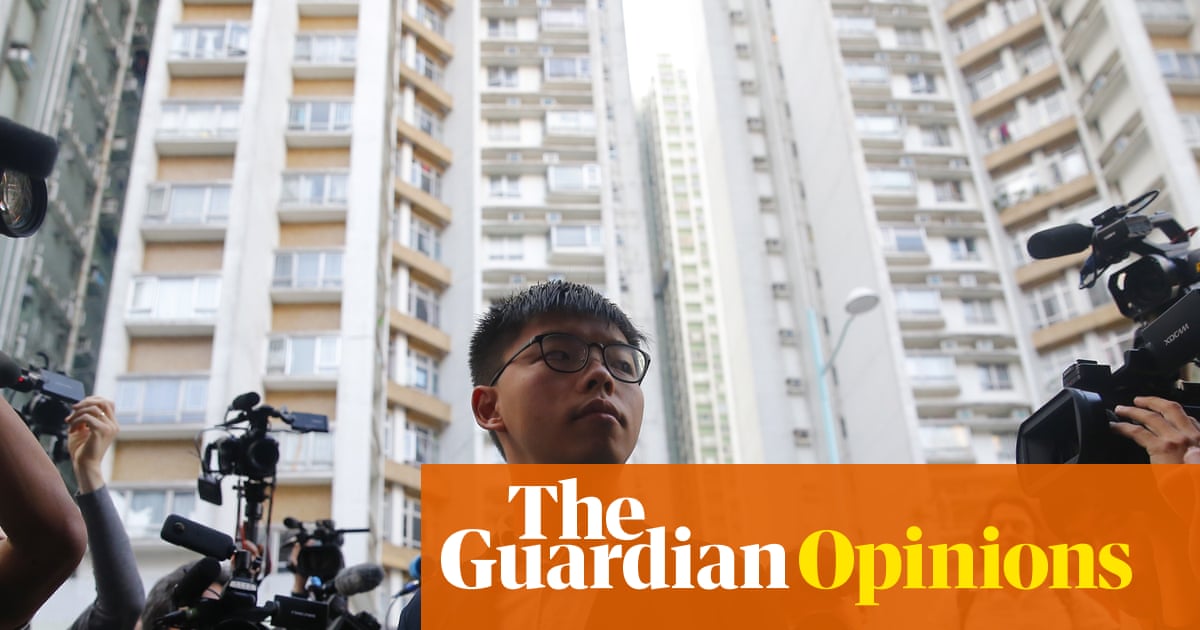
One is internationally famous – he was once dubbed “the Face of Protest” by Time magazine – and the other is little known outside his home town. What Joshua Wong and Au Kam San share, beyond the harsh sentences they received last week, is that they represent the spirit of dissent that Beijing is determined to crush.Mr Wong, who has been in prison for six years, should have walked free next January – not free to fight for Hong Kong’s rights, which China has suppressed so decisively, but at least to walk the streets of the city he loves.
Instead, a court last Thursday sentenced the 30-year-old, an activist from the age of 14, to another 10 years. He is the only person to have been prosecuted twice under the draconian national security law (NSL).
The case’s timing means that he will remain behind bars until he is 40 because so little of his sentences overlap. It also came one day after the city’s annual summit for global financial leaders ended – avoiding awkward questions for companies such as Morgan Stanley and Goldman Sachs, which long ago decided that it is business as usual, even as China turns the screw.Au Kam San.
Photograph: Bertha Wang/APMr Wong was sentenced after pleading guilty to “foreign collusion” – the same charge used against the newspaper tycoon Jimmy Lai, a British citizen, who was jailed for 20 years this spring. Their crime was lobbying foreign governments to put pressure on China as they sought to safeguard Hong Kong’s way of life and high degree of autonomy – guaranteed for half a century in the international treaty that Beijing signed with London when Hong Kong was returned in 1997.
Yet Mr Wong had mostly curtailed this activism before the NSL came into force. While high-profile targets have faced prolonged detention due to the stacking of charges, many more have been pursued by authorities.
More than 300 people have been arrested for violating the NSL, a colonial-era “sedition” law and other legislation enacted two years ago.One day after Mr Wong’s sentencing, a court in nearby Macau handed Mr Au a 12-and-a-half year prison sentence for subversion in the city’s first case under its national security law, which was held behind closed doors. Mr Au is a former primary school teacher and legislator who advocated for democracy and helped to organise annual vigils in Macau to commemorate those killed in the bloody crackdown on 1989’s Tiananmen Square protests.
The extraordinary 2019 protest movement and unrest in Hong Kong never spread to Macau, but authorities still increased pressure on the casino hub and former Portuguese colony. Mr Au once spoke of “sowing seeds” in a bitter winter, in the hope they might one day sprout if the external environment changed.
The intent of authorities is clear: to further chill any critics in Macau.Leaders elsewhere must be clear in not only condemning the sentences handed to activists such as Mr Wong and Mr Au, but also calling for their release. The EU and Portugal condemned the sentencing of Mr Au, who also holds Portuguese citizenship, but did not call for him to be freed.
Governments should consider imposing travel bans or asset freezes on officials involved in the crackdown. They must also do their utmost to protect activists who have fled Hong Kong and continue to press the cause of their home and their friends from exile, as they face increasing threats and pressure.