


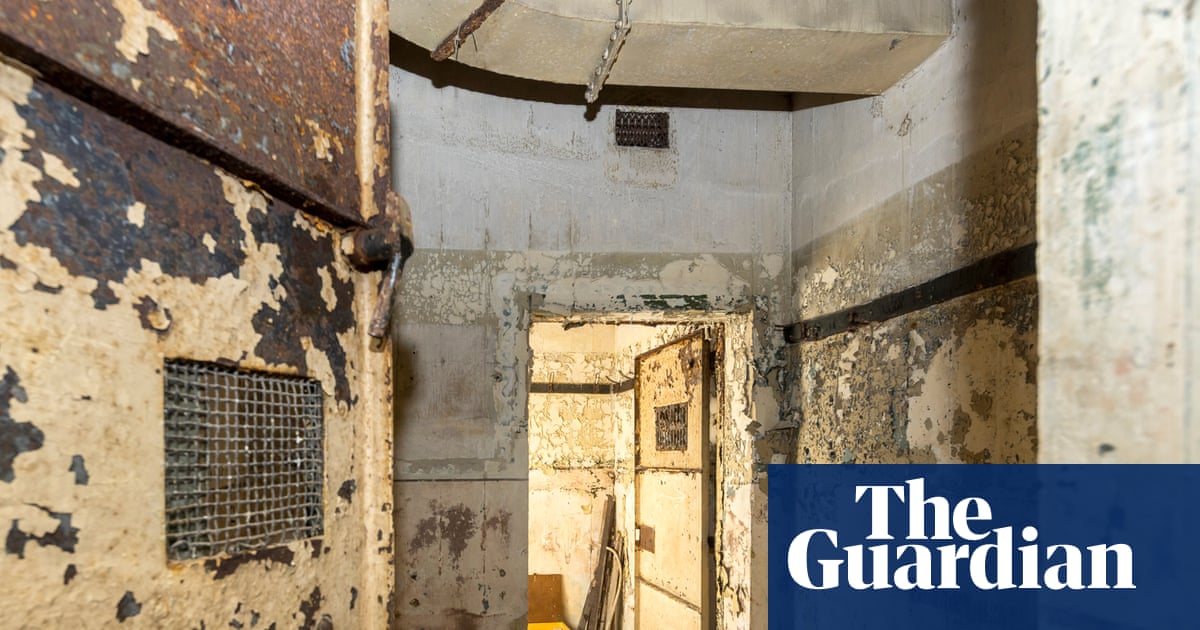
It has been kept secret for decades, buried four metres deep into the white cliffs of Dover. But from Friday, members of the public will finally be able to visit a pioneering command bunker that was ordered by Winston Churchill and proved a vital defence during the second world war.The Fan Bay plotting room, which is encased in concrete, housed the first land-based computer-aided targeting system.
This acted as a “brain” for a gun battery that was used to defend Dover and attack German ships in the Channel, according to Jon Stewart, who led the excavation project for the National Trust.Stewart was the first person to enter the bunker when it was rediscovered in 2017 after it had been secretly mothballed in 1957 and classified until 1981 owing to its military importance.“It was a Tutankhamun moment for a conflict archaeologist,” he said. “We had done all this research on the people who had served there, and then suddenly you’re standing in their office. It was an exciting moment.”Visitors take a tour of the plotting room at Fan Bay.
Photograph: John Miller/National Trust Images/John MillerThe plotting room and the artillery it controlled can be directly traced to Churchill. Soon after his “fight them on the beaches” speech, he visited the Kent coast and was alarmed to observe enemy ships passing through the strait of Dover unchallenged.At the same time, Dover was on the frontline of a Britain facing regular bombardment by enemy guns in occupied France.In a July 1940 memo Churchill wrote: “We have to fight for command of the straits by artillery, to destroy the enemy batteries and fortify our own.”He ordered the most advanced technology to be used and demanded weekly updates on progress on Dover’s new defences.
The guns were ready within 100 days and the plotting room bunker was completed 64 days later.“The guns were known around here as Churchill’s pets,” Stewart said.3D reconstruction of hidden World War II plotting room beneath White Cliffs of DoverPhysical traces of the urgency of the construction were still visible at the site, said Stewart. He pointed to the rough openings through the walls and floors for the cabling.
Contemporary accounts describe how the equipment was installed before drawings governing its layout were available.The plotting room housed a 1.8-metre-long electromechanical computer known as a fire direction table. It was used to calculate the position of moving ships when shells hit and to send firing instructions to gun crews.Stewart said the discovery of the plotting room reminded him of the rescue of Bletchley Park, the codebreaking site in Buckinghamshire, in the 1990s. “We didn’t know about it then, but now it’s all part of our national consciousness,” he said. “The plotting room is a new hidden history.”He added: “We tend to think of plotting tables as glamorous Wrens [members of the Women’s Royal Naval Service] pushing around markers on a map as they do in war films.
But it’s not a map – it’s a really cutting edge electromechanical computer, and it is completely unique.”skip past newsletter promotionafter newsletter promotionWinston Churchill views activity in the Channel from an observation post at Dover Castle in 1940. Photograph: Sean Carney/© Crown copyright IWM 003499The computer was deliberately destroyed in 1957 to stop it falling into enemy hands.Up to 10 people at a time worked in the plotting room.
Stewart is keen to make contact with anyone who had family members who served there, to help him understand how the machine worked.“What we know about it is based on a manual and ghost markings on the floor. I would really love to hear if anybody knows if their family members served at Fan Bay because the records are scant.”The identities of only a handful of people who operated the computer are known.
They include Wallas Eaton, an actor who later appeared as Senator Ludicrus Sextus in the TV comedy series Up Pompeii, alongside Frankie Howerd.This image of a battery plotting room interior shows how the Fan Bay bunker may have looked when it was operational. Photograph: Major Barlow ArchivesA man named WP Bryant, a lance bombardier, was also recorded as a plotter at Fan Bay. “He was a tailor so he probably had a head for numbers,” said Stewart.The plotting room, which from Friday can be visited via National Trust guided tours through a hatch in a field, has been preserved as Stewart and his team found it.
Remnants include old newspapers found on the floor, old shoes and official notices. There is also chalked graffiti on one of the service tunnels saying “heroes fan hole Dodds and Petitt”.
Stewart said Dodds and Petitt may have been involved in installing cables to the bunker.“They were probably self-appointed heroes responsible for marshalling horrible thick cable through particularly uncomfortable tunnels,” he said.“There’s something very special about standing in a place that has changed so little since the people who worked here left. Rather than recreate the past, we’ve carefully conserved the plotting room so visitors can experience it much as we found it, with all the marks of its history still visible.
It’s a rare opportunity to discover a completely different side of the white cliffs.”