


IN “BURNING DAYS”, a political thriller that made waves in Turkey a few years ago, enormous sinkholes appear near a fictitious town in the country’s heartland. When a prosecutor arrives to investigate, he uncovers widespread corruption.
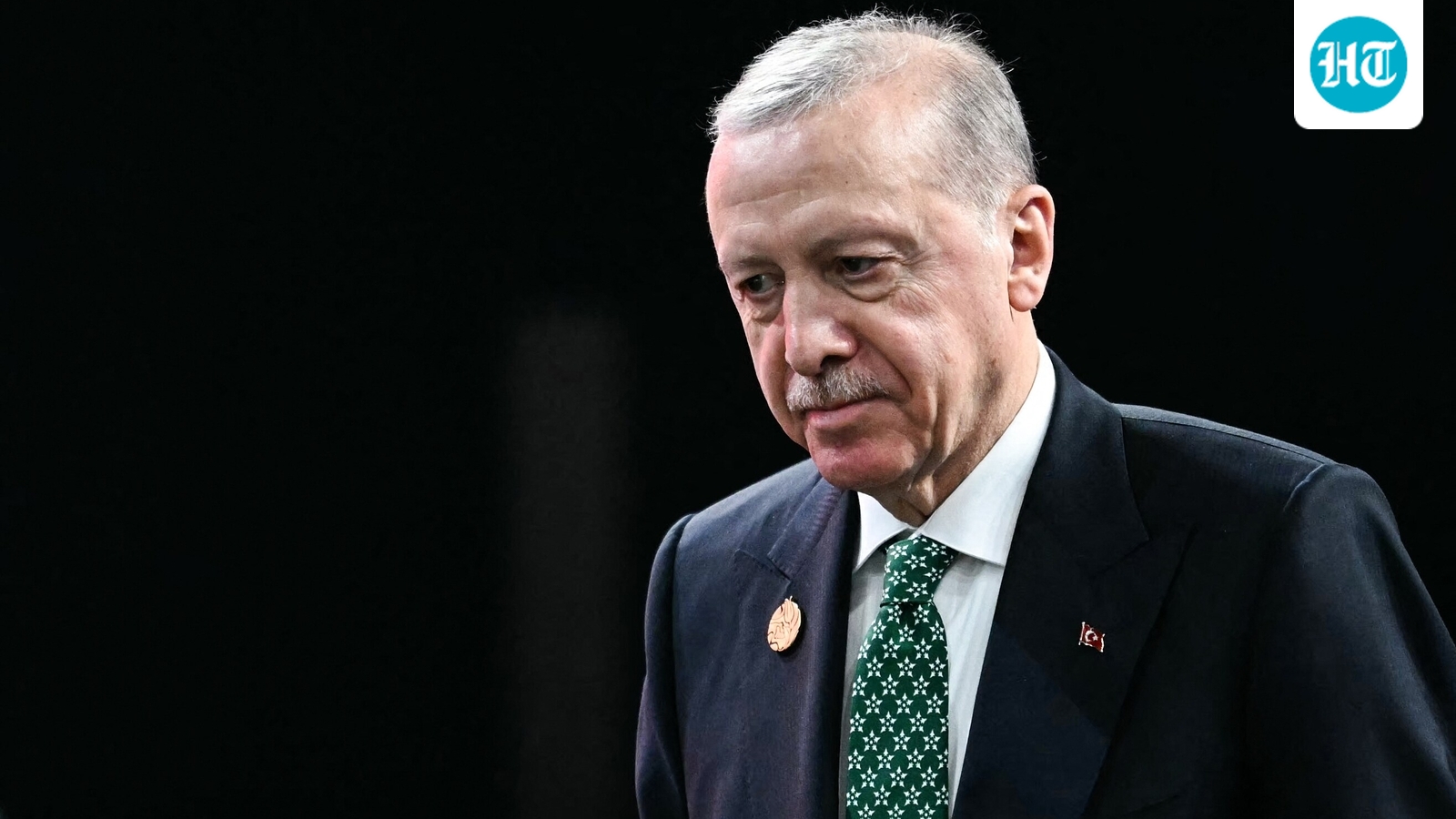
Threats and pressure ensue.Turkey's President Recep Tayyip Erdogan arrives on stage to deliver a speech during the High-Level Segment for Heads of States and Government at the 31st United Nations Climate Change Conference (COP31) at the Antalya Expo Center in Antalya on November 11, 2026. Turkey host the COP31 climate talks from November 9 to 20 in the Mediterranean resort city of Antalya, with Australia presiding over the negotiations. (Photo by Ozan KOSE / AFP) (AFP)This autumn a new sinkhole, in the form of a sprawling financial scandal, has opened, swallowing senior bureaucrats, finance executives and politicians.
The latest casualty, Sahap Kavcioglu, head of the bank regulator and a former central-bank governor, resigned on November 11th. Earlier victims include an ex-adviser to President Recep Tayyip Erdogan, a former head of the stock exchange, and Fatma Betul Sayan Kaya, a deputy chair of the ruling Justice and Development (AK) party, who have all been arrested.
The chairs of Turkey’s capital markets and auditing watchdogs and a deputy finance minister have lost their jobs.The turmoil began in September, when regulators ordered the liquidation of 131 investment funds, after some failed to meet redemption requests. Some funds were hoovering up shares in small, often obscure companies, driving their valuations to gravity-defying levels.
Investors hungry for easy money poured in. By the time the scheme had unravelled, leading to a stock-market rout, the funds held more than $20bn in assets and had attracted over 450,000 investors.With elections pencilled in for early 2028, but expected to be brought forward, Mr Erdogan and AK are desperate to put the scandal behind them.
Turkey’s leader had hoped vainly that the arrests of executives accused of running the scheme and the decision to wind up the funds would be enough. But the scale of the operation, the failure of the authorities to act earlier and new revelations have only invited more scrutiny.
A charitable interpretation is that regulators were too slow to act on warning signs that began flashing in late 2025. A less generous but increasingly prevalent one is that some were complicit.Mr Erdogan and his justice minister, Akin Gurlek, have vowed that the investigation will spare nobody.
But the crisis has been inching closer to the president’s inner circle. Prosecutors are investigating how Ms Kaya, a former cabinet minister, and her husband made 2bn lira ($40m) by buying 163m lira-worth of shares in a company in which one fund, Tera, held a commanding stake, and selling them for 2.17bn lira before the fund was dissolved.
Ms Kaya denies wrongdoing or receiving inside information. Rumours that other politicians, as well as officials inside the presidential administration, were in on the scheme continue to swirl around Ankara.
More heads may yet roll.The government is going to new lengths to ensure reporting on the financial scandal is neutered. In the past two months the authorities have blocked access to T24, an independent news website, and taken over Halk TV and Sozcu TV, two of the country’s most popular pro-opposition channels.
Tensions are also mounting within AK. Another party deputy chairman, Hayati Yazici, has faced heat from colleagues after reports that a relative of his wife netted 2.4bn lira from one fund.
Some worry that suspicion now hangs over the entire party. “As long as the list is not disclosed,” Abdulhamit Gul, a senior AK figure, has said, referring to the names of those under investigation, “there’s the impression that everyone is guilty.”The stock-market fall has eased off, but not before $150bn in market value was wiped out between late August and late October. The political repercussions may haunt Mr Erdogan and his party allies for some time to come.
To stay on top of the biggest European stories, sign up to Café Europa, our weekly subscriber-only newsletter.