


Picture a government hospital on a crowded Monday morning, wherein, a panel of three senior doctors examines a patient who has been waiting for years, writes out five medicines and sends him down the corridor to the pharmacy. The pharmacist studies the slip at his own leisure.
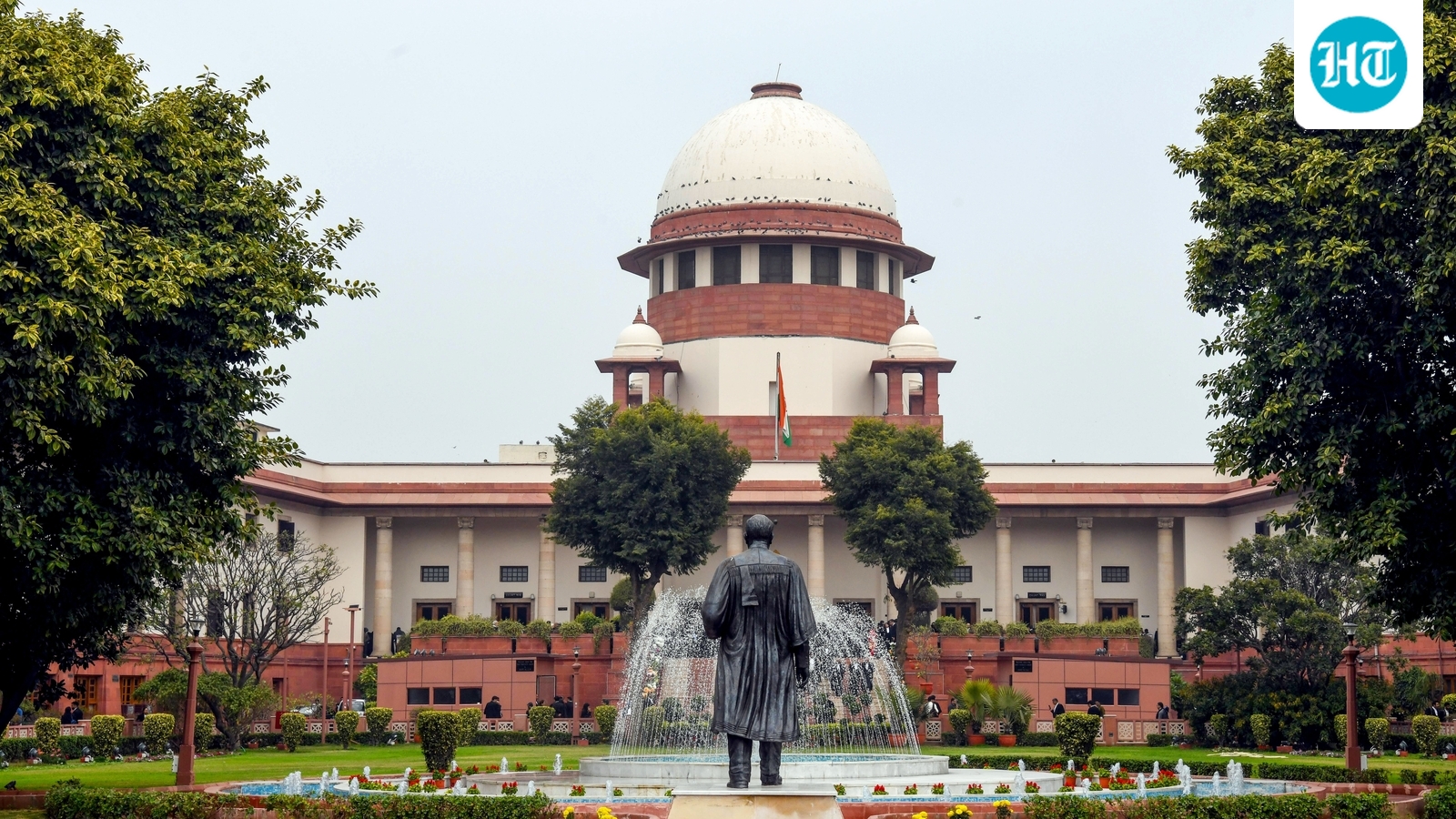
He hands over the first medicine, keeps the second ‘under consideration’, sends the third back upstairs for a second opinion nobody asked for, and dispenses the fifth before the fourth because he happens to like the label or salt. The patient goes home with half a treatment and a token number and waits for eternity.A view of the Supreme Court of India in New Delhi. (ANI/ Representational)In any other hospital the pharmacist would be answering a show-cause notice by the afternoon.
In ours, the doctor watches the whole performance from his cabin, says nothing, and reaches for the next prescription pad.Also Read I Rakhi Sawant gets relief from UP court in 2010 abetment of suicide case, non-bailable warrant cancelledThat, is the story of how judges are appointed now in our Country. We are still told that ‘judges appoint judges’ and it is closer to the truth to say that judges recommend judges, and somebody else decides which of them, when, and in what order to appointed or not.Appointment of CJIThe doctor did not come by his authority casually, in 1993, nine judges held in the Second Judges case that the opinion of the Chief Justice of India, formed in consultation with senior colleagues, would have primacy over the Government's, and that a name returned once and then reiterated must be appointed.
Five years later the Third Judges case settled the Collegium at the Chief Justice and the four senior-most judges.When the Parliament tried to change the arrangement through the NJAC, the Court struck down a constitutional amendment in October 2015 by four to one, holding that judicial independence is part of the basic structure and that a Law Minister at the selection table was one politician too many. In April 2021, in PLR Projects v.
Mahanadi Coalfields, it even wrote the timetable, a reiterated name is to be notified within three to four weeks.Thus, the doctor has already fought three constitutional battles to establish that he alone may write the prescription, strangely, he never intended to fought one to see that it is honoured by the pharmacist.The record tells its own story, and it has a chapter for every kind of file that travels from the Court to the Ministry.Begin with elevation to the Supreme Court, in January 2018 the Collegium recommended Justice K.M. Joseph and Ms.
Indu Malhotra together. The Government notified one and returned the other, and when Justice Joseph was finally appointed that August after reiteration, he took his oath below two judges who had been recommended six months after him.Move to the Chief Justices of High Courts, in May 2019 the Collegium recommended Justice Akil Kureshi for Madhya Pradesh.
The Government sat on the file, and by September the Collegium had quietly modified its own recommendation and sent him to Tripura. In September 2022 it proposed Justice S.
Muralidhar for the Madras High Court. The Government cleared another transfer from the very same resolution and left his untouched for nearly seven months, until the Collegium recalled the proposal in April 2023, recording that it had drawn no reply at all.
The doctor, tired of standing at the counter, tore up his own prescription.Transfer and judges in Delhi High CourtTransfers of puisne judges follow the same script. In August 2025 the Collegium resolved to send Justice Atul Sreedharan to Chhattisgarh, where he would have sat in the High Court collegium.
In October it sent him to Allahabad instead, seventh in seniority, and recorded with rare candour that it did so ‘on reconsideration sought by the Government’ and no reason was given by either side.Then come those recommendations, where the casualties are advocates and not judges. In January 2023 the Collegium reiterated five advocates at once and, for once, published the Government's objections.
Mr. Saurabh Kirpal's name for Delhi had been travelling since 2017.
Mr. R.
John Sathyan's offence for Madras was sharing an article critical of the Prime Minister. Mr.
Amitesh Banerjee and Mr. Sakya Sen for Calcutta were being reiterated for the second time.
Only the fifth, Mr. Somasekhar Sundaresan, was appointed, ten months later.
The other four were still waiting nearly two years on, long after juniors recommended behind them had taken oath.In August 2024 three lawyers were recommended together for the Delhi High Court. Two were notified in January 2025 and the third, Ms.
Shwetasree Majumdar, waited almost a year without being told why and withdrew her consent in July 2025. In the same week Mr.
Rajesh Datar, separated from a batch of four recommended for Bombay, did the same after nine months.The habit is alive and well recently, on 10 September 2026, the Collegium cleared eight judicial officers for the Delhi High Court and nine days later seven were notified leaving one out the name at the top of the list was not among them, no reason has been made public and subsequently notified his name disturbing seniority again.A bench headed by Justice Sanjay Kishan Kaul had named the disease in 2023, calling it ‘pick and choose’ and warning that it disturbs seniority and tells every candidate whose goodwill matters. The Bar also speaks of a quieter habit, in which names are sounded out with the Government before the Collegium signs them.If that is so, the prescription is shown to the pharmacist for approval before it is written, and that is the very partnership the NJAC judgment held unconstitutional.The story has a final scene.
Justice Kaul's bench was hearing a contempt petition on precisely these delays and had directed that it be listed on 5 December 2023. On that morning the matter was missing from the cause list.
When counsel mentioned it, the judge said he had not deleted it, and added that ‘some things are best left unsaid’. He retired later that month, and the question retired with him.So, the Court that claimed primacy over appointments could not secure a date in its own registry, and the doctor's appointment with the patient vanished from the doctor's own diary.‘An opaque system’Admittedly, the Executive has a legitimate part to play, it holds the intelligence inputs and it is entitled to object once, with reasons but none of that explains a split list, a reshuffled seniority or a year of unexplained silence, and none of it explains why the Collegium accepts all three without protest every time.The consequences of this unsaid arrangement are not abstract.
A judge who knows that his elevation, his seniority and his chance of leading a court depend on the pharmacist's mood will learn to keep the pharmacist content, and the Government happens to be the largest litigant in his courtroom.Also Read I Delhi HC rejects Neha Bora's plea against notice to sign peace, 'maintain peace'Good lawyers, unwilling to hang in public limbo for years, decline the offer or withdraw their consent. The High Court’s run with empty courtrooms while arrears climb and worst of all, the Collegium loses the only defence it ever had.It asked the country to tolerate an opaque system because that system kept the Executive out and If the Executive is in anyway, the opacity protects nothing.The cure needs no constitutional amendment.
The Collegium should insist that a batch is notified as a batch, with seniority fixed by the date of recommendation and not the date of notification. The timelines in PLR Projects should carry a consequence, so that when the clock runs out on a reiterated name the Court says what follows, whether a deemed clearance or a contempt notice to the Secretary concerned.The Government's objections and the Collegium's answers should be published, as the Collegium briefly did in January 2023, so that no name can be cleared in advance behind a closed door.
The Memorandum of Procedure, left unfinished since the NJAC judgment, should be finalised and the contempt petition should be decided by a bench, not by the cause list.Until then the patient stays in the waiting room. The pharmacy has one medicine that is never out of stock, and it is labelled ‘under consideration’.
The danger is that the doctor has begun prescribing it to himself.(Vaibhav Choudhary, Advocate-on-Record at the Supreme Court, on the collegium)