


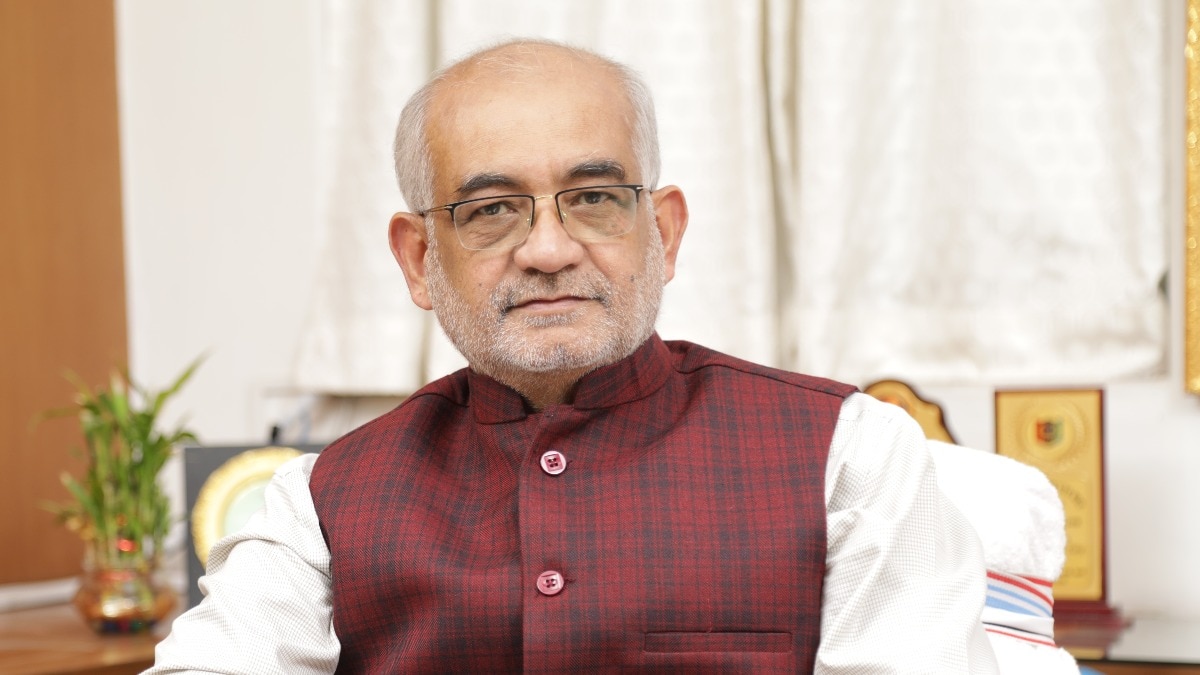
Professor Indranil Manna, Vice-Chancellor of BIT Mesra and former Director of IIT Kanpur (2012–2017), has called for a reassessment of how India readies its workforce for a changing employment market. In an exclusive conversation with India Today, Prof Manna, a former president of the Indian National Academy of Engineering, said that shorter courses and periodic reskilling could help workers acquire skills for specific jobs, but stressed that education must remain rooted in fundamentals.With AI beginning to affect professions across disciplines, Professor Manna said the question was not whether degree programmes had outlived their purpose, but whether the country was preparing people to adapt when their existing skills were no longer sufficient.If individuals are given a sound grounding in fundamentals, they can be trained over shorter periods to acquire skills that will be relevant for a shorter period, seeing the changes that technological advancements are making.The larger question, therefore, is whether reskilling must depend on enrolling in more courses or whether institutions can create clearer pathways through which individuals can learn, apply their knowledge and move towards specific areas of work.
How can India's education system put such an approach into practice, and what would it take to bring different disciplines together in preparing people for an AI-driven employment market?Professor Manna set apart between training for a particular task and education that enables a person to take up new work. A diploma or certificate, he said, may be adequate for someone seeking to operate or maintain a particular machine. "If you look at any major manufacturing industry, particularly in the hardware sector, the typical workforce structure requires about five to six diploma holders and 10 to 12 certificate-level workers for every engineer," he opines.But a person who wishes to understand a system, develop it or respond to changes in its design would require a stronger foundation."A short training in a given period is for them," he said, referring to those seeking to meet a specific skill requirement.
He cautioned, however, against assuming that such training could serve as a substitute for a degree.RESKILLING FOR A CHANGING WORKPLACEProfessor Manna said no set of skills could be expected to remain relevant throughout a person's working life. As industries change, workers must have the opportunity to return to education and update their knowledge."There is no guarantee that the set of people that you train today will remain relevant forever," he said. "So they need to, time to time, replenish themselves."Such learning, he added, should not be limited to technical skills.
Even fundamental knowledge may need to be revisited as one discipline draws increasingly upon another.The IITian himself, Professor Manna, cited the growing links between physics and biology to explain why professionals must learn beyond the boundaries of their own disciplines."Physics now understands biology better," he said, adding that "both physicists and the biologists have to combine these two, or at least get exposed to them."He pointed to medical practice as another example of this convergence. "A doctor today uses a lot of technology," he said, noting that medical professionals may need training in areas they were not exposed to during their formal education.The exchange, he argued, must also work in the other direction: those trained in technology should understand "the way the physiological systems or any biological system works".Prof Manna explained the need for engineers to update their knowledge as technology changes, he cites one example here.“When we move from an IC engine to a hybrid or electric drive, the vehicle design remains the same. Only the power generation and transmission designs become different,” he said.He added that training an engineer for only one type of vehicle would limit the person's ability to work on others. “If you train somebody only for a hybrid car, the person will only be able to take care of a hybrid car, not the others,” he added.AI CALLS FOR A REVIEW OF EDUCATIONProfessor Manna said AI would affect far more than engineering.
Medicine, sports, music, literature and the creative arts would also have to respond to its growing use."AI is going to be something which is going to hit everything together," he said, arguing that every discipline would need to adapt. This, in turn, would require changes in teaching, curricula and educational approaches.He maintained that the foundations of education must be reviewed, but not discarded.
The aim, he said, should be to prepare students to understand the principles of a subject and apply them to problems that may not yet have emerged.Prof Manna also called for greater flexibility in educational institutions. He says: "Including opportunities for students and working professionals to acquire additional skills and return to learning is what we can add to a new structure."Such provisions, he said, should encourage innovation rather than become exercises in procedural compliance.Professor Manna also raised concerns about the expansion of engineering education without adequate attention to quality. "We allowed mushrooming of engineering colleges, as a result of which the credibility of engineering education has taken a hit," he said.Pointing to the rise in engineering seats, Professor Manna, who is the Vice President, Indian National Science Academy, questioned whether the growth had been matched by demand for graduates.For BIT Mesra VC, therefore, the debate over degrees and shorter courses cannot be settled by choosing one over the other.
The country needs people trained for specific tasks as well as those equipped with the fundamentals to meet demands that have yet to take shape. The challenge, he suggested, is to plan for both.(As the current education system struggles to align with today's job market or adapt to future needs, often leaving students unprepared as industry demands shift before graduation.
The underlying issue is that the Indian educational framework cannot keep pace with rapid technological and economic change; education must equip individuals to stay relevant as the market evolves.)- Ends