


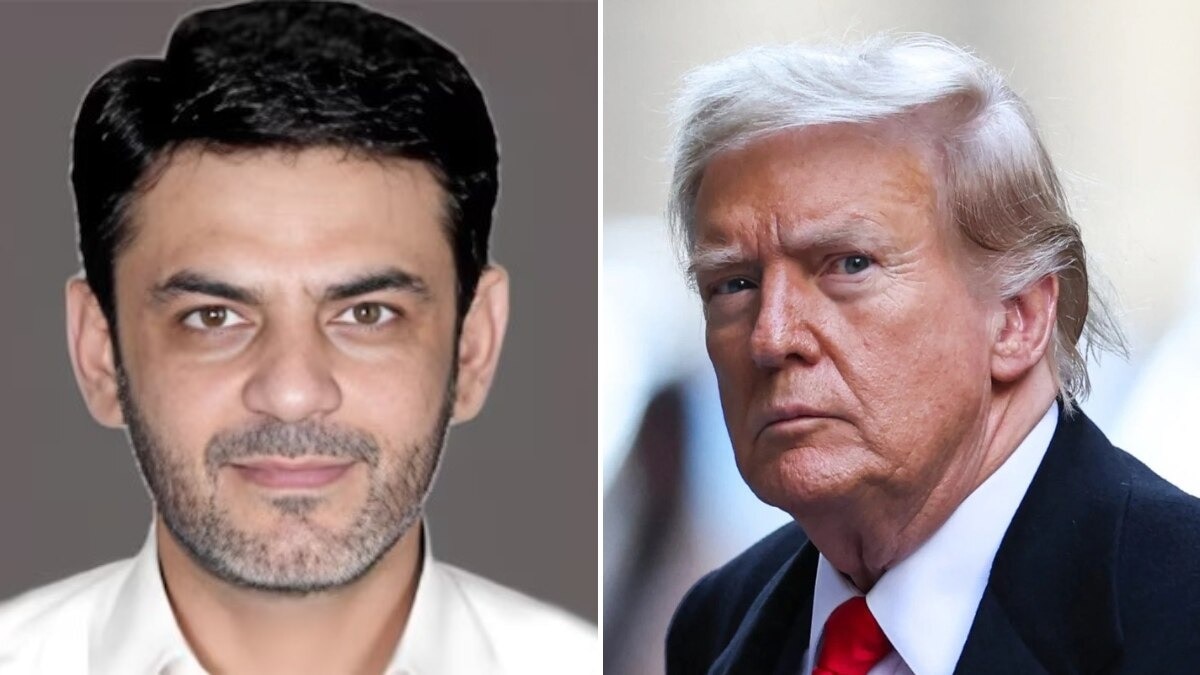
Asif Merchant, 48, said an operative of Iran's paramilitary Revolutionary Guard had driven him to take part in the assassination plot. According to trial testimony, possible targets included US President Donald Trump, former president Joe Biden and former US ambassador to the UN Nikki Haley.Asif Merchant entered US in April 2024 and quickly got in touch with a man he thought could help him arrange contract killings.
A Pakistani businessman who admitted to plotting the assassination of a senior US political figure has been sentenced to a little more than 27 years in prison, news agency Press Trust of India reported.Asif Merchant, 48, said an operative of Iran's paramilitary Revolutionary Guard had driven him to take part in the plot. According to trial testimony, possible targets included US President Donald Trump, former president Joe Biden and former US ambassador to the UN Nikki Haley.
The Iranian government has denied trying to kill US officials.Merchant was sentenced in New York on Tuesday after being convicted earlier this year of murder-for-hire and attempted terrorism. He had faced a possible life sentence for what the judge described as an exceptionally serious crime.“Not many charges ... are more serious than the contemplated, targeted killing of a US president or other senior government official,” US District Judge Eric Komitee, who was appointed by Trump, said.
Merchant shifted in his chair but showed no other visible reaction when the sentence was announced. He declined to speak during the sentencing hearing.His lawyer, Avraham Moskowitz, said Merchant planned to appeal but was grateful that the judge had rejected the prosecution's request for a life sentence. “I think what it shows is that our judiciary remains independent, thankfully,” Moskowitz said.
US Attorney General Todd Blanche said in a statement that Merchant had been “justly sentenced."At his trial, Merchant told jurors that he had researched locations of Trump rallies and discussed carrying out an assassination at a political rally. He used objects on a hotel napkin to explain the proposed attack to an acquaintance, according to PTI.Merchant then contacted people he believed were hired killers and paid them USD 5,000 in cash, which he had borrowed from a relative.
The supposed assassins were undercover Federal Bureau of Investigation agents. The acquaintance who witnessed Merchant's demonstration on the napkin had alerted the authorities.Merchant was arrested in Texas on July 12, 2024, while preparing to board a flight to Pakistan.
His arrest came a day before an unrelated assassination attempt on Trump in Butler, Pennsylvania.Merchant testified that he had only followed the Revolutionary Guard operative's instructions because he feared for the safety of his relatives in Iran. He said he expected US authorities to stop the plot and believed he could then cooperate with them and possibly receive immigration assistance.“My family was under threat, and I had to do this,” Merchant testified in March.
He said his handler had named Biden, Haley and Trump as potential targets.Defence lawyer Christopher Neff said Merchant's role in the plot had been “half-hearted”. “This plot was incompetent from the very beginning,” he told the court. The defence said Merchant had met a Revolutionary Guard operative several years ago and believed intelligence work would be exciting and profitable, but also feared the consequences for his relatives if he refused to cooperate.Merchant had worked for Pakistani banks for decades before entering businesses including car sales and banana exports.
He travelled periodically to the US for work and to visit relatives, and also went to Iran for Shia Muslim religious pilgrimages and family visits.Prosecutors disputed Merchant's claim that he had acted under pressure. They cited anti-American and anti-Trump posts he had shared on social media after the US killed senior Iranian military commander Qassem Soleimani in 2020, during Trump's first administration.The defence described the posts as expressions of anger and said Merchant was neither an extremist nor inclined to act violently.
Assistant US Attorney Sarah Winik, however, said he had done “the most extreme thing you can do: Plot the assassination of a government official."The judge said he believed Merchant had some concern for his family but was also “highly motivated to do harm to this country."- Ends