


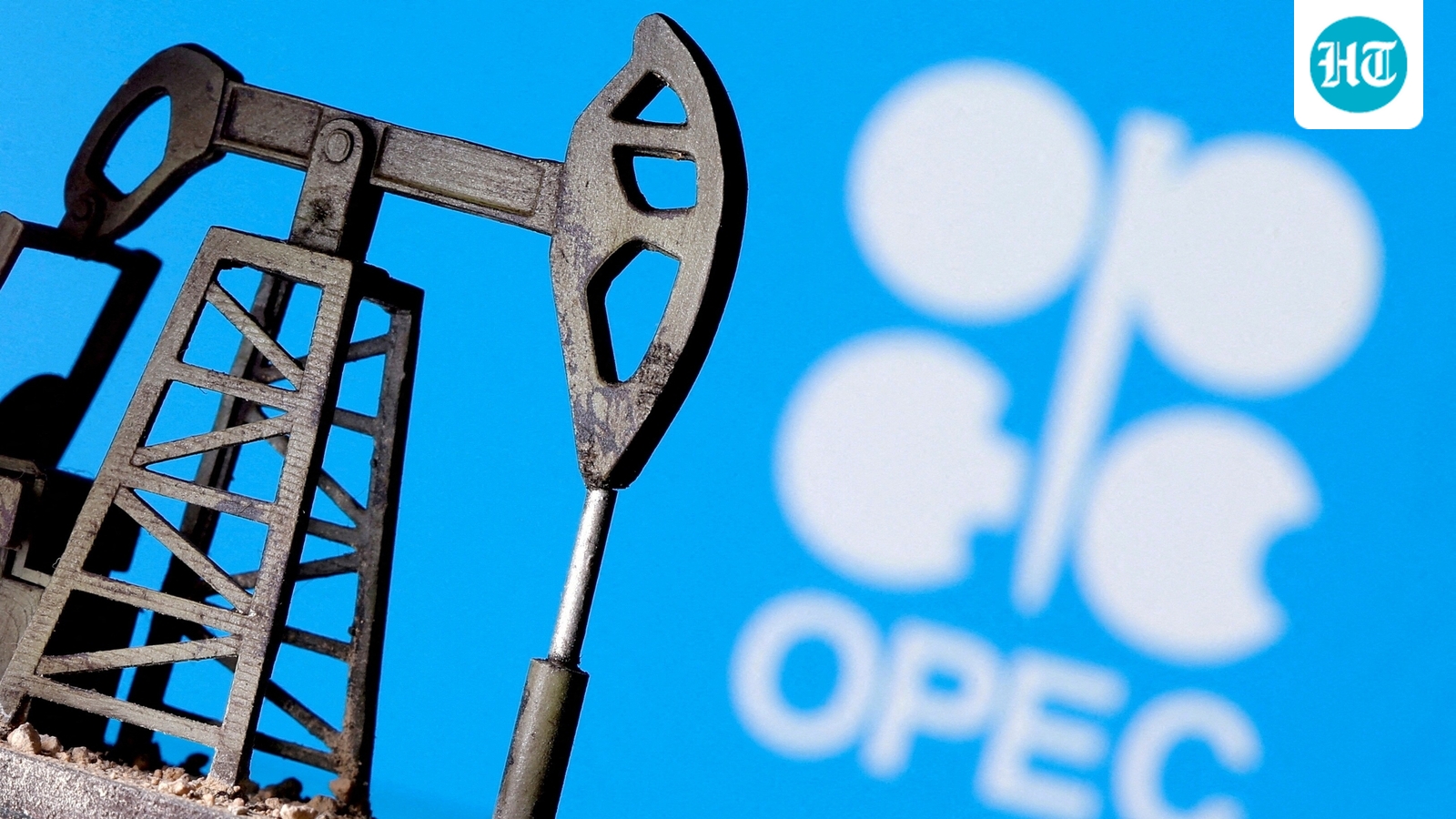
OPEC+ countries are expected to keep their oil production targets unchanged for December as the group continues to face problems shipping oil because of the ongoing US-Iran war. The decision is expected to be taken at a meeting on Sunday, November 1.OPEC+ oil producers prepare to maintain December production targets amid US-Iran war disruptions. (REUTERS)Seven key OPEC+ members have agreed in principle to maintain their current production targets for December.
This means they are not planning to increase or reduce their planned oil output next month. Three people familiar with the discussions told Reuters on Saturday.OPEC+ members to keep December oil production targets unchangedThe seven countries are Saudi Arabia, Russia, Iraq, Kuwait, Algeria, Kazakhstan and Oman.
Their online meeting is scheduled to begin at 1200 GMT on Sunday, one of the sources told Reuters.The decision to keep production targets unchanged is in line with market expectations. OPEC+ is expected to avoid further changes to its production policy until 2027, as it prepares for discussions on future production limits.US-Iran war continues to disrupt Gulf oil exportsThe US-Iran war has disrupted oil exports from Gulf countries for several months.
These disruptions have affected the amount of oil that member countries can send to international markets, even when they have the capacity to produce more.Gulf oil producers have started increasing their exports despite the disruptions. Their combined oil flows recovered to an average of around 81% of their pre-war levels in September, according to data reported by Reuters on October 6.
However, exports have not fully returned to normal.Also read: 401(k) portability system cuts retirement cash-outs among job switchers, but only 6% reach new plansMost OPEC+ members are still producing less oil than their official production targets. This is mainly because export disruptions and other difficulties have limited how much oil they can pump and deliver to buyers.OPEC+ production cuts and oil supply plans for 2027OPEC+ has already increased its production targets several times during 2026.
The group had been gradually bringing back oil supplies that were reduced under earlier production-cut agreements.In September, OPEC+ completed the planned return of 1.65 million barrels per day (bpd) of oil supplies to the market. These production cuts were first agreed upon in 2023.
The increase was carried out in stages rather than all at once.The group had also decided to keep its production targets unchanged for October and November. Sunday's expected decision would mean that OPEC+ maintains the same approach for a third consecutive month.OPEC+ is also preparing to shift its attention towards production plans for 2027.
Reuters reported in July that the group was likely to avoid changing its production targets during the fourth quarter of 2026 as it focused on negotiations over future production quotas.Another round of production cuts, amounting to around 2 million bpd, is still in place. These cuts cover most OPEC+ members and are scheduled to remain in effect until the end of 2026.
They are separate from the 1.65 million bpd of cuts that the group completed reversing in September.OPEC+ to review oil production capacity before setting 2027 quotasBefore deciding production limits for 2027, OPEC+ must review how much oil each member country can produce. The review is expected to be completed during the fourth quarter of 2026.The review will help the group decide new production baselines for its members.
These baselines will determine how much oil each country is allowed to produce under its future quota.The new production baselines will also influence how OPEC+ plans to reduce its remaining production cuts. The group will use the review to decide how and when to bring more oil supplies back to the market, according to Reuters.OPEC+ includes the Organization of the Petroleum Exporting Countries (OPEC) and other oil-producing countries that work with it, including Russia.
The alliance coordinates production policies among its members to influence global oil supply.