


For years after Independence, India lived from ship to mouth, and the Green Revolution of the 60s made it self-sufficient in grains. India filled granaries as it became food-secure.
With India aspiring to be a developed country by 2047, Prime Minister Narendra Modi on Thursday said "filling foodgrain warehouses alone is not enough". PM Modi was delivering the plenary address at the India Today Group's Kisan Tak Bharat Agriculture Conference 2026.As if using the of the two-day conference's theme, 'Smart Kisan for Viksit Bharat', PM Modi said, "Building a Viksit Bharat (developed India) is simply not possible without developing agriculture, making farming smarter and empowering farmers."While most things around us have changed at a breakneck speed, especially since the turn of the century due to technology, the way most farmers in India carry on farming hasn't changed much.
That's significant because agriculture and allied sectors employ around 45-50% of India's workforce."With time, the world changed, markets changed, people's needs changed, and food habits changed. The weather changed, technology changed.
We needed to empower our farmers afresh in keeping with these changes. But earlier, even this was not given proper attention to," PM Modi said at the India Today Group's Kisan Tak Bharat Agriculture Conference. "Those who ran governments for decades were satisfied during their tenure with just one thing: that the country's farmers had filled the granaries with foodgrains," said Modi, following it with a vital question."But what did farmers get after that?
Filling foodgrain warehouses alone is not enough," he said. The question is vital, and has been discussed by farmers and agricultural experts, including ICRIER's Ashok Gulati, Bina Agarwal, Nabard's Shaji Krishnan and Niti Aayog's Ashok Kumar Lahiri, during the two-day conference.Despite a glut in rice and wheat in India, but the country having to import pulses, why aren't farmers going for crop diversification, was a key focus area of the conference."We are already buried under heaps of rice, yet we continue to grow more rice and expect the government to buy everything.
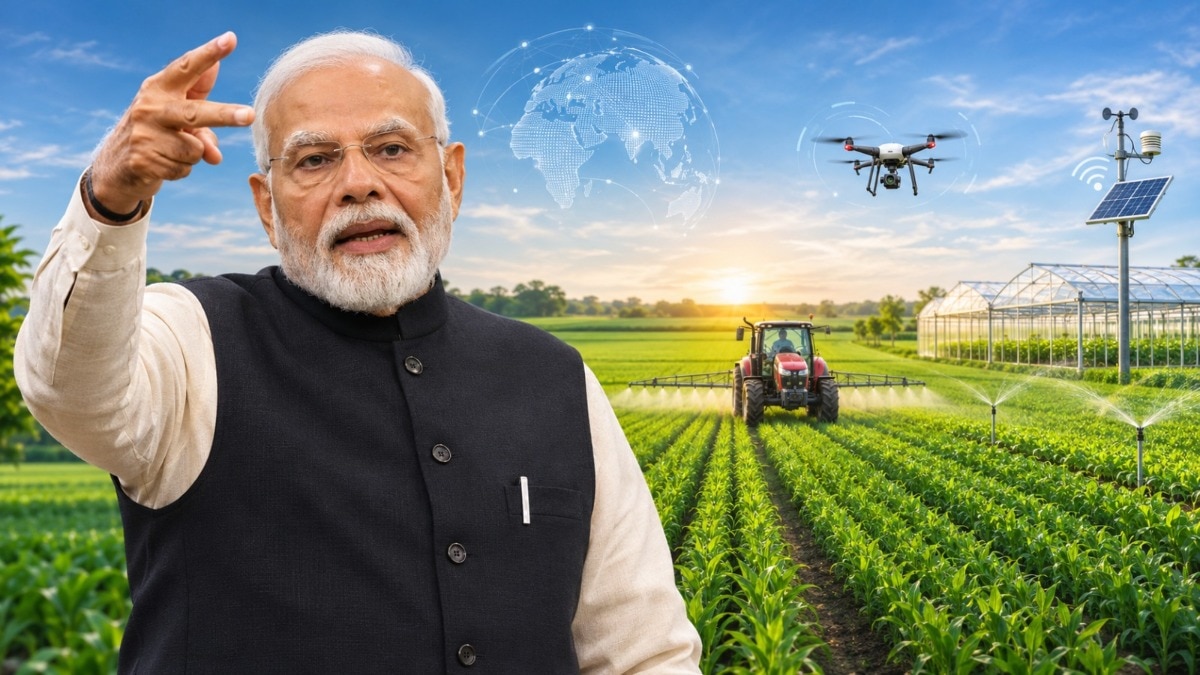
How long can it keep buying," asked Gulati on Wednesday, the Day One of the Kisan Tak conference.On Thursday, PM Modi seemed to offer a solution, stressing upon the need to turn farmers into agricultural entrepreneurs by promoting food processing, value addition and access to export markets.At least 2,000 farmers, policymakers and industry leaders were in attendance as the prime minister made the pitch to turn "our food providers into agripreneurs, or agricultural entrepreneurs".Modi said work was on to ensure value addition took place where the produce is grown.He cited the network of 10,000 Farmer Producer Organisations (FPOs), built by small farmers with government support, saying it was helping them become value creators and connect with the food-processing business. "Efforts are also being made rapidly to connect small farmers with export markets," Modi said.Technological assistance and the participation of equipment manufacturers is vital to making farming smart. So, is the need that farmers make greater use of technology.Modi called for greater use of technology and engineering in agriculture, urging manufacturers and startups to develop solar-powered farm equipment."Whatever equipment you manufacture from now on, make it solar-powered, because we are going to take solar power to every field," he said, appealing particularly to MSMEs and small-scale industries to focus on the agriculture sector.He also pointed to how the government was bringing technology from labs to land.He also cited the example of Namo Drone Didis to explain how the use of technology in agriculture was bringing social recognition to people in rural areas.
The initiative trains women to operate drones that are used to spray fertilisers and insecticides on farms."I was speaking to a Drone Didi from Jharkhand. She told me that her status had completely changed.
I asked her why. She said the entire village now called her a pilot.
Even her brothers-in-law called her 'Pilot Bhabhi'," Modi said.He said sensor-based artificial intelligence (AI) technology was being used to develop equipment that could provide farmers with precise information and remain affordable for even the smallest cultivators."You simply have to put a little soil into the system through your mobile phone, and it immediately gives you a report telling you which crop your soil is suitable for and how much fertiliser, and what kind of fertiliser, you need," PM Modi said.Modi, who said it wasn't just enough to fill granaries, said the government was focused on increasing the profits made by farmers."Along with production, we have also focused on productivity and farmers' profits. Productivity and profit are equally important," he said.Prime Minister Modi's plenary speech, which echoed the Kisan Tak conference's theme and showed the way ahead, was a fit conclusion to the India Today Group's event focused on improving farming and the lives of farmers.- Ends